
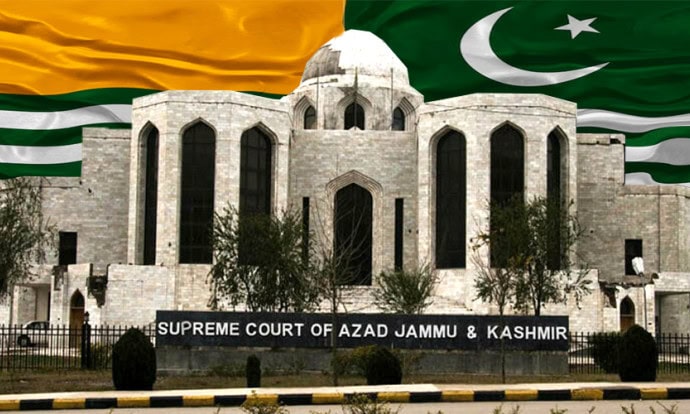
MUZAFFARABAD – Supreme Court of Azad Jammu and Kashmir backed government’s stance on long-debated issue of migrant seats, issuing an opinion that places clear emphasis on constitutional authority and parliamentary procedure.
The reference, filed under Article 46A on the advice of government, asked court to clarify the legal standing of the 12 reserved migrant seats in the legislative assembly. In its response, the court ruled that these seats are constitutionally protected under Article 22 and cannot be altered through administrative or executive action.
The judgment traced historical and legal roots of the arrangement to earlier legal frameworks dating back to 1960, 1964, and 1970, along with subsequent constitutional developments including the 1974 Constitution and the 1975 Act.
The court observed that any change in the structure of migrant seats would require constitutional amendment under Article 33, making it clear that such matters fall strictly within the domain of the legislature. It also reiterated that constitutional change must follow due process — through elected representatives, parliamentary debate, and public mandate.
The court stressed that constitutional authority cannot be shaped by street pressure or protest movements, underscoring instead the primacy of the Constitution. The apex court of region supported the government’s decision to refer remaining constitutional matters to the elected assembly and emphasized that elections under Article 22(4) must be held in a timely manner. It stated that electoral processes cannot be disrupted or delayed due to political agitation.
Clarifying balance between rights and responsibilities, the court noted that while peaceful protest remains a constitutional right, it does not extend to causing disruption in daily life. It added that the exercise of one group’s rights cannot come at the expense of others, and the state remains responsible for maintaining law and order.
Legal experts said the opinion strengthens constitutional framework around elections and governance, particularly in relation to attempts to influence or obstruct electoral processes outside institutional means. According to them, the court has once again underlined that constitutional change is only possible through the assembly and the ballot box — not through pressure or confrontation.
AJK election 2026 Schedule revealed, sparking high-stakes political showdown