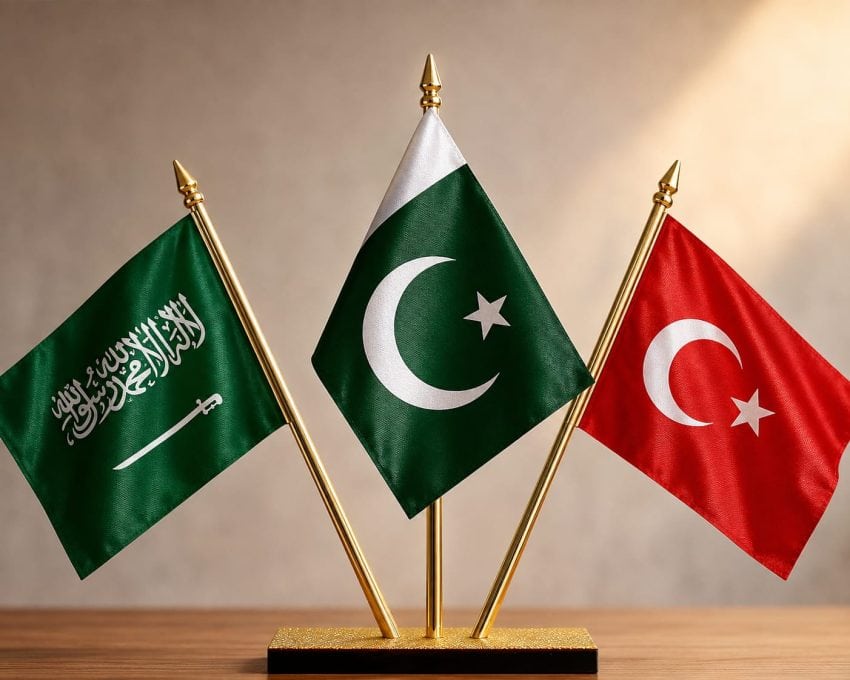
A new security alignment is taking shape in West Asia. Saudi Arabia, Turkey and Pakistan have signed a joint defence agreement in Makkah on Friday, 7 August 2026, declaring that an armed attack on one would be regarded as an attack on all. The agreement aims to establish a trilateral security alliance that could reshape the balance of power across the Middle East region and beyond amid continuing tensions with Iran and the wider regional security crisis.
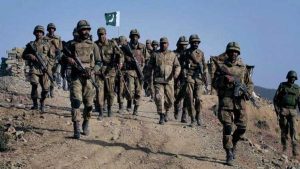
Saudi Arabia brings regional influence and strategic depth. Turkey brings advanced military technology, drones, and a powerful defence industry built around NATO standards, and Pakistan brings a battle-tested military along with its nuclear capabilities, as well as its efforts to mediate the US-Iran war. Turkey has played a diplomatic role in negotiations aimed at ending the war in Gaza, and Saudi Arabia has enormous financial power and regional influence. That combination is exactly why this development is attracting global attention. Three countries, three different strengths, one shared ambition, together aiming to establish a unified security architecture.
Moreover, many analysts are calling it an Islamic NATO, because at its core, it holds the same principle that made NATO famous: collective security. Though this isn’t NATO in the legal sense. It doesn’t yet have a formal Article 5 equivalent. It doesn’t have an integrated military command. But politically, strategically, and symbolically, it is the closest that the Islamic world has come to creating a collective military block. Saudi Arabia wants regional stability at a time when Houthis are attacking. Turkey wants strategic influence, and Pakistan wants a stronger defence partnership while avoiding a direct confrontation with Iran.
This trilateral agreement further adds to the historical fact of Pakistan’s brotherhood with Saudi Arabia and Turkey. Pakistan and Turkey’s bond traces back to the Caliphate Movement of 1919–1924, before Pakistan was even a country. That early solidarity over the years turned into steady defence cooperation, joint military and naval exercises, technology sharing, and growing arms trade between Ankara and Islamabad.
Saudi Arabia and Pakistan’s alliance, meanwhile, is deeply rooted in religious affinity, defense, and economic cooperation, and over eight decades the relationship has evolved into a military alliance and financial support, culminating in the most significant deal: the strategic mutual defense agreement signed in Riyadh last year, which was originally a bilateral agreement but has now evolved into this trilateral agreement, the Mecca pact.
Though the pact doesn’t aim to alter the military balance in the region, it does signal the emergence of new security coalitions, the weakening of old alliances, and a world where regional powers increasingly want to protect themselves without depending on America.
It’s an alliance that could redraw the strategic map of West Asia and directly affect India’s security calculations. India wanted to isolate Pakistan, diplomatically or through funding terrorist groups. Today, Pakistan stands at the centre of a new collective-security equation with Saudi Arabia and Turkey.
Moreover, India’s biggest strategic concern is the deteriorated relationship between New Delhi and Ankara, especially after President Erdogan’s remarks on Kashmir. The relationship worsened further after Turkey openly backed Pakistan during Operation Sindoor. Turkey has also become an important supplier of drones, naval platforms, and military technology to Pakistan.
Saudi Arabia, meanwhile, remains one of India’s most important strategic partners in West Asia. The two countries cooperate extensively on defence, intelligence, counterterrorism, maritime security, investment, and energy. Still, India should be concerned that Pakistan’s deeper military alignment with Saudi Arabia and Turkey could reshape strategic security from the Gulf to Southeast Asia, as Pakistan’s strategic relevance becomes increasingly prominent globally.
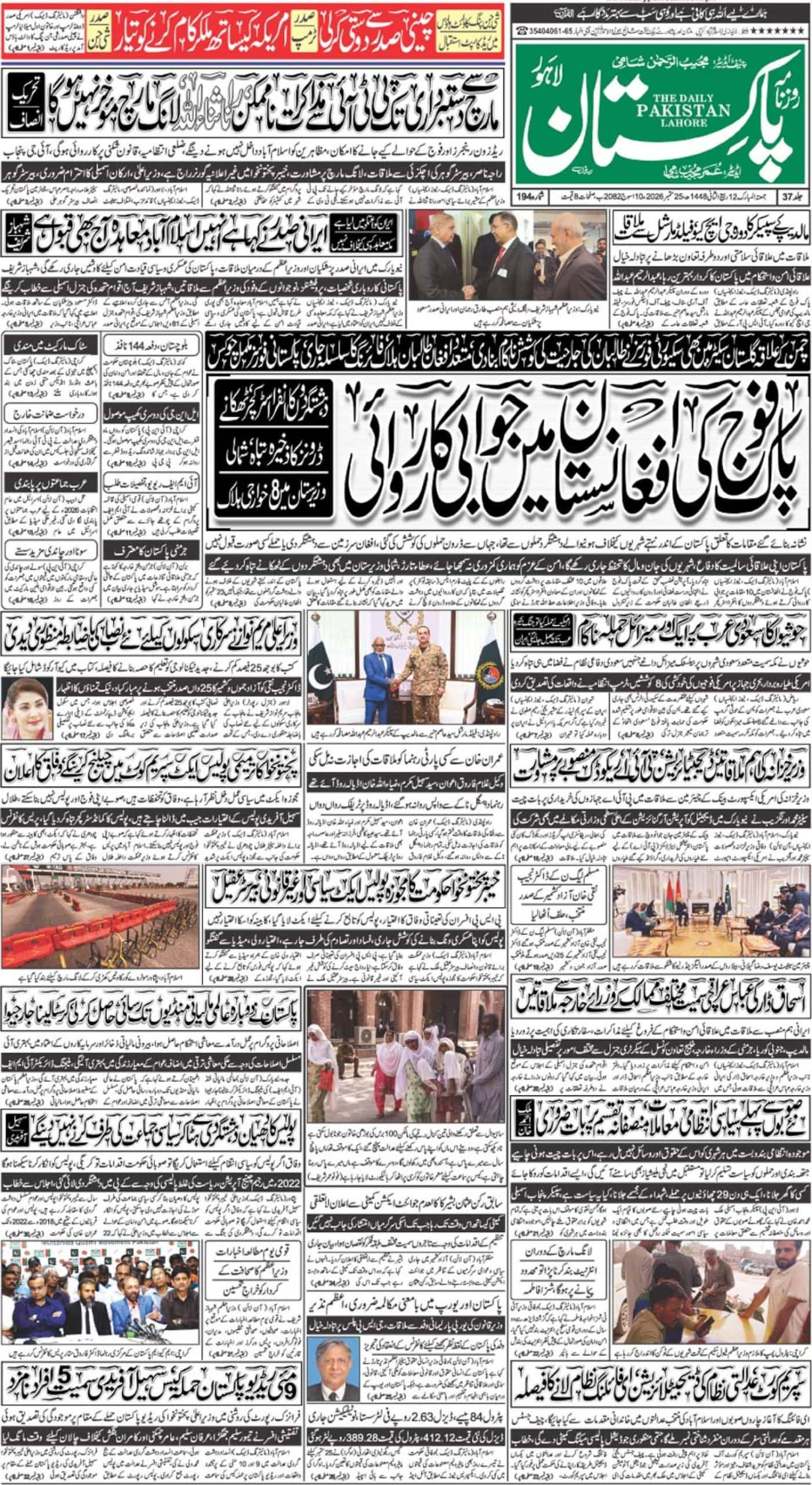
Pakistan’s nuclear capability is also something neither Saudi Arabia nor Turkey possesses, and Pakistan is increasingly being recognized globally as a powerful mediator. Credit for that goes largely to the efforts of FM Asim Munir, whose strong military leadership capabilities and continued diplomatic efforts have helped strengthen Pakistan as a credible, trusted, and increasingly influential regional security partner.
Pakistan is now increasingly regarded beyond the South Asian lens, but as a key strategic stakeholder connecting South Asia, the Gulf, Central Asia, and the wider Muslim world, and his diplomatic engagements with world leaders are visible well beyond official communiqués.
Pakistan stands out as the major player of the alliance, particularly as the Gulf has changed dramatically over the last few years; Iran has become increasingly assertive, regional conflicts from Gaza to the Red Sea have exposed new vulnerabilities, and Saudi Arabia, after decades of depending on Washington for its security, is now clearly diversifying, building multiple security partnerships instead of relying on one superpower, which is the USA alone. In this evolving regional security environment, the Makkah joint agreement represents a significant step towards enhancing regional cooperation and security, while further strengthening Pakistan’s strategic relevance.