
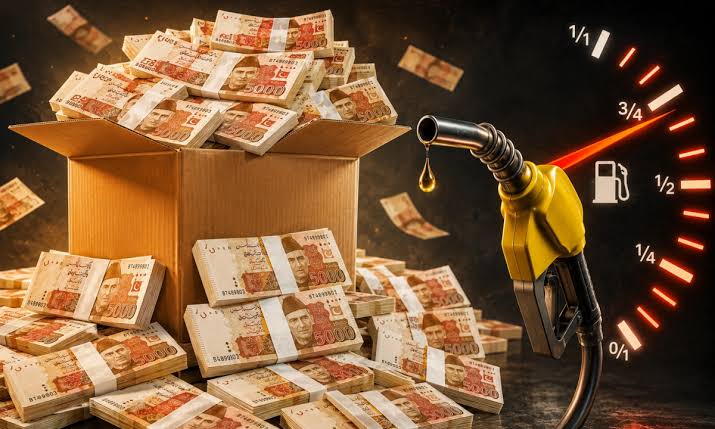
Pakistan’s petroleum levy is said to raise much-needed revenue but at a time of sky high oil prices, rising inflation and mounting debt-servicing costs, the question is whether the levy is still achieving its fiscal purpose, or imposing a larger economic cost.
Why doesn’t the IMF know a good tax from a bad one?
One reason Pakistan may not exit stabilization: Case for cutting the petroleum levy.
Cutting the levy is simple math. Halve one revenue head to contain an expense that can push the country out of stability.
Pakistan’s gross…
— Ibrahim Hasan Murad (@ibrahimhmurad) September 11, 2026
His argument is that Pakistan should halve petroleum levy from Rs80 to Rs40 per litre to cushion the economy from the surge in global oil prices. With Brent crude at around $108 and petrol prices rising from Rs266 to Rs370, higher fuel costs could push inflation up by another 4.5–6.5%, forcing further interest-rate hikes.
Given the government’s Rs59.44 trillion domestic debt and significant private-sector borrowing, even a 1% rate increase could add hundreds of billions of rupees in annual interest costs while weakening businesses and tax revenues.
For the unversed, petroleum levy is generating billions for the government at precisely the moment when it may be costing the economy even more. With Brent crude hovering around $108 a barrel, petrol prices have surged from roughly Rs266 per litre before the latest oil shock to around Rs370, while the government continues to impose an Rs80-per-litre petroleum levy, in addition to a Rs5 Climate Support Levy.
The levy remains one of Islamabad’s most dependable revenue instruments. But economists and policymakers face a more uncomfortable question, How much of that revenue is ultimately being wiped out by higher inflation, higher interest rates and rising debt-servicing costs?
Pakistan’s domestic government debt stood at approximately Rs59.44 trillion in June 2026. At that debt level, even a modest increase in borrowing costs carries a huge fiscal price.
State Bank of Pakistan has already raised its policy rate by 100 basis points in response to the first oil shock. A further 1 percentage-point increase could add roughly Rs150 billion to the government’s quarterly interest bill, depending on the debt’s refinancing and repricing structure.
That potential cost is larger than the government’s monthly petroleum levy revenue of around Rs130 billion. The arithmetic is raising questions over whether Pakistan is protecting a revenue stream that could be contributing to the very inflation and monetary tightening that make its fiscal position more difficult.
Petrol Levy in Pakistan could fall to Rs5–10, Here’s How Govt plans to fill Rs1.5 Trillion Gap
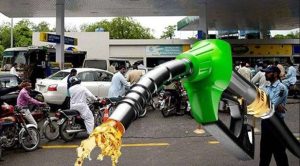
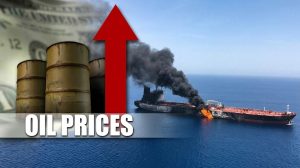
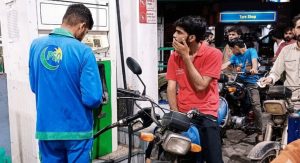
The pressure begins at the petrol pump but does not end there. Brent crude climbed into $100–108 range amid continuing Middle East tensions and supply concerns. Domestic fuel prices have followed, with petrol recently notified at around Rs375.82 per litre and diesel approaching Rs400.
The transmission into inflation has already been visible. Headline inflation jumped from 7.3% in March to around 11.7% in May, with energy costs playing a major role. Although inflation subsequently eased somewhat, it has remained elevated. A prolonged period of high international oil prices could add another 4.5%–6.5% to headline CPI under a high-oil scenario once direct and second-round effects are taken into account.
That creates a potentially dangerous policy chain: Higher oil prices. Higher fuel prices. Higher inflation. Higher interest rates. Higher debt servicing. Slower growth. And the fifth most populated nation enters that cycle carrying a domestic debt stock of almost Rs60 trillion.
Rs150 billion question
The government’s vulnerability is straightforward. A 100-basis-point rise in the effective cost of borrowing on debt stock of roughly Rs59–60 trillion can add around Rs150 billion to quarterly interest costs, depending on the maturity and repricing structure. The central bank has already delivered a 100-basis-point increase.
If another 1 pc point becomes necessary to contain oil-driven inflation, the government could face another roughly Rs150 billion in quarterly financing costs. Meanwhile, petroleum levy collections average around Rs130 billion a month.
That comparison does not prove that cutting the levy would automatically save money. But it does expose a fiscal paradox, the government could be collecting more at the pump while simultaneously paying more to service its debt because of the inflationary consequences of high fuel prices.
The shock is not confined to the government. Private-sector credit is estimated at around Rs11.38 trillion. A 1 pc-point increase in borrowing costs would imply roughly Rs113 billion in additional annual interest expenses, assuming the entire stock were repriced at the higher rate.
For companies already facing higher transportation, energy and imported-input costs, another increase in financing expenses could squeeze margins further.
Investment could weaken, Corporate profits could dent and lower profits ultimately mean less tax revenue for the government. Consumers face a similar squeeze as higher fuel prices and borrowing costs reduce disposable income. The result could be a broader slowdown precisely when Pakistan needs stronger economic activity to move beyond stabilization.
‘IMF’s favourite tax’
This is where the petroleum levy becomes politically and economically contentious. For IMF and Pakistan’s fiscal managers, the levy has an obvious attraction. It is difficult to evade. It produces cash at snap speed, and provides the federal government with a predictable source of revenue.
And unlike many FBR taxes, it does not depend on persuading a narrow and often reluctant formal tax base to declare more income. The government collected around Rs1.43 trillion in petroleum levy revenue during the first 11 months of one recent fiscal period. Full-year FY2025-26 collections were roughly Rs1.55–1.57 trillion, with monthly receipts frequently falling in the Rs100–160 billion range.
FY27 targets remain ambitious, with government estimates in the Rs1.58–1.68 trillion range, while some earlier IMF-linked projections were higher. For government struggling to balance its books, those numbers are difficult to ignore but there is a catch. A tax can be easy to collect and still be economically expensive.
Cutting Rs80 to Rs40
One proposal is simple, cut the petroleum levy from Rs80 to Rs40 per litre. At current consumption levels, that would cost the government approximately Rs65 billion a month in direct revenue. For a government under an IMF programme, that is hardly trivial.
But proponents of a cut argue that the calculation should not end there. Lowering the levy would reduce the final price paid by motorists and transport operators. That could soften the immediate inflationary shock from expensive crude and reduce pressure on the SBP to tighten monetary policy further.
If the measure helped avoid another 100-basis-point rate increase, the potential government interest saving could be around Rs150 billion per quarter. Businesses could also avoid approximately Rs113 billion in annual interest costs associated with a 1 percentage-point increase on Rs11.38 trillion of private-sector credit.
The resulting boost to corporate activity and consumption could, in turn, protect part of the government’s broader tax base. The immediate revenue loss, therefore, would not necessarily equal the ultimate fiscal loss.
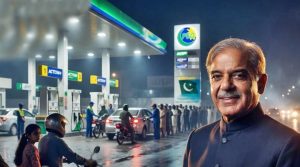
There is a major obstacle. Sharif led govt cannot cut roughly Rs65 billion a month from revenue without explaining how it will replace the money. The petroleum levy is a component of the federal government’s fiscal framework and has been central to meeting primary-balance targets under IMF-supported programmes.
A unilateral cut could create a fiscal hole, undermine programme targets and complicate relations with the Fund. Any substantial reduction would therefore require a credible alternative. That could involve stronger tax enforcement, expansion of the formal tax base, expenditure cuts or other revenue measures.
Tax that may be taxing the economy twice
The key argument against maintaining the levy at its current level is not that taxation is unnecessary. Pakistan desperately needs revenue.
The argument is that the economic cost of collecting a particular tax matters just as much as the amount it raises. The petroleum levy directly increases the cost of fuel during an international oil shock. That higher price feeds into transport, food, manufacturing and services. If the resulting inflation forces the central bank to raise rates, the government pays more to service its enormous debt.
The South Asian nation made progress on several fronts. Debt growth has slowed, the maturity profile has improved and there have been periods of stronger primary balances and better external buffers. But the economy remains highly exposed to energy shocks.
For Pakistan, the debate should no longer be limited to whether the petroleum levy meets its revenue target. The bigger question is whether it remains fiscally efficient when oil is above $100 a barrel, inflation is already above 11%, domestic government debt is nearly Rs60 trillion and monetary policy remains vulnerable to another oil-driven shock.
If cutting the levy by Rs40 costs the government around Rs65 billion a month, but helps prevent hundreds of billions of rupees in additional interest costs, protects private-sector activity and reduces pressure on inflation, the policy may deserve a closer look.