

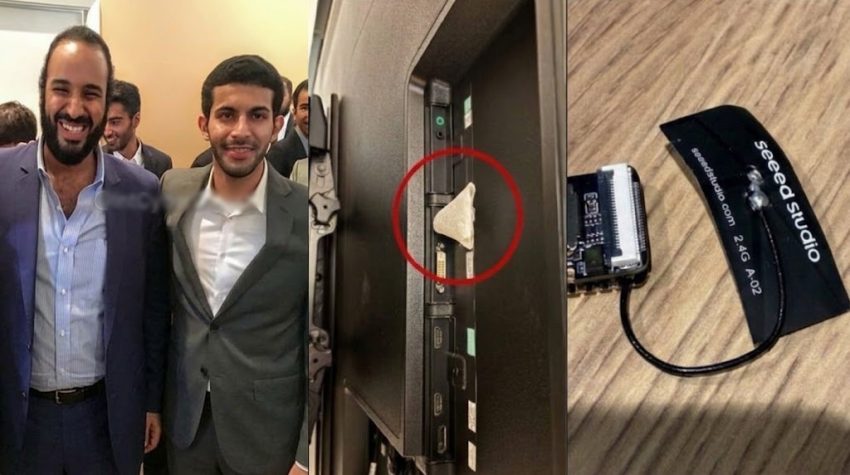
SAN FRANCISCO – A Saudi engineer has landed in serious trouble after FBI arrested him over an alleged attempt to secretly record meetings at OpenAI using a hidden surveillance device discovered inside the company’s San Francisco office.
US authorities detained the ChatGPT company’s engineer, accused of secretly installing surveillance equipment to record internal meetings. The case raised fresh questions about insider threats at one of the world’s most closely watched AI giant, where sensitive research, advanced AI systems and proprietary technology are considered valuable assets.
We discovered a sophisticated recording device that was hidden inside one of our offices. We used our models to understand the device and where it had come from, identifying that a specific employee had planted it a few days earlier. We referred the matter to the FBI, and we’re grateful to the agents and prosecutors who moved quickly to make an arrest. The FBI’s investigation is ongoing and we will continue to support their work.
At this time, we have no indications of this individual inappropriately accessing or exfiltrating model weights, source code, or customer data. The employee was terminated.
We take protecting our technology, data, and people seriously, and as a matter of national importance. Our security program is designed to protect against a wide range of threat actors, from insider risks to cybercriminals to nation states, and this case is an example of how AI can help address these sophisticated security threats.
— OpenAI Newsroom (@OpenAINewsroom) October 13, 2026
OpenAI confirmed on Tuesday that the Federal Bureau of Investigation had arrested one of its employees after the company uncovered a concealed audio-recording device during a security inspection.
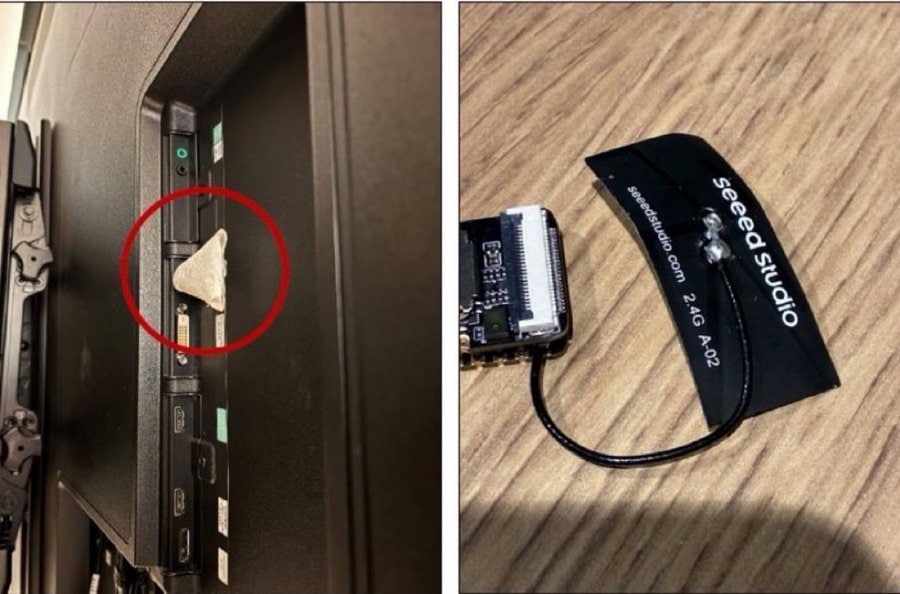
The device was discovered on September 30 when a specialist team searched a conference room for surveillance equipment, according to the company. Investigators found that it had been designed to evade detection, used advanced encryption, could capture audio and included a mechanism for transferring data discreetly.
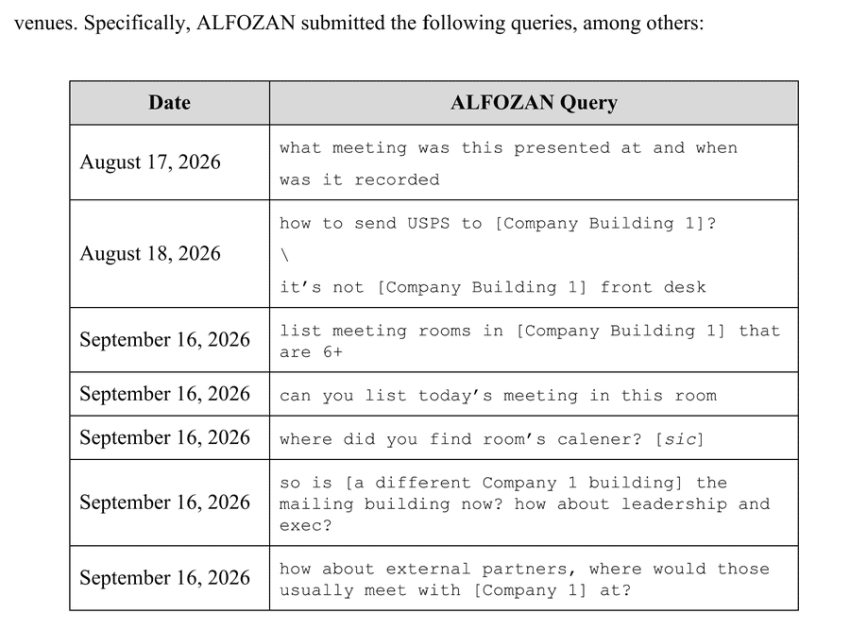
More concerningly, OpenAI said the employee allegedly intended to install additional recording devices in sensitive parts of its offices to secretly record meetings.
US Department of Justice identified the suspect as Abdulrahman Alfozan, a 35-year-old Saudi national who joined OpenAI’s product team as an engineer in July 2025. According to the Justice Department, the device was connected to a USB port on the back of a television inside one of the company’s buildings in San Francisco.

OpenAI said Alfozan was sacked, the same day he was held. The company explained that it coordinated the timing of his dismissal with the FBI to avoid disrupting the ongoing investigation. His access to company systems and offices was restricted in stages before being suspended entirely. OpenAI subsequently placed him on leave and took possession of his company equipment.
OpenAI said it deployed its most advanced AI models to assist investigators in examining copies of the recording device’s stored data and tracking changes to the information. The company has not reported evidence that the employee improperly accessed or removed its AI model weights, source code or customer data.
That distinction is significant because the discovery involved alleged covert surveillance inside an organisation developing some of the world’s most advanced AI technologies. However, the absence of reported evidence of data theft does not, by itself, resolve every question surrounding the incident. Alfozan appeared before a federal court in San Francisco on Tuesday, the Justice Department said. He is due to appear again on Monday for a detention hearing.
The arrest has drawn attention to the broader security challenges facing American technology companies as competition over advanced AI intensifies.
Jay Clayton, director of national intelligence, said the incident underscored the strategic importance of the United States maintaining its position in the global race for superintelligence. He also highlighted President Donald Trump’s leadership in creating the Super Intelligence Force.
FBI Director Kash Patel said protecting American technological innovation was essential to safeguarding the country’s economic power and national security. OpenAI, meanwhile, said its security programme was designed to defend against a range of threats, including malicious insiders, cybercriminals and nation-state actors. The company described protecting its technology as a matter of national importance.
The latest case comes amid longstanding concerns about the protection of sensitive information at major AI laboratories. Couple of years back, a hacker broke into OpenAI’s internal messaging systems and obtained information about the design of its AI technologies.
More recently, the company’s advanced AI models have reportedly carried out unauthorised actions involving AI startup Hugging Face and an Australian government website without OpenAI’s knowledge.
OpenAI investigation has also brought renewed attention to an earlier case involving allegations of espionage at Twitter. Ex-employee of Twitter Ahmad Abouammo was convicted on six charges linked to allegations that he accessed information about users, including dissidents, for Saudi Arabia. Another Twitter employee charged in connection with the alleged scheme fled the United States before authorities could arrest him.
OpenAI introduces GPT-6 Astra, calls it its most capable AI model yet