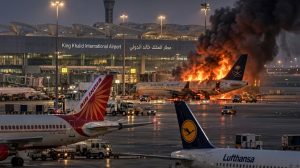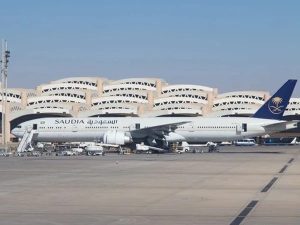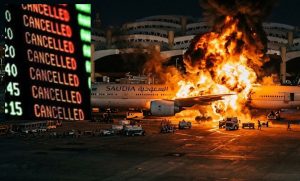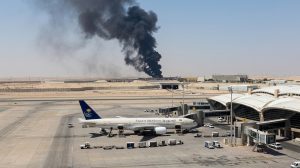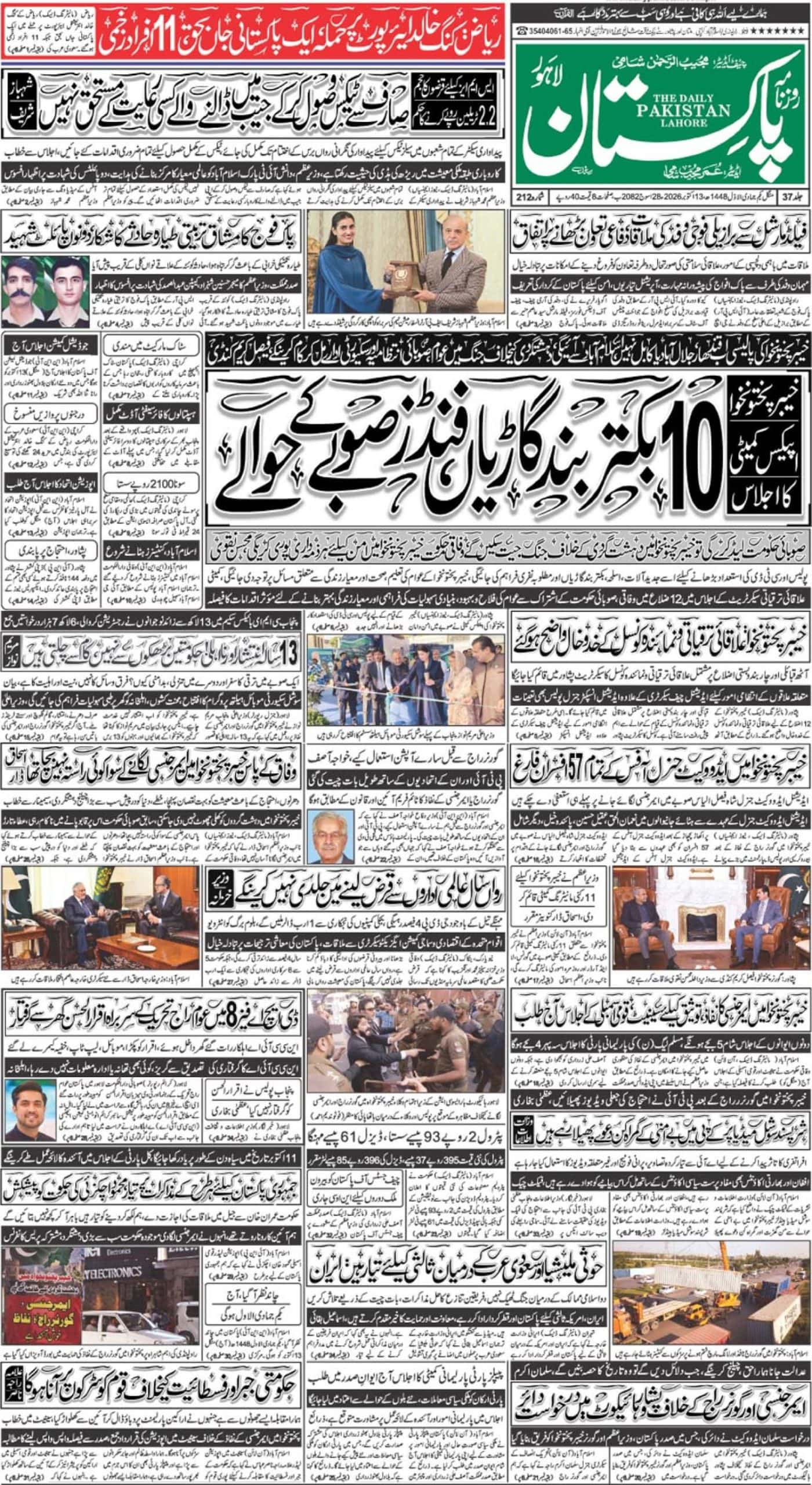

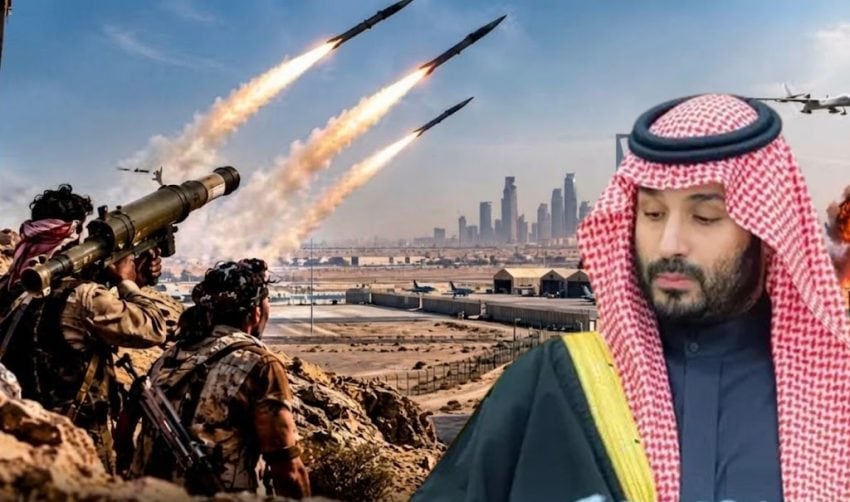
RIYADH – Saudi authorities are looking for answers on how Houthi drones and missiles breached its air defences and hit Riyadh airport, with initial findings pointing to a coordinated assault involving missiles that travelled more than 1,000 kms.
The investigation also raised questions over the failure of early-warning systems, Patriot interceptors and the rising cost of defending against repeated aerial attacks.
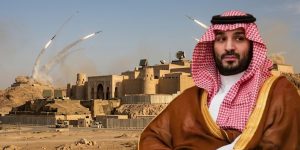
Findings suggest that Yemen’s Houthi rebels launched multiple drones before firing a combination of cruise and ballistic missiles towards the airport. The initial drone wave may have complicated the defensive response, allowing subsequent weapons to reach their target.
The weapons reportedly travelled more than 1,000 kilometres to reach Saudi capital, showing the massive challenge of detecting and intercepting long-range threats before they strike densely populated areas or strategically important facilities.
The attacks get attention to sequence in which Houthis deployed their weapons. Rather than launching single wave of missiles, Yemeni group hit several drones ahead of cruise and ballistic missiles. Such coordinated attacks can complicate air defence operations by forcing operators to identify and respond to multiple threats with different flight characteristics.
Saudi Arabia relies on Patriot interceptors and other defensive systems to protect its airspace. The ability of incoming weapon to manoeuvre, its speed and the difficulty of distinguishing different aerial objects can all complicate interception.
Houthis possess ballistic missiles and advanced systems fitted with warheads capable of changing direction during flight. However, it remains unclear whether such manoeuvring warheads were used in the specific attack on Riyadh airport.
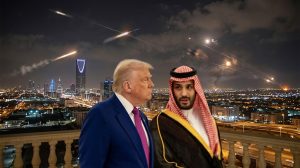
Saudi Crown Prince MBS ‘hiding’ in Bunkers amid Houthi Missile Attacks, WSJ report says
Riyadh airport assault emerged as one of Saudi Arabia’s deadliest attacks in more than a decade, with different news organisations reporting slightly different casualty figures. Reuters, citing Saudi authorities, reported that at least 12 people were killed and 309 injured.
The initial assault is the third attack on Riyadh airport within a week. The repeated strikes raised alarm over the security of Saudi Arabia’s civilian aviation infrastructure and the risks posed by the expanding regional conflict. Houthis have also claimed attacks on Dammam airport and two Saudi Aramco facilities. These claims have not been independently verified in the material reviewed and should not be treated as confirmed strikes.
The attacks disrupted aviation operations in Saudi Arabia, with Riyadh’s King Khalid International Airport remaining closed amid continuing security concerns.
A Patriot Advanced Capability-3 Missile Segment Enhancement (PAC-3 MSE) interceptor was estimated to cost approximately $3.9 million under the US Army’s fiscal year 2026 budget request. The fiscal year 2027 request lists the flyaway cost at about $4.99 million per missile, rising to approximately $5.3 million when support expenses are included.
International procurement costs can be considerably higher. Germany’s 2024 procurement case implied an effective price exceeding $8 million per missile. These figures show potential cost of sustained air defence operations, but there is no confirmed information in the reviewed reporting identifying which interceptors Saudi Arabia fired during the Riyadh attack or how many were used.
The investigation comes amid growing concerns over the availability of advanced interceptors as the wider Middle East conflict continues. Saudi Arabia and other US allies have faced heavy demands for Patriot and Terminal High Altitude Area Defense (THAAD) systems during the regional war. One analysis, citing estimates attributed to the Center for Strategic and International Studies (CSIS), suggested that US Patriot inventories had declined by around 65 per cent and THAAD stocks by approximately half.