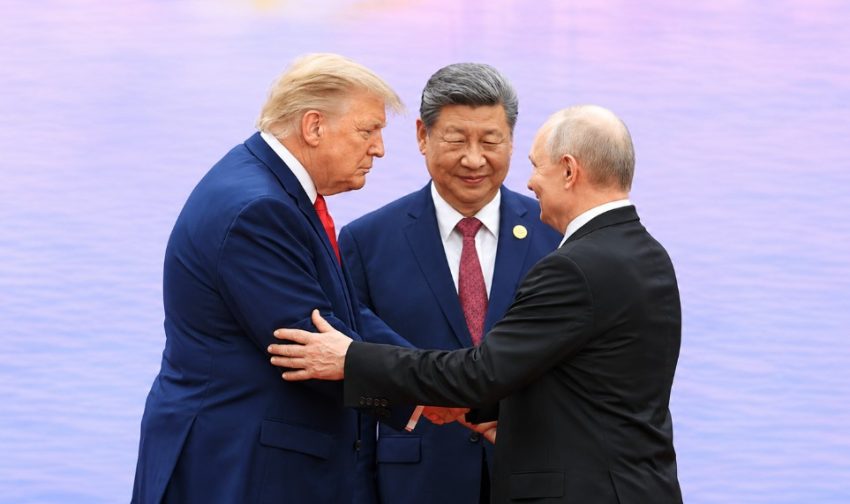
SHENZHEN – Chinese President Xi Jinping remains in global headlines for hosting the first-ever trilateral summit involving China, Russia and the US and he sees this meeting as of extraordinary importance.
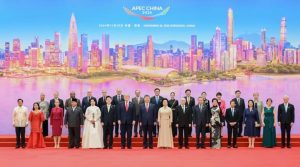
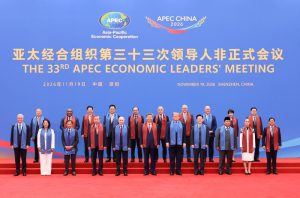
The unprecedented trilateral meeting took place at Kylin Villa in Shenzhen, on the sidelines of the Asia-Pacific Economic Cooperation (APEC) Summit. The gathering is first face-to-face meeting involving sitting presidents of Beijing, Russia and Washington, calling it an event of groundbreaking significance.
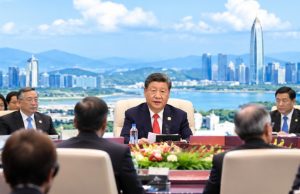
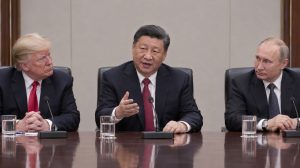
Xi chaired the high-level discussions, with Putin seated to his right and Trump to his left. The talks lasted approximately 80 to 90 minutes, beginning with public remarks before the leaders moved behind closed doors to discuss international security, economic stability and the future of relations among the three countries.
Xi Jinping pushes for Breaking Technology Barriers across Asia-Pacific at APEC Summit
The meeting was preceded by separate diplomatic engagements, with Putin reportedly arriving before the American president and holding individual talks with Xi. Trump was personally received by the Chinese leader upon his arrival, a gesture described as a notable departure from customary protocol.
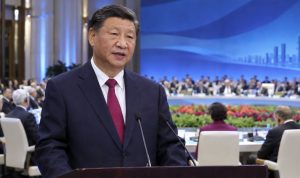
Xi delivered a strong appeal for cooperation, warning that escalating rivalries between powerful nations could have serious consequences for international peace. Chinese president stressed that when major powers maintain constructive relations, the world benefits from stability, but when they enter into confrontation, international disorder becomes increasingly difficult to prevent.
He said cooperation between China, Russia and the United States should not be regarded merely as a diplomatic option, but as a responsibility arising from their influence over global affairs. Xi also referred to the three countries’ historical roles in the outcome of World War II, urging them to uphold the international system established after the conflict and defend the fundamental principles of the United Nations Charter.
Calling for a new approach to managing relations among powerful states, he advocated mutual respect, peaceful coexistence, meaningful dialogue and cooperation based on shared interests. Chinese leader challenged the argument that conflict between established and rising powers is inevitable. Rejecting the notion of the so-called Thucydides Trap, Xi maintained that major powers could become partners rather than permanent rivals if they demonstrated political determination and a willingness to resolve differences peacefully.
China puts $20 Million behind New APEC Push on Tech, Data and Clean Energy
The document called for continued negotiations to reduce nuclear risks, prevent the proliferation of nuclear weapons and strengthen international mechanisms intended to avoid catastrophic military confrontation.
The three countries supported increasing the production and supply of refined petroleum products to help strengthen international energy markets and reduce the risk of supply disruptions. Such cooperation could carry implications for economies heavily dependent on imported fuels, particularly during periods of uncertainty in global oil markets.