
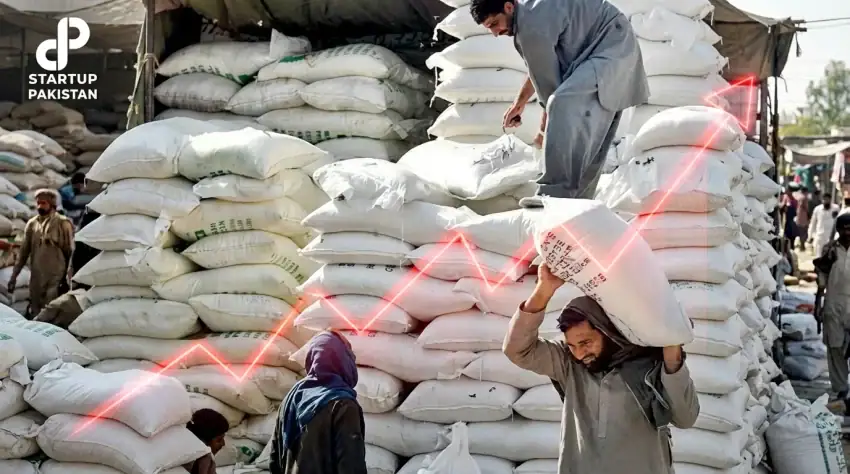
ISLAMABAD – Price of several commodities including flour are becoming increasingly difficult to afford and thats when Pakistanis are bearing brunt of fuel prices and soaring utility bills. Despite government interventions and wheat imports, prices continue to climb, and now a 20kg bag reached Rs3,800 in parts of Pakistan.
For millions already battling rising living costs, even putting bread on the table is turning into struggle. Hyderabad tops the list of cities with the highest flour prices, while Peshawar, Islamabad and Rawalpindi also face soaring costs despite government intervention and wheat imports.
The rising cost of flour added to the financial woes of households across Pakistan, with the price of a 20-kilogram bag climbing to an alarming Rs3,800 despite government efforts to control the market and the import of wheat.
Latest figures shared by Pakistan Bureau of Statistics shows Hyderabad emerged as most expensive city for flour consumers, with prices reaching the highest level recorded nationwide.
Peshawar follows closely, where a 20kg bag is selling for Rs3,750. Consumers in Rawalpindi and Islamabad are paying Rs3,733 for the same quantity, reflecting the mounting pressure on household budgets. The situation is equally concerning in other parts of the country. Flour is being sold at Rs3,600 per 20kg bag in Karachi, Bannu and Quetta, while prices in Larkana have reached Rs3,560.
In Punjab, Gujranwala, Sialkot and Lahore have also reported steep prices, with a 20kg bag costing Rs3,533 in each of these cities. The persistent surge raised serious questions about the effectiveness of government measures, particularly as wheat imports were expected to help improve supply and bring prices under control.
Flour prices soar in Punjab as open-market wheat rates climb
With flour being a staple food for millions of Pakistani households, the continued price surge is intensifying concerns over food affordability and the growing cost of living. Citizens are looking to the government to take urgent and practical steps to regulate flour prices, ensure an adequate supply of wheat and provide relief to consumers struggling with rising food expenses.