
ISLAMABAD – Amid growing trade ties and mounting reform expectations, EU foreign policy chief Kaja Kallas arrived in Islamabad for visit carrying major diplomatic weight. Her meetings with Pakistan’s top civilian and military leadership are expected to focus on everything from economic cooperation and regional stability to the future of Pakistan’s valuable GSP+ trade status.
Kallas landed in Pakistan on for high-profile visit that focuses on growing importance of EU-Pakistan relations amid ongoing discussions on trade privileges, governance reforms, and regional cooperation.
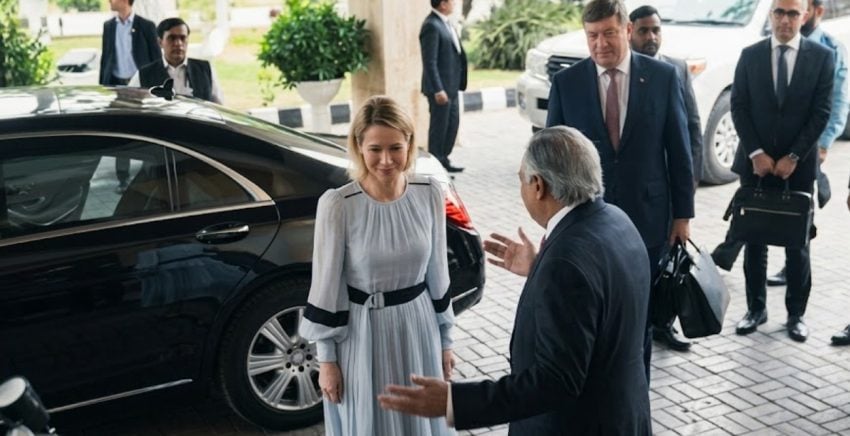
Welcomed by Deputy Prime Minister and Foreign Minister Ishaq Dar at Ministry of Foreign Affairs, Kallas is leading EU delegation at 8th EU-Pakistan Strategic Dialogue.
The visit comes at a time for Pakistan, as South Asian nation seeks to strengthen economic and diplomatic ties with one of its largest trading partners. Kallas, who also serves as Vice-President of the European Commission and the EU’s High Representative for Foreign Affairs and Security Policy, is co-chairing the dialogue alongside Dar.
Pakistan’s Foreign Office described the visit as a reflection of the growing momentum in bilateral relations and a shared commitment to expanding cooperation across multiple sectors. The EU and Pakistan maintain a broad partnership based on trade, political engagement, development cooperation, and support for multilateral institutions.
Beyond the strategic dialogue, Kallas is scheduled to hold meetings with President Asif Ali Zardari, Prime Minister Shehbaz Sharif, and Chief of Army Staff Field Marshal Asim Munir, highlighting the significance the European Union attaches to its engagement with Pakistan’s civilian and military leadership.
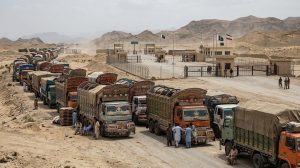
At the heart of the discussions is Pakistan’s access to the European market through the Generalised Scheme of Preferences Plus (GSP+), a trade facility that has provided Pakistani exporters with duty-free or reduced-duty access to the EU since 2014. The programme, extended until 2027 by the European Parliament, remains a vital pillar of Pakistan’s export-driven economic strategy.
However, the benefits of GSP+ come with obligations. Participating countries must comply with 27 international conventions covering human rights, labour standards, environmental protection, and good governance. European officials have repeatedly stressed that continued access to the scheme depends on sustained progress in implementing these commitments.
The issue remains sensitive. Last year, EU Ambassador Raimundas Karoblis publicly urged Islamabad to make greater progress on concerns including blasphemy-related legislation, enforced disappearances, and the protection of minority rights. While EU acknowledged certain reforms undertaken by Pakistan in December 2025, it also stressed that deeper and longer-term changes remain necessary.
Observers said the outcome of the strategic dialogue could have important implications for Pakistan’s economic future, particularly as the country seeks to maintain preferential trade access to one of its most lucrative export destinations.