It is hard to imagine the pain of a parent standing in front of cameras, holding up a picture of a child they believe has disappeared. Behind that one photograph are nights without sleep, unanswered questions, fear that eats away at the family, and a small hope that maybe, if the world sees the face, someone will help bring that child home. Now imagine the cruelty of that moment if the people who brought that parent before the cameras already knew the truth: that the child was alive, armed, and sitting in a training camp across the border in Afghanistan. They knew, but let the family plead anyway. That press conference was never really about finding a missing child. It was about using a family’s grief to accuse the state of a disappearance that had not happened.
This is not a random example. It is the method the Balochistan Liberation Army has used for years, and it has done so through the civilian cover of the Baloch Yakjehti Committee.
Start with the violence, because the numbers tell their own story. The Global Terrorism Index 2025 ranked Pakistan second in the world for terrorist activity. In 2024 alone, more than a thousand attacks were recorded, with the BLA and TTP responsible for the overwhelming majority. Balochistan saw 254 attacks in 2025, leaving 419 people dead and 607 injured. The previous year, 322 people were killed. These are not the actions of a movement trying to protect Baloch people. These are the numbers of an organisation tearing through the very province it claims to speak for.
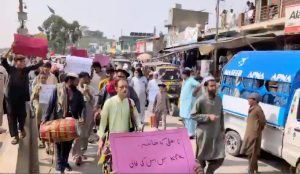
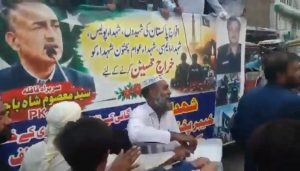
So where does the BYC fit in? When it first emerged around 2020, it presented itself as a peaceful civic platform, a place where families of missing persons could gather, grieve, and demand answers. Its leadership received international attention. There were nominations, magazine features, human rights platforms, and applause from people who saw only the surface. But behind that carefully built image, something else was happening. Protest camps were not just spaces of solidarity. They became places where vulnerable young people could be watched, identified, influenced, and slowly pushed toward militancy. The sit-ins were not always just sit-ins. In many cases, they worked like recruitment grounds.
Take the case of Tayyab Baloch. His family was guided through the process by BYC itself: how to file a missing person complaint, how to speak to the media, what words to use, and how to frame the case. For weeks, an online campaign presented his disappearance as another state crime. But the reality was different. Tayyab had voluntarily gone to a BLA camp in Bela in August 2024 to train as a suicide bomber. The campaign continued anyway. The people managing the narrative stayed silent. His family kept appearing in public as if they were still searching for him.
Then there is Sohail Lango. BYC records continued to list him as missing through 2024. His photographs were shared online, including images showing him alongside BYC leadership. He was described as a trusted associate. But when security forces later killed him during an operation against a BLA hideout in Qalat in July 2025, the same networks kept calling him missing for months. Not because they did not know. Because the lie still served a purpose.
The damage caused by this kind of manipulation has now reached a point Balochistan had never seen before. Female suicide bombing was not part of the province’s history before BYC’s rise. Then, in June 2023, Summiya Qalandarani blew herself up in Turbat. In August 2024, a female operative appeared in the Bela attack. By January 2026, at least two more women, Hawa Baloch and Asifa Mengal, were involved in coordinated attacks across Quetta, Gwadar, and Panjgur. In a video recorded before Hawa’s attack, she is seen laughing and saying that war is fun and Pakistan cannot stop them. That is not the voice of ordinary political anger. It sounds like someone who has been worked on, isolated, shaped, and pushed until violence feels normal. That is what long-term psychological manipulation looks like when it reaches its final stage.
In December 2025, two women, Hani Baloch and Khair-un-Nisa, were detained after intelligence pointed to a handler named Farid, also known as Zagreen, who was allegedly preparing a female bomber. Within five days, BYC launched a missing persons campaign for them. There was no mention that the women had already been stopped. No mention of the planned attack. Just the same familiar template: two names, two families, and another accusation aimed at the state.
This raises the question that cuts through the whole “ehsaas-e-mehroomi” argument. BLA sympathisers often say the violence is the result of deprivation, neglect, and anger. They argue that Balochistan has been ignored, its resources taken, its youth left hopeless, and that this despair is what pushes people toward armed struggle.
But despair does not build a logistics network. Frustration does not buy M4 carbines, M16 rifles, night-vision equipment, or encrypted communication systems. Yet these are the weapons Pakistani security forces have recovered from BLA fighters, many carrying US Government markings and linked to arms left behind after the 2021 American withdrawal from Afghanistan. In December 2024, border officials caught a vehicle coming from Afghanistan with weapons hidden inside sacks of onions. Since 2021, terrorist attacks along Pakistan’s western border have risen sharply. Pakistan’s Ministry of Foreign Affairs has named the BLA as one of the main beneficiaries of this flow of weapons. Grievance alone does not create procurement routes. Proxy networks do.
Then there is India’s role. Pakistan’s representative at the United Nations said in May 2025 that India was actively financing the BLA and the Majeed Brigade to attack Pakistani civilians. This accusation is not new. Kulbhushan Jadhav, a former Indian Navy officer, was arrested in Balochistan in 2016 while operating under a false identity, and Pakistani authorities linked him to RAW’s activities in the province. Senior BLA figures have reportedly lived in India, received support there, and benefited from political space. There have also been efforts to create a Baloch government-in-exile on Indian soil. At the Tianjin SCO Summit in 2025, the propaganda network built around the BLA-BYC narrative, with Indian backing, was rejected on a multilateral platform for the first time, even though much of the Western press barely covered it.
This is not simply mehroomi. This is fitna-e-Hindustan. It is a calculated effort to keep Balochistan unstable, to block CPEC, and to stop the kind of development that could bring ports, roads, industrial zones, energy projects, and jobs to the province. India does not want a functioning CPEC. The BLA does not want a developed Balochistan. Their interests meet at the same point, and the violence follows that logic. That is why infrastructure is repeatedly targeted. That is why Gwadar remains under attack. No one destroys their own future this consistently unless someone else benefits from the destruction.
The BYC gave this entire operation a human face. It turned grieving families into symbols, protest camps into pipelines, and real pain into political ammunition. It took the suffering of ordinary people and fed it into a machine designed to produce two things at the same time: recruits for the BLA and pressure against the Pakistani state. For a while, it worked. The awards came. The interviews came. The international sympathy came. And much of the world looked away from the bodies piling up in Balochistan.
But the cases are now too many to ignore. The pattern is too clear. The people of Balochistan are not the BLA. They are the people the BLA exploits, frightens, recruits, and kills. And those who applauded this machinery without asking hard questions owe Balochistan more than silence. They owe it an honest reckoning.