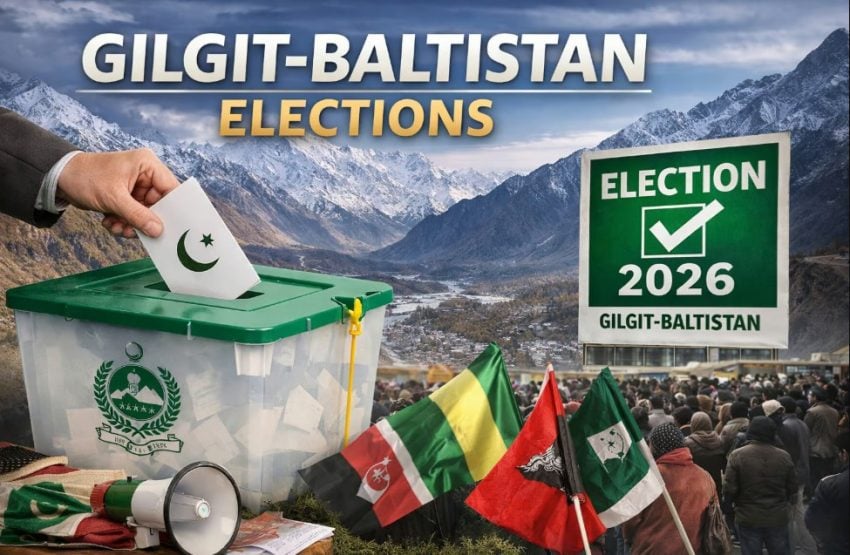
33-member Gilgit-Baltistan Assembly is up for grabs, including 24 general seats, 6 reserved seats for women, and 3 technocrat seats. A party or coalition will need at least 17 seats to secure a simple majority and form the next government, setting the stage for a tightly contested race.
The electoral field is crowded, with major political parties and a large number of independents in the race. The Pakistan Peoples Party (PPP) has fielded 23 candidates, closely followed by the Pakistan Muslim League-Nawaz (PML-N) with 22. Other key players include the Istehkam-e-Pakistan Party with 15 candidates, Pakistan Muslim League with 11, and JUI-F with 9 contenders.
Smaller but influential political forces are also in the contest, including the Majlis Wahdat-e-Muslimeen with 7 candidates, while Jamaat-e-Islami and MQM have entered the race with 6 candidates each. However, the real wildcard remains the 266 independent candidates, who could play a decisive role in shaping the final outcome. Seven women candidates are also part of the electoral contest.
958,780 voters in total are expected to decide the fate of the region’s political future. The voter base includes 503,772 men and 454,708 women, highlighting a strong public mandate awaiting activation at the ballot box.
The competition spans diverse geography, with Diamer and Skardu emerging as politically crucial battlegrounds, each carrying four constituencies. Gilgit, Ghizer, and Ghanche follow with three seats each, while Nagar and Astore have two. The smaller districts of Hunza, Shigar, and Kharmang each hold one constituency but remain politically significant in tightly fought contests.
Security has been placed on high alert across the region. Authorities have established 1,368 polling stations, including 480 declared highly sensitive, 350 sensitive, and 457 normal. Around 15,000 police personnel have been deployed to maintain order, while Section 144 remains enforced in Diamer to prevent any untoward incidents.
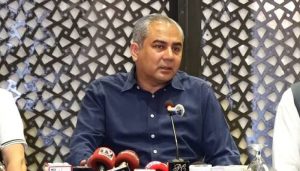
Chief Election Commissioner Raja Shahbaz Khan has urged voters to come out in large numbers, stressing that peaceful participation is key to strengthening democracy. He said all arrangements have been finalized for free, fair, and transparent elections, and appealed to citizens to cooperate with polling staff and security agencies to ensure a smooth electoral process.
With high voter turnout expected and political stakes running high, today’s polling is being seen as a decisive moment that could reshape the political landscape of Gilgit-Baltistan.
More updates to follow…