LAHORE — Pakistan has intensified nationwide flood preparedness efforts under its National Adaptation Plan (NAP) as the country braces for the upcoming Monsoon 2026 season amid growing climate threats and recurring extreme weather events.
Ministry of Climate Change and Environmental Coordination (MoCC&EC), with support from the United Nations Environment Programme (UNEP), has launched a coordinated federal-provincial implementation process aimed at strengthening flood resilience and improving disaster preparedness across the country.
The initiative follows directions from the Prime Minister’s Office and operationalizes the Prime Minister’s Monsoon 2026 Strategic Plan, described by officials as Pakistan’s most comprehensive flood mitigation framework to date.
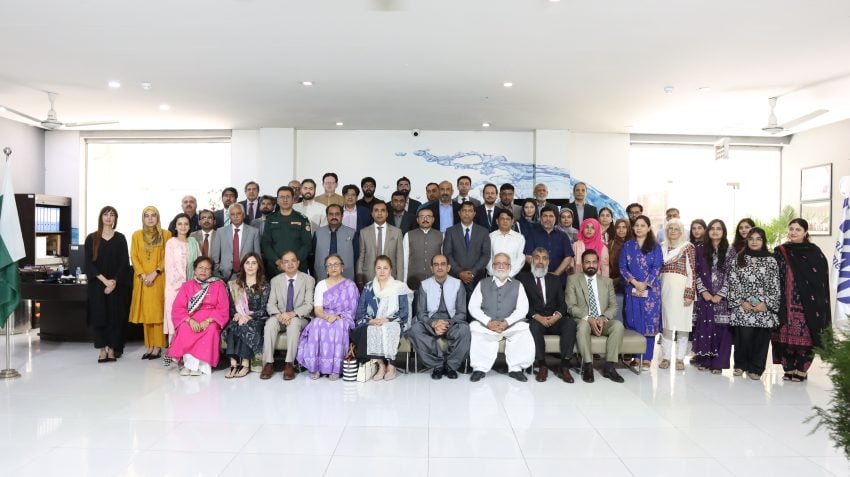
The first provincial consultation workshop was held in Lahore, led by the International Water Management Institute (IWMI) in collaboration with Hisaar Foundation under the NAP framework. More than 60 senior government officials, technical experts, development partners, and policymakers participated in the consultation.
The workshop focused on translating national flood resilience priorities into actionable provincial interventions, particularly in Punjab, which has provisionally allocated PKR 180 billion for priority flood mitigation measures.
Pakistan’s broader flood preparedness framework identifies five major flood risks like Riverine flooding, Urban flooding, Hill torrents, Glacial lake outburst floods (GLOFs), and Coastal surges.
A preliminary national investment envelope of Rs1.17 trillion has been proposed for short-, medium-, and long-term interventions.
Pakistan has experienced devastating floods over the past decade. Since 2010, floods have claimed more than 4,500 lives, injured nearly 18,000 people, and displaced close to 40 million people nationwide. In 2022 alone, flood-related losses reached approximately 9.3 percent of the country’s GDP.
Officials emphasized the urgent need to move away from reactive emergency responses toward anticipatory and science-based flood management systems.
“The Prime Minister’s Monsoon 2026 Strategic Plan is not just a document, it is a commitment to the people of Pakistan,” said Ms. Aisha Humaira Moriani, Federal Secretary, Ministry of Climate Change and Environmental Coordination.
“Through the National Adaptation Plan, we now have a unified framework to guide implementation. These provincial consultations are critical to ensuring that resources translate into timely, on-ground action through clear institutional roles and coordinated decision-making,” she added.
Participants identified immediate rehabilitation of flood infrastructure as the top priority before the onset of monsoon rains.
Urgent measures highlighted during the consultation include:
- Repair and strengthening of embankments
- Rehabilitation of barrages and drainage systems
- Restoration of vulnerable breach points
- Desilting of rivers and canals
- Strengthening urban drainage networks
Experts also called for reducing reliance on designated breaching sections and increasing the capacity of barrages and bridges to safely pass floodwaters.
Critical bottlenecks identified included Shahdara Railway Bridge, Lahore and GT Road Bridge, Lahore.
The consultation strongly advocated for improved institutional coordination among the Pakistan Meteorological Department (PMD), Provincial Disaster Management Authority (PDMA), Irrigation Department, WAPDA, and local governments.
Participants emphasized the importance of Real-time flood forecasting, Predictive hydrological modelling, GIS-based monitoring systems, AI-assisted forecasting tools, Satellite data integration, and Improved data-sharing mechanisms.
Completion of Pakistan’s national telemetry network and establishment of a unified national flood data platform were also identified as urgent priorities to improve early warning systems and forecast lead times.
“Pakistan’s flood challenge is not only about water, but also about governance, maintenance, and data,” said Dr. Mohsin Hafeez, Global Director for Water, Food & Ecosystems at IWMI. “The solutions are known and achievable. What is required now is timely and coordinated implementation across institutions,” he said.
Experts noted that urban flooding in Pakistan is largely driven by governance failures, including poor drainage maintenance, encroachments on waterways, and fragmented institutional responsibilities.
Immediate recommendations included Removal of encroachments from natural waterways, Routine desilting operations, Strengthening stormwater drainage infrastructure, Improved urban planning and land-use enforcement.
Long-term recommendations included stricter floodplain regulations and integrated basin-wide flood management approaches.
The consultation also emphasized nature-based solutions and watershed management, particularly in high-risk hill torrent zones.
Recommended interventions included Construction of check dams, Afforestation initiatives, Water retention structures, Watershed rehabilitation projects, Community-based early warning systems.
Participants stressed that ensuring continuity of essential services — including water supply, sanitation, healthcare, and social protection, must become a core component of disaster preparedness planning.
Punjab’s consultation marks the first in a nationwide series of provincial workshops, with similar consultations planned in Khyber Pakhtunkhwa, Sindh, and Balochistan.
The findings from all provincial consultations will contribute to a consolidated national implementation roadmap under the National Adaptation Plan framework.
“Punjab’s workshop marks the beginning of a coordinated national effort to strengthen flood preparedness,” said Muhammad Kazim Pirzada, Minister of Irrigation, Government of Punjab.
“By aligning provincial actions with the national framework, we are better positioned to reduce risks and protect communities ahead of Monsoon 2026,” he added.
Stakeholders warned that with only weeks remaining before monsoon rains begin, the window for action is narrowing rapidly. However, they stressed that timely, coordinated, and evidence-based interventions could significantly reduce flood risks and protect vulnerable communities across Pakistan.