
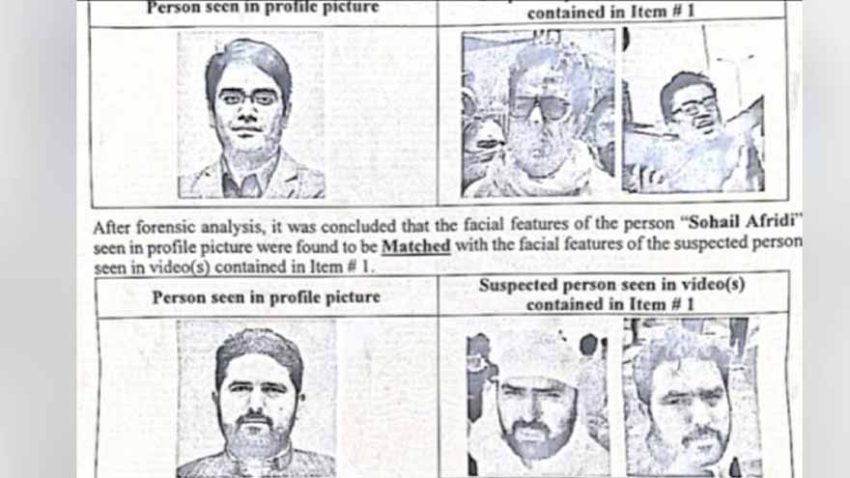
ISLAMABAD – A major development emerged in investigation into May 9 incidents in Peshawar, as Punjab Forensic Science Laboratory (PFSL) completed detailed forensic verification of video footage linked to the unrest, confirming the involvement of several high-profile political figures.
According to the forensic report, the presence of Khyber Pakhtunkhwa Chief Minister Sohail Afridi, along with Kamran Bangash, Taimur Jhagra, and Irfan Saleem, has been verified in videos connected to the May 9 events. The analysis was conducted at the request of Peshawar Police, who submitted audio-visual material for expert examination.
The footage was provided by Sharqi Police Station, Peshawar, in the form of USB drive containing 16 separate videos. PFSL experts conducted a frame-by-frame analysis of each clip. While several videos showed no signs of tampering, others revealed visual manipulation, including the addition of individuals and text overlays.
Crucially, the forensic team detected evidence of video splicing in two clips featuring Sohail Afridi and Irfan Saleem. To confirm identities, PFSL compared Sohail Afridi’s official profile photograph with the individual visible in the May 9 footage, concluding that both images belonged to the same person.
A similar facial-matching process confirmed Irfan Saleem’s presence in the videos. The report also verified that Kamran Bangash’s profile image matched the individual seen in the footage, while a clear and conclusive match was established between Taimur Jhagra’s profile photograph and the person appearing in the analyzed videos.
PFSL emphasized that the investigation was strictly limited to visual analysis, with no assessment of audio content. The forensic examination was carried out over a five-day period, from December 19 to December 23, 2025.
The highly anticipated forensic report was sought by the Anti-Terrorism Court in connection with the Radio Pakistan attack case, after Peshawar Police forwarded the video evidence for independent verification—marking a significant turning point in the high-profile investigation.