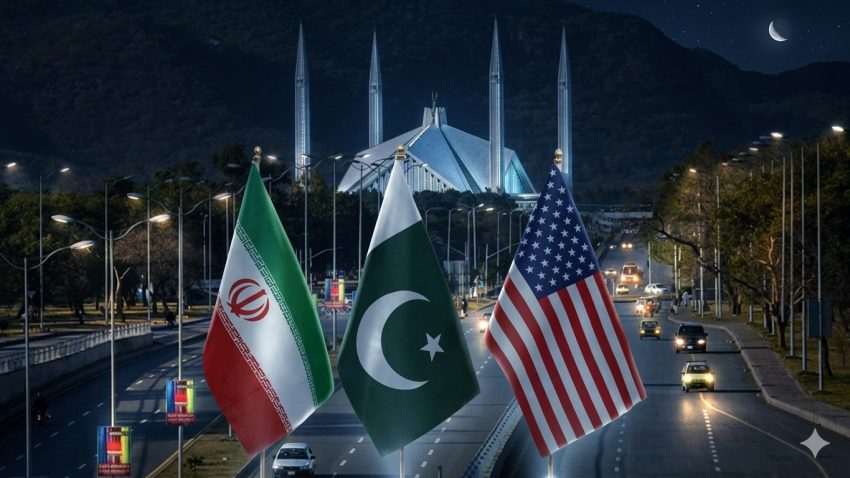
The high-level talks between US and Iran entered their second day with no major breakthrough. The direct negotiations now turned into a tense diplomatic standoff, with both sides locked behind closed doors with apparently no clarity on progress.
Pakistani journalists are not allowed to share updates, while officials are refusing to comment on timelines or outcomes, fueling speculation that the negotiations are entering a critical and potentially decisive phase.
On US side, the delegation is reported to include JD Vance, Steve Witkoff, and Jared Kushner. Representing Iran are Abbas Araghchi, Mohammad Bagher Ghalibaf, and Ali Bagheri Kani. According to Iranian sources, the atmosphere inside the talks has turned increasingly tense, with warnings that this may be a “last chance” moment to secure even a basic framework agreement.
At heart of the deadlock is Strait of Hormuz, which is bone of contention between two sides. United States is reportedly demanding full and unrestricted passage for global shipping, while Tehran is pushing for expanded authority over the waterway, including the ability to impose transit fees on vessels passing through it. Despite limited flexibility from Iranian negotiators, Washington’s position is being described as firm and uncompromising.
Reports claim that at least three Iranian aircraft landed at Nur Khan Airbase in Rawalpindi around midnight. The aircraft are believed to be operated by Pouya Air, an airline linked to Iran’s Islamic Revolutionary Guard Corps and associated with the Quds Force and aerospace operations.
Their sudden and unexplained arrival further intense speculation about whether additional technical delegations or reinforcements are being quietly moved in as the talks reach a more sensitive and technical stage. However, the exact purpose of the flights remains unconfirmed.
Strait of Hormuz itself remains the epicenter of global economic anxiety, with nearly one-fifth of the world’s oil and liquefied natural gas passing through the narrow waterway. Any disruption, analysts warn, could send shockwaves through global energy markets, fueling inflation and slowing economic growth worldwide.
The discussions have been direct engagements between Washington and Tehran in decades. Sources say both sides have been exchanging written proposals alongside face-to-face negotiations, signaling a structured but deeply tense diplomatic process unfolding behind closed doors.
US Vice President JD Vance arrives in Islamabad for ceasefire talks with Iran