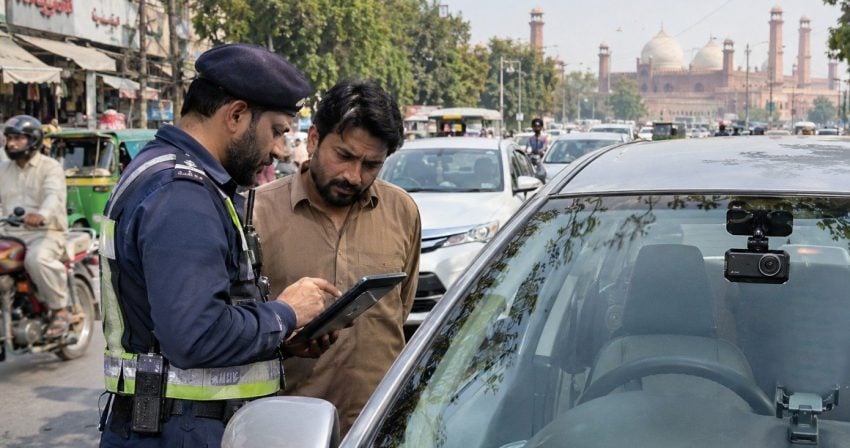
LAHORE – Lahore’s booming online transport industry gets new directives from Lahore police over uncovered criminal records linked to more than 2,000 commercial vehicle drivers, prompting authorities to order stricter screening, mandatory surveillance cameras, GPS tracking devices and emergency panic buttons across ride-hailing services.
The recent findings raised fresh questions about passenger safety in a city where more than 100,000 motorcycles, rickshaws and cars are working as Online Taxis.
Lahore Traffic Police has warned that drivers with serious criminal histories will be barred from operating online cabs, while companies refusing to meet the new security requirements could face strict enforcement action. The key revelation emerged from an ongoing background verification campaign conducted by Lahore Traffic Police.
Authorities looked into criminal histories of around 10,000 commercial vehicle drivers. It also identified 2,050 individuals with criminal records, collectively linked to around 3,700 registered criminal cases.
Online cab driver caught Masturbating during Ride with Female Passenger; Viral video here
More than one in five drivers screened had a recorded criminal history, showing scale of the challenge facing authorities. However, the figures do not establish that all those identified were convicted or involved in serious offences. The disclosures have intensified calls for stricter driver registration procedures and greater accountability among companies operating online transportation platforms.
Operators were directed to provide complete driver records to traffic police, enabling authorities to examine their backgrounds before determining their eligibility to provide commercial transport services. CTO also instructed companies to equip their vehicles with dashboard cameras and advanced location-tracking systems.
The cameras are expected to help deter criminal activities and provide evidence during investigations into accidents, disputes and other incidents involving passengers or drivers. GPS technology, meanwhile, is intended to improve vehicle monitoring and enable more effective tracking of journeys.
The police chief made it clear that safeguarding citizens and their property must take precedence over commercial considerations. Companies failing to adopt the prescribed security arrangements have been warned of strict action, although officials have not specified a final installation deadline or detailed penalties.
Online Taxi Driver goes missing during Lahore-to-Gujranwala Ride
Ride-hailing operators have been told to ensure the earliest possible installation of QR-based panic buttons in their vehicles, bringing more of Lahore’s online transport network under the provincial government’s digital safety framework. The system is designed to provide passengers with a direct emergency communication mechanism in potentially dangerous situations.
Passengers can scan the code using their smartphones to access vehicle information and, through supported features, report emergencies or transmit location and vehicle details to the police and Safe Cities authorities.
With over 100,000 motorcycles, rickshaws and cars connected to online ride-hailing operations in Lahore, authorities face the task of ensuring that a vast and diverse transportation network follows consistent security standards.
Companies may need to invest in surveillance hardware, GPS equipment, installation procedures and ongoing maintenance while maintaining accurate records of their drivers. Yet the real test will come during implementation, when app based taxi companies must show that the required equipment is functional, driver records are properly verified and emergency alerts can lead to timely intervention.