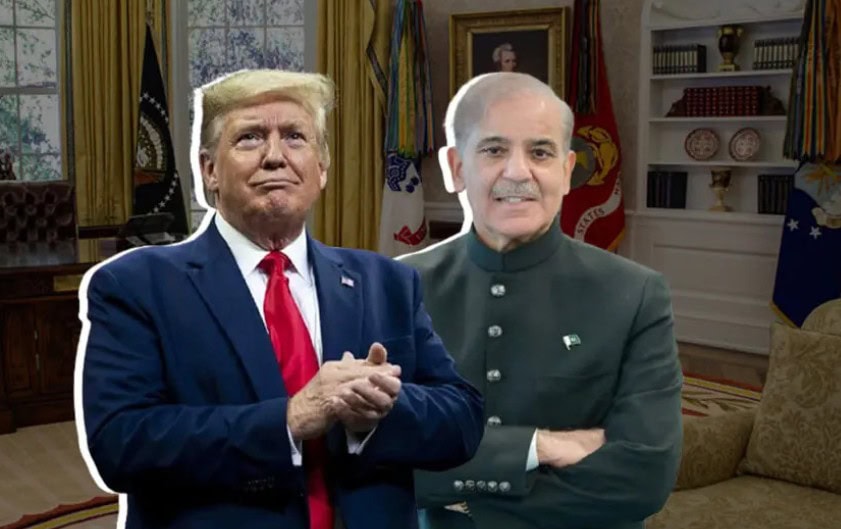
ISLAMABAD – Prime Minister Shehbaz Sharif touched down in United States on Thursday, stepping into global spotlight as Pakistan commits to the high-stakes Gaza Board of Peace as this unprecedented international initiative could reshape the future of Palestinians, and perhaps global diplomacy itself.
The meeting led by President Donald Trump, is expected to host delegations from at least 20 countries, with Ishaq Dar, Pakistan’s deputy prime minister and foreign minister, also in attendance.
The controversial Board of Peace, launched at World Economic Forum earlier this year, positions Trump as chairman with sweeping powers, including the ability to restructure the body, appoint and remove executive members, and approve all major decisions.
Islamabad’s entry comes amid intense scrutiny as the South Asian nation made it crystal clear, any troop contribution will be strictly limited to peacekeeping. Officials made it clear that Pakistani forces will not participate in disarming Hamas, warning that any deviation could spark a diplomatic clash. Sources say Pakistan could deploy thousands of troops, but only after receiving full clarity on the ISF’s mandate, chain of command, and operational authority.
President Trump is expected to unveil multi-billion-dollar plan to rebuild Gaza, alongside proposals for a UN-authorised stabilisation force. While the board was initially designed to cement Gaza’s ceasefire, it now aims to tackle broader global conflicts, a move that has raised eyebrows in international circles, with some warning it could rival the United Nations.
Pakistan’s official statement frames its participation as a step toward ending Palestinian suffering, scaling up humanitarian aid, and securing permanent ceasefire under UN Security Council Resolution 2803. Islamabad also reaffirmed its commitment to Palestinian self-determination, advocating for an independent, sovereign state within pre-1967 borders, with Al-Quds Al-Sharif as its capital.
Board of Peace requires formal acceptance from three countries to come into force, and membership is capped at three years, except for nations contributing $1 billion or more, which grants permanent status. Invitations have been extended to global heavyweights including China, India, Russia, Ukraine, Canada, Egypt, and Argentina, while France refused to join.
For Gaza, Anger is Not a Strategy—We Need a Seat at the Board of Peace