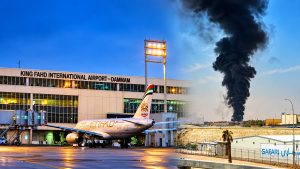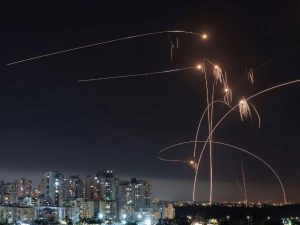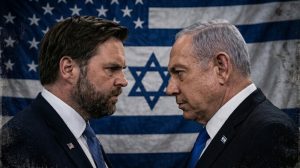

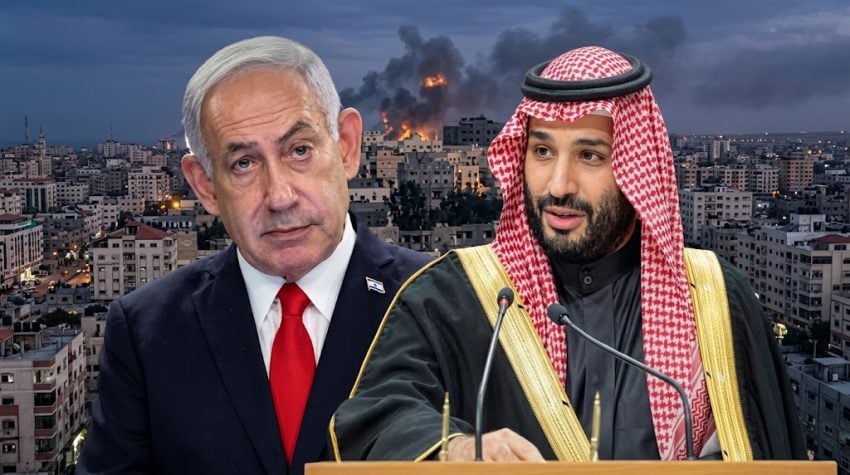
RIYADH/TEL AVIV – As Houthi drones and missiles keep pressure on Saudi Arabia, Israeli PM Netanyahu appears to see an opening. Behind the scenes, Israel is reportedly offering intelligence support to Riyadh, while the Israeli premier pushes for the diplomatic breakthrough he has long sought, normalization with Saudi Arabia.
A report by Middle Eastʼs leading news outlet said Netanyahu is making last-minute push to bring Riyadh closer to formal ties with Israel, with escalating Houthi threat emerging as a potential bargaining chip in the high-stakes diplomatic effort.
Quoting senior Israeli political sources, the report said Netanyahu is pursuing discreet contacts with Riyadh and hopes a breakthrough with Saudi Arabia could strengthen his political position ahead of Israel’s October elections. But the diplomatic gamble comes at a sensitive moment for Saudi Arabia.
The kingdom is facing increasingly intense Houthi campaign, including attacks involving drones and missiles and mounting pressure around the Red Sea and Bab al-Mandab. Saudi Arabia has been seeking assistance from several partners as its defensive resources come under strain.
It said Israel indirectly signalled that it could help Saudi Arabia tackle the Houthi threat through intelligence support and military consultations. The proposal reportedly does not involve Israeli forces carrying out attacks on Houthi targets for Riyadh.
Instead, Israeli experts could potentially help Saudi counterparts improve intelligence gathering, identify Houthi military positions and understand the group’s weapons infrastructure and operational plans.
Israeli political sources believe Netanyahu is seeking to use Washington as an intermediary, effectively linking potential Israeli assistance with movement on Saudi-Israeli normalization. The strategy would also allow Netanyahu to portray any diplomatic progress as a personal foreign-policy achievement before voters.
Netanyahu’s aide said the prime minister understands the electoral value of an agreement with Riyadh. “He knows that such an agreement could win him the elections, and he is working on it,” the source said.
The reported push comes as Israel and several Arab states are already engaging in increasingly direct security coordination.
Earlier this week, Axios reported that senior military commanders from the US, Israel, Saudi Arabia, the UAE, Bahrain, Kuwait, Qatar, Jordan and Egypt met privately in Germany last week.
The meeting was organized by US Central Command chief Adm. Brad Cooper and focused on the war involving Iran and wider regional security concerns. The gathering was not publicly announced by the participating governments. Separate reporting has indicated that Israel and Saudi Arabia have held CENTCOM-mediated discussions over possible Israeli intelligence assistance against the Houthis.
The developments are particularly significant because Saudi Arabia and Israel still do not have formal diplomatic relations.
Saudi Arabia’s need for assistance has grown as the Houthi campaign has intensified. Another recent report said Crown Prince Mohammed bin Salman sought US military help from President Donald Trump, while Washington offered intelligence sharing and targeting assistance rather than direct strikes.
Riyadh also sought support from other regional and Western partners as it confronts pressure from the Houthis. For Israel, the situation presents an opportunity to demonstrate the value of its intelligence and military capabilities.
An Israeli intelligence official said Saudi Arabia substantial financial resources but lacks some of the intelligence and operational capabilities required to confront the Houthi threat. Israeli officials have also pointed to the country’s demonstrated ability to conduct long-range operations against Houthi targets.
Despite the growing security contacts, normalization remains far from practical. Saudi Arabia repeatedly linked recognition of Israel to meaningful progress toward Palestinian statehood and a credible pathway to a two-state solution. That position hardened after the Oct. 7, 2023 Hamas attack and the subsequent Gaza war.
Before the conflict, US-mediated discussions brought Tel Aviv and Riyadh closer to possible normalization agreement. Riyadh had also taken steps toward practical engagement, including opening its airspace to civilian flights traveling to and from Israel in 2022.
Israeli-Saudi intelligence contacts existed for years, including reported high-level back-channel engagement involving Netanyahu and Mohammed bin Salman. But transforming those contacts into formal diplomatic relations would require Riyadh to address the Palestinian issue as well as its broader regional security calculations.
Has Saudi Arabia removed Hadiths about Jews from its Textbooks?