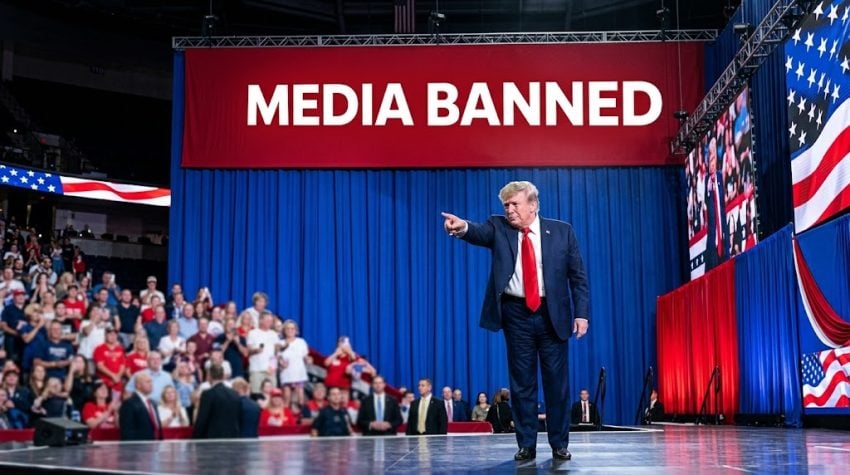
WASHINGTON – CNN, Politico and other major US media outlets are facing White House showdown after President Donald Trump announced immediate ban on these news organisations for spreading “fake news” and warning that more outlets could be next.
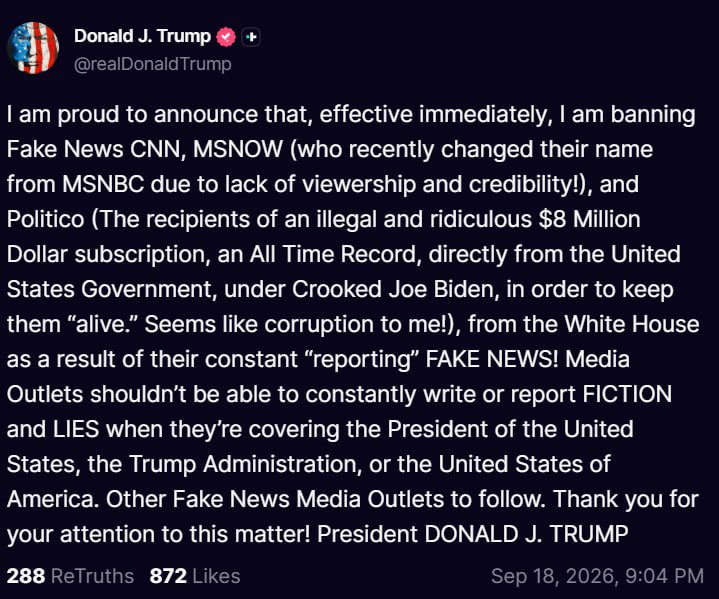
Trump made the announcement on his social media, saying the ban was effective immediately and warning that more media outlets could be targeted. “Other Fake News Media Outlets to follow,” Trump wrote, accusing news organisations of reporting what he described as “fiction and lies” about the president, his administration and the United States.
The announcement immediately raised questions about how the ban would actually be enforced.
Speaking later in the Oval Office, Trump was pressed by reporters to explain why CNN, MS NOW and Politico had been singled out. His response was direct, calling them fake news. Trump did not identify a specific report that triggered the decision. Instead, he described the move as the result of what he characterised as cumulative coverage over several years.
He said he did not want the targeted organisations in his office or at the White House and indicated that the restrictions could extend as far as possible.
Trump also suggested that the restrictions could potentially be lifted if the organisations changed their approach to covering his administration.
The announcement puts Trump administration on a collision course with major press-freedom organisations and the targeted newsrooms. CNN said it stands behind its White House journalists and argued that reporters have a constitutional right to cover the government without interference.
Politico also said it would continue reporting on the Trump administration and future administrations while defending its First Amendment rights.
White House Correspondents’ Association also defended the targeted organisations, saying constitutional press protections do not depend on whether a president approves of a newsroom’s reporting or questions.
Press-freedom groups warned that a broad exclusion based on the content of reporting could face a serious constitutional challenge.
CNN journalists continued working from the White House grounds after Trump’s declaration, while reports said there were initially no clear signs that officials had physically removed the targeted organisations. The precise scope of the proposed ban also remained unclear.
Trump did not stop with the three organisations named in his announcement. He warned that additional “fake news” outlets could be targeted and specifically mentioned The New York Times and The Washington Post. However, he did not announce a formal ban on either newspaper.
Trump also said the White House might stop displaying print copies of the two newspapers, while indicating that they had not yet been removed from the premises.
The latest confrontation is part of a long-running series of disputes between Trump and news organisations. During his first presidency, the White House attempted to revoke the credentials of CNN correspondent Jim Acosta following a heated exchange between Acosta and Trump at a November 2018 press conference.
Trump’s latest declaration now sets the stage for another potential legal confrontation over the boundaries of presidential authority and press access.
The central issue is not simply whether the president can decide which journalists enter particular restricted events. The legal questions become more complicated when access to generally available White House press facilities or credentials is restricted because of an outlet’s reporting.
UAE bans use of its airspace for US military action against Iran