
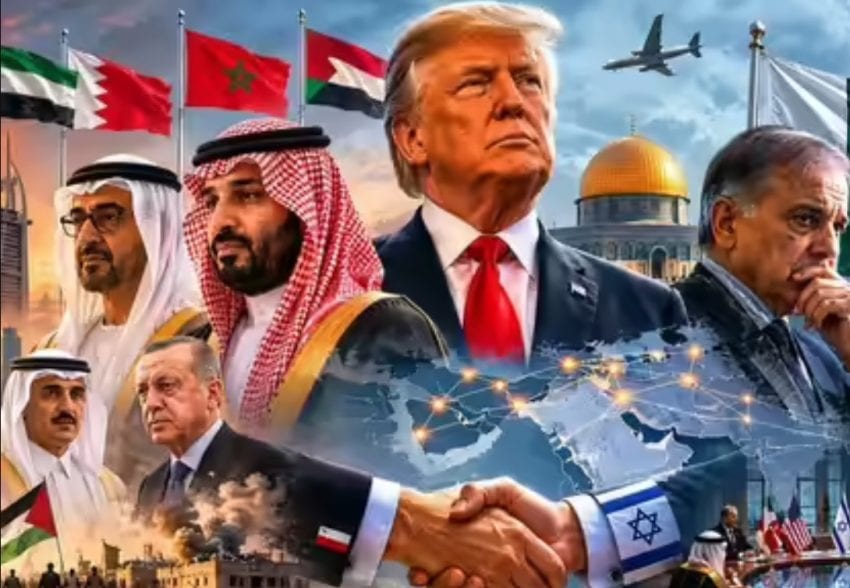
ISLAMABAD – US President Donald Trump engaged a group of Muslim-majority countries, including Pakistan, Saudi Arabia, Qatar, Turkey, to join the Abraham Accords in what Washington describes as a major step to normalize ties with Israel for a wider diplomatic push linked to efforts to end conflict involving Iran.
POTUS said he spoke directly with leaders from these countries, as well as with existing Abraham Accords members, the UAE and Bahrain, in potential major expansion of the agreements.
Outright rejection from Pakistan
The strongest immediate response came from Pakistan, as Islamabad rejected the proposal. Pakistani security source made it clear that Trump’s remarks appeared to be part of an attempt to link Iran ceasefire diplomacy with broader normalization efforts, insisting the two issues are entirely separate and “cannot be connected.”
Offiicals further stressed that Pakistan is under no obligation to comply with such pressure.
Lately, Defence Minister Khawaja Asif also described Abraham Accords as “unacceptable,” arguing they clash with Pakistan’s foundational ideological position. He also said there had been no formal communication or diplomatic request regarding the matter, dismissing speculation of any progress. Referring to the situation in Gaza, he questioned the reliability of Israel in any agreements amid tensions and mistrust.
While Trump claimed outreach to multiple governments, none of the other mentioned countries, including Saudi Arabia, Qatar, Turkey issued public confirmations or responses so far. A positive reaction appears unlikely in near future, given widespread public opposition across many Muslim-majority nations, especially amid continued outrage over the war in Gaza.
The proposal reignited debate over future of Abraham Accords, originally designed to normalize ties between Israel and several Arab states. Critics argue that expanding the framework risks sidelining Palestinian issue entirely, weakening long-standing diplomatic principles that tied normalization to progress toward Palestinian statehood.
At the same time, security analysts warn of potential geopolitical backlash. Closer alignment with Israel, they argue, could increase exposure to retaliation from Iran and allied groups such as Hezbollah and the Houthis. Past attacks on Gulf infrastructure are often cited as reminders of the region’s fragility and the risks tied to shifting alliances.
Trump’s push, if pursued further, could sharply deepen political divisions across the Middle East, while placing participating governments under intense domestic pressure and heightened regional security risks.
Trump suggests Pakistan, other Muslim nations could join Expanded Abraham Accords amid Iran Talks