
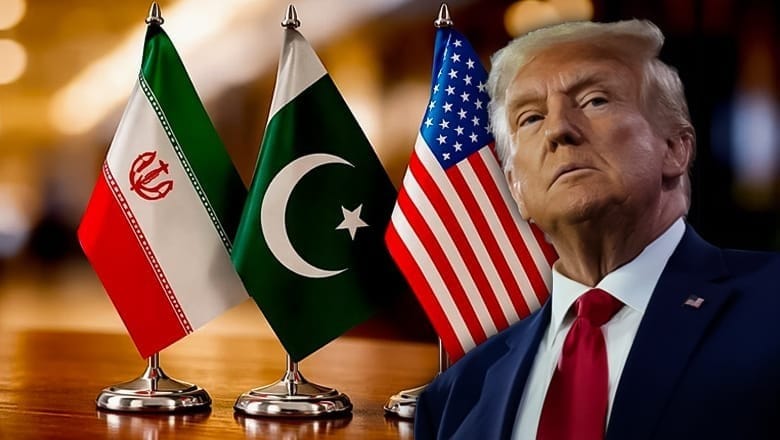
WASHINGTON – US President Donald Trump sparked another controversy for its sweeping claims on Middle East diplomacy, including ongoing negotiations with Iran and proposals to significantly expand the Abraham Accords framework.
In his new remarks, POTUS said discussions with Iran were “proceeding nicely,” but cautioned that the outcome would be either a comprehensive agreement or no deal at all. He further warned that a breakdown in diplomacy could lead to a return to “battlefront and shooting,” underscoring the potential for renewed tensions if negotiations fail.
Trump’s statement also claimed that Trump had recently spoken with several regional leaders, including Mohammed bin Salman, Mohammed bin Zayed Al Nahyan, Tamim bin Hamad Al Thani, Recep Tayyip Erdoğan, Abdel Fattah El-Sisi, and Abdullah II of Jordan, along with references to officials from Pakistan and Bahrain. These discussions were presented as part of broader efforts toward what was described as a potential regional settlement linked to Iran diplomacy.
At the center of the proposal is an expanded vision for the Abraham Accords. Trump suggested that additional countries, including Saudi Arabia, Qatar, Egypt, Jordan, Türkiye, and Pakistan, should be incorporated into the framework, describing broader participation as key to achieving long-term regional stability and economic growth. He also pointed to what he described as the accords’ existing economic and social benefits for current member states.
In a further development outlined in the statement, he suggested that Iran itself could eventually be included in an expanded version of the accords should a broader agreement be reached, potentially reshaping the diplomatic architecture of the region.
The statement also implied that countries opting out of such a framework could be excluded from any resulting settlement, framing participation as both a diplomatic opportunity and a condition of inclusion.