
ISLAMABAD – Political tensions in Khyber Pakhtunkhwa escalated, and now federal government weighs constitutional options, including governor’s rule, while Chief Minister Muhammad Sohail Afridi dared to dissolve the provincial assembly with consent of PTI parliamentary committee.
The political confrontation opened several possible scenarios for region already dealing terrorism, with governor’s rule, emergency measures, a change in the chief minister’s office and dissolution of the provincial assembly all being discussed amid deteriorating law and order and heightened political tensions.
PM’s aide on Political Affairs Rana Sanaullah confirmed that governor’s rule remains an option in KP, although he said no final decision has been taken. Sanaullah said the federal government could constitutionally impose governor’s rule if the required conditions were met, and claimed that the KP government currently fulfilled those conditions.
He said a decision could still be taken, alleging that the provincial government was not being run according to the Constitution and law.
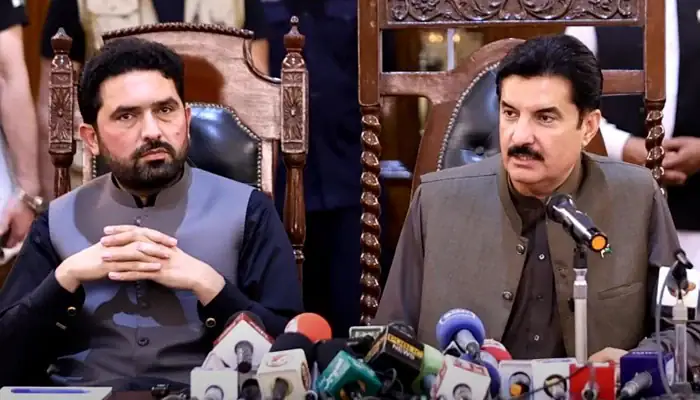
KP Governor Faisal Karim Kundi also added to the uncertainty surrounding the provincial government, saying there was speculation about whether Sohail Afridi was leaving while former chief minister Ali Amin Gandapur could return. Kundi said, however, that he had not received any formal resignation through the proper channel.
“If the resignation comes from the Chief Minister’s House through the official channel, I will accept it,” the governor said. According to a statement from the Governor’s Office, Kundi has contacted the federal government and spoken to the prime minister about convening a federal cabinet meeting in Peshawar.
He also proposed holding the meeting at the Governor’s House to discuss the province’s law and order situation and requested that an Apex Committee meeting be convened in Peshawar.
The dispute has also expanded into the security situation. Kundi said Chief Minister Sohail Afridi had condemned drone attacks but questioned why he had not similarly condemned quadcopter attacks allegedly originating from Afghanistan. The governor further questioned why the KP government had not brought a resolution before the provincial assembly against such attacks and asked why the provincial administration was remaining silent on the issue.
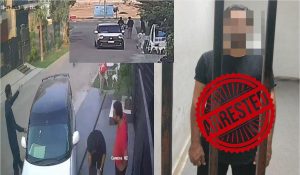
Amid the escalating confrontation, KP Assembly Speaker Babar Saleem Swati sought detailed record of police actions involving lawmakers, ministers and other parliamentary officials. The provincial assembly secretariat has written to the KP inspector general of police, demanding complete details of incidents involving assembly members, ministers, advisers, special assistants and parliamentary secretaries during the past two weeks.
The requested information includes arrests and detentions, raids and searches of residences, attacks and other police-related incidents. The speaker’s office has also demanded copies of relevant police reports and FIRs, along with details of individuals who informed police about the incidents.
The assembly secretariat instructed the police to provide the complete record immediately for presentation before the speaker. The letter cited Articles 66, 67 and 127 of the Constitution of Pakistan, as well as the KP Assembly Rules of Procedure 2025 and the Provincial Assembly Powers, Privileges and Immunities Act 2026.
Despite the political uncertainty, Chief Minister Sohail Afridi has doubled down on PTI’s protest plans. Addressing supporters in Malakand, Afridi thanked the local population and praised their political enthusiasm, saying the same spirit would be carried forward to Islamabad. He announced that PTI would head towards the federal capital on October 4.
Afridi said the gathering was also meant to pay tribute to provincial minister Shakil Khan, whom he described as a fearless and courageous political worker of Imran Khan. The chief minister condemned what he described as “undemocratic” treatment of Shakil Khan and other PTI leaders, saying such actions would not weaken the party’s resolve.
Afridi made it clear that restrictions on transport would not, in his view, stop the planned mobilisation. “If vehicles are not available, we will go on motorcycles. If motorcycles are not possible, we will use bicycles. And if bicycles are also unavailable, we will walk,” he said.
Afridi also said the party would not retreat from its political position, arguing that those seeking power and office were focused on the wrong objective. According to the chief minister, PTI’s stated demands centre on justice, democracy and what it describes as genuine freedom rather than political office.
He also criticised those who had reacted strongly to the “Somnath” remark, questioning their response to incidents in which, according to him, innocent civilians had been shot.
With federal government keeping governor’s rule on the table, the KP governor questioning the provincial administration, the assembly speaker seeking records of police action and the chief minister announcing another Islamabad mobilisation, the province’s political crisis has entered a particularly uncertain phase.