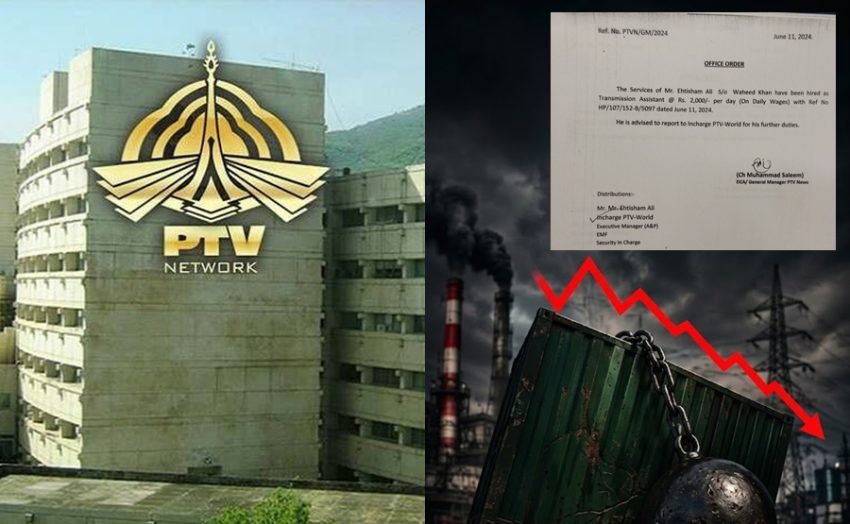
ISLAMABAD — Pakistan state broadcaster is struggling to stay afloat on public money for year and is now facing questios on hiring and paying its employees.
The government TV channel is already carrying around Rs20 billion in accumulated losses, its revenues have fallen sharply, and the government has once again stepped in with Rs13 billion in supplementary funding to keep salaries and essential operations running.
But at the same time, allegations of nepotism and favouritism in appointments have put the organisation under a fresh cloud. The allegations centre on individual, with claims that several of his relatives have been appointed to different positions at PTV.
According to the allegations, Muhammad Asif, described as his son, is working as a coordinator with a monthly salary of Rs80,000, despite having Inter education. Zeeshan Khalid, identified as his nephew, is reportedly employed as a coordinator on Rs70,000 per month.
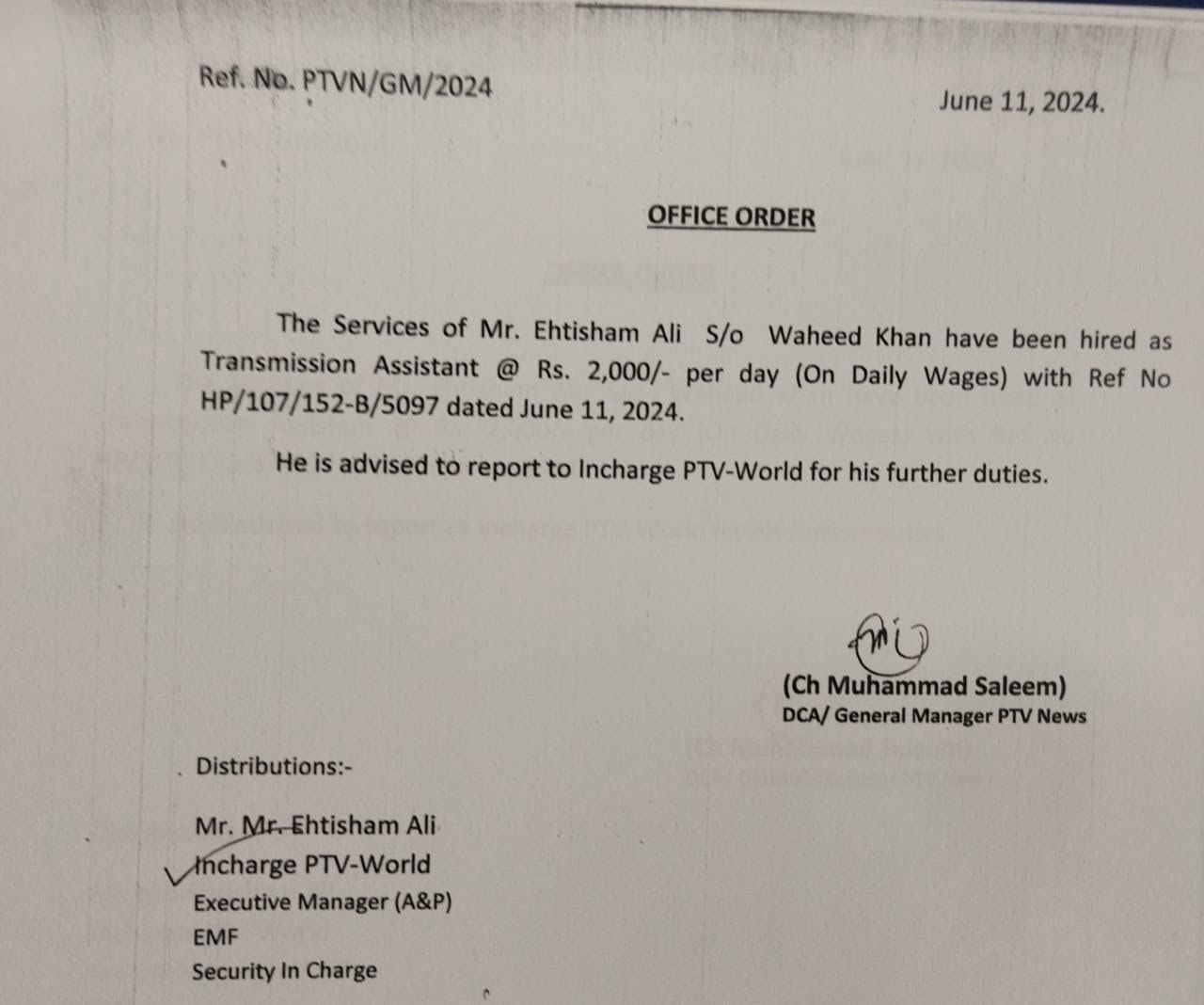
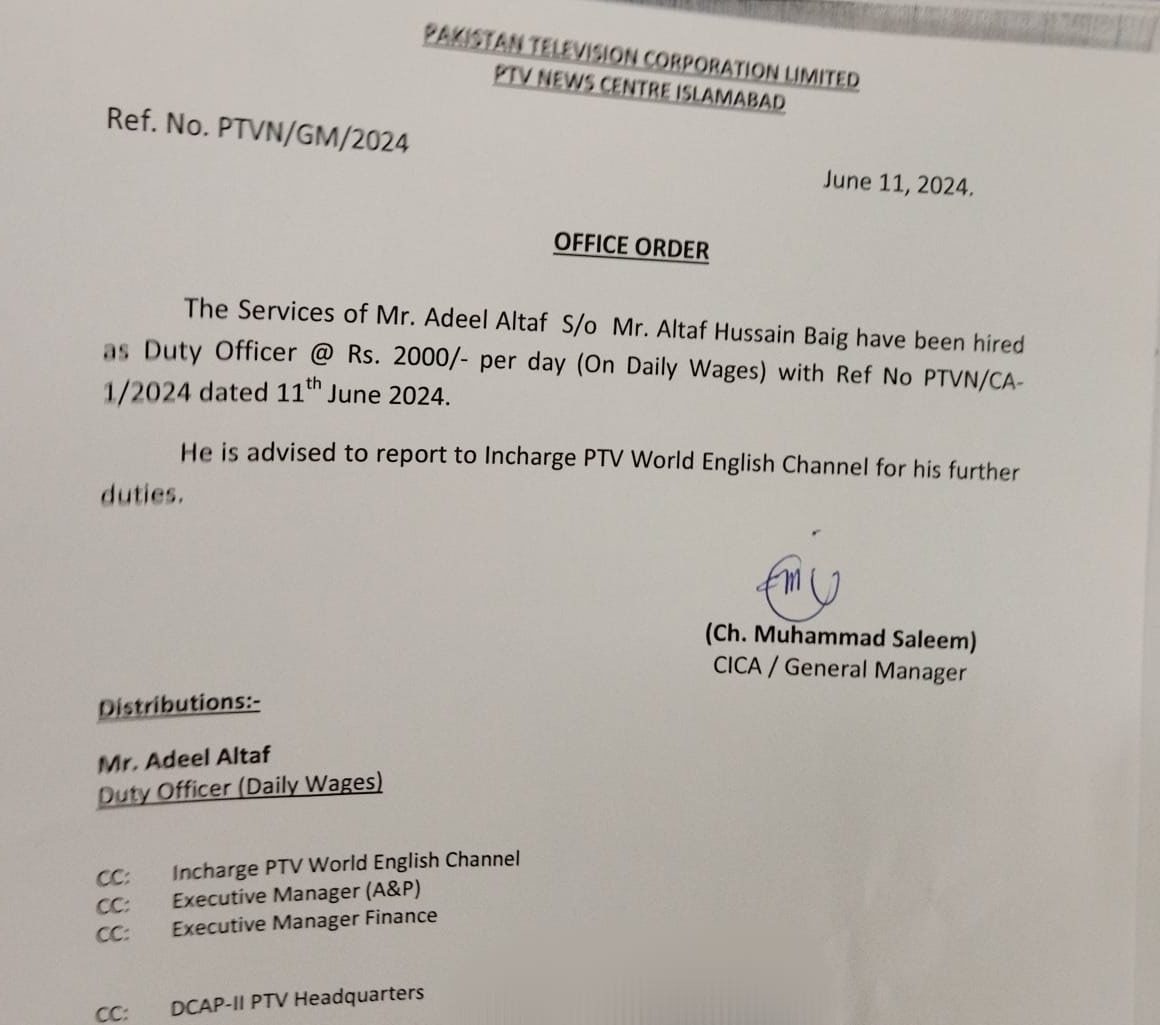
Another individual identified as Kawish, described as a close relative and son-in-law, is also reportedly working as a coordinator with a Rs70,000 salary. Muhammad Ramzan, his alleged nephew, is reportedly working as a researcher on Rs55,000, while Ijaz Zaheer, also his nephew, is allegedly employed as a spot boy on Rs55,000.
Mukhtar Ahmed, identified as a close relative, is reportedly serving as coordinator/researcher with a salary of Rs80,000, with Dars-e-Nizami listed as his qualification.
Two more names have also been raised, Rifaqat, a close relative working as a spot boy on Rs36,500, and Muhammad Zain, another alleged close relative, reportedly employed as a security assistant on Rs55,000.
These claims raise serious questions about merit, recruitment procedures and accountability inside a public institution funded, directly or indirectly, by taxpayers’ money. However, these are allegations and should be independently verified through PTV’s official employment and personnel records. The individuals named and PTV management should also have the opportunity to respond.
The controversy becomes more striking when viewed against PTV’s financial condition. The broadcaster made a profit of nearly Rs870 million in previous years. In FY2023-24, PTV slipped into a loss of around Rs30 million, while concerns were raised over overspending in areas including sports, programme production and current affairs.
During FY2024-25, PTV’s revenue dropped by 22 per cent to Rs14.3 billion, while the corporation recorded a net loss of Rs639 million. A Finance Ministry report prepared by the Central Monitoring Unit for state-owned enterprises subsequently ranked PTV as the 20th highest loss-making public-sector entity.
And behind those annual figures sits an even bigger problem: PTV’s accumulated losses had reached around Rs20 billion by June 2025. With PTV struggling to meet its basic financial commitments, the government has once again opened the public purse.
Earlier this year, Economic Coordination Committee (ECC) approved Rs13 billion supplementary grant for PTV to cover salaries and essential operational expenses. The amount was approved against a much larger Rs20 billion demand submitted by the Ministry of Information and Broadcasting.
The request included funding for salaries, allowances, utility bills and other essential expenses.
PTV’s problems are not simply about how much money it earns. A big chunk of its budget gone towards salaries and pensions, leaving limited room for investment, modernisation and expansion. The broadcaster has also faced expenditure pressures in programme production and sports broadcasting.