
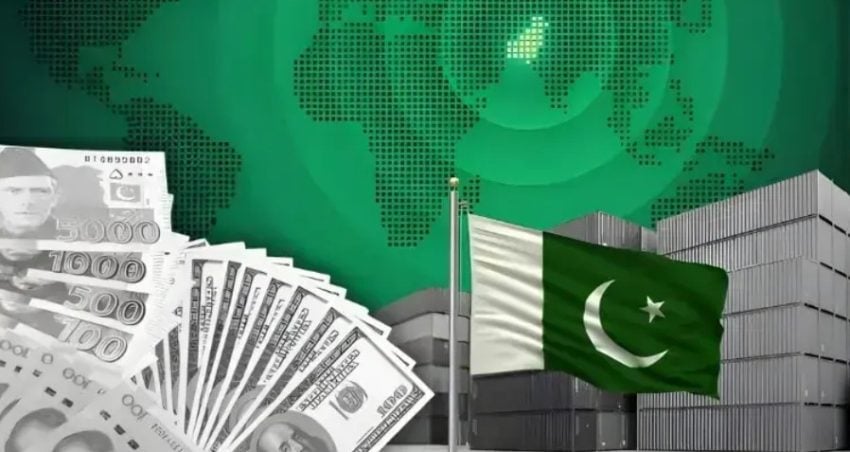
KARACHI – Economic journey of Pakistan continues to unfold with twists of relief and uncertainty. Over $10 billion in external financing has flowed in, half as fresh loans to keep financial wheels turning and half as extensions of existing obligations that would otherwise have come due.
Yet amid this inflow, one question lingers like an unresolved chapter: whether $2 billion debt extension from United Arab Emirates has been finalized. The central bank’s silence on matter adds layer of intrigue to an already complex financial narrative, where every decision on rollovers or extensions shapes the country’s economic path forward.
The financial saga of Pakistan’s external borrowing has taken another dramatic turn, with the country securing over $10 billion in foreign financing, half of it new loans and the rest extensions of existing obligations. Yet biggest cliffhanger remains unresolved: the central bank has stayed silent on whether a crucial $2 billion debt rollover from the United Arab Emirates has been approved, fueling speculation and concern in economic circles.
Pakistan managed to pull in $5.1 billion in fresh borrowing between July and January. But broader picture is far from rosy. Loans and rolled-over obligations from allies such as Saudi Arabia and China—along with support from the International Monetary Fund, amounted to roughly $5 billion. While that sounds substantial, it is actually $1.4 billion less than the same period last year, suggesting tightening external financing conditions.
Financial experts point to unresolved UAE rollover as primary culprit behind the slowdown. The $2 billion facility matured twice—first in January and again this month, without an official confirmation from the authorities. In contrast, the State Bank of Pakistan had no hesitation announcing the extension of a $3 billion Saudi deposit arranged via the Saudi Fund for Development, a credit line that has been repeatedly renewed since 2021. Critics argue that the silence over the UAE deal could signal behind-the-scenes negotiations or deeper financial uncertainties.
China extended $1 billion deposit for another year, and IMF released $1 billion tranche. Authorities remain optimistic that total inflows, including rollovers, will exceed $25 billion in the current fiscal year. Pakistan faces daunting repayment burden of $12.5 billion in maturing deposits. With foreign exchange reserves hovering around $16 billion (including deposits), analysts warn that net reserves are effectively negative, raising questions about long-term financial stability.
The government also hoped to raise $250 million through Eurobonds, but that plan has stalled due to what officials vaguely describe as “mismanagement.” Meanwhile, the country secured $269 million in loans for expansion of the Chashma Nuclear Power Plant and only $142 million in commercial borrowing, far below expectations.
Asian Development Bank disbursed $622 million, while the World Bank provided $828 million. The Islamic Development Bank contributed $502 million, primarily for energy-related imports. Despite these inflows, Pakistan’s external debt and liabilities now stand at $138 billion, an alarming figure that underscores the country’s dependence on international financing.
The finance ministry insists there is no immediate crisis, noting that about 75% of external debt consists of concessional long-term loans from multilateral and bilateral partners (excluding IMF obligations). Only 7% is commercial debt and another 7% stems from Eurobonds. However, rising global interest rates mean that interest payments are climbing, squeezing the government’s fiscal space and reigniting debates about economic mismanagement.
Opposition figures and economic commentators have seized on the numbers, arguing that Pakistan’s reliance on foreign borrowing is unsustainable. They point to repeated announcements about bond issuances and export enhancement plans that have failed to materialize. Meanwhile, government officials maintain that external financing remains necessary to stabilize the economy and fund development projects.