ISLAMABAD – Pakistan has drawn international attention amid reports of its role as a potential intermediary between the United States and Iran, with analysts pointing to the emergence of unconventional and largely informal channels of engagement.
While formal diplomatic contacts continue, observers say parallel mechanisms may be shaping backchannel interactions. Some analysts have described this evolving dynamic as “crypto diplomacy”, a term used to suggest a link between geopolitical engagement and digital financial ecosystems.
Security analyst Raja Faisal has claimed that Pakistan’s engagement with Washington and Tehran has gained momentum through a combination of civil-military coordination and emerging economic linkages tied to digital finance. He said that senior American figures, including envoy Steve Witkoff, may have been involved in indirect or exploratory contacts related to the broader mediation effort.
These claims, however, have not been independently verified, and no official confirmation has been issued by the governments concerned.
Faisal further argued that Pakistan’s acceptance as a mediator may have been facilitated by overlapping geopolitical and business interests. He referred to reported connections involving figures linked to the Trump business network and ventures such as World Liberty Financial, suggesting that such intersections may have quietly enhanced Pakistan’s leverage in diplomatic and financial spheres.
At the centre of this narrative is the concept of “crypto diplomacy”, which differs from traditional statecraft by relying less on formal negotiations and more on technological collaboration and financial alignment. Proponents suggest that such channels could enable discreet trust-building in politically sensitive situations.
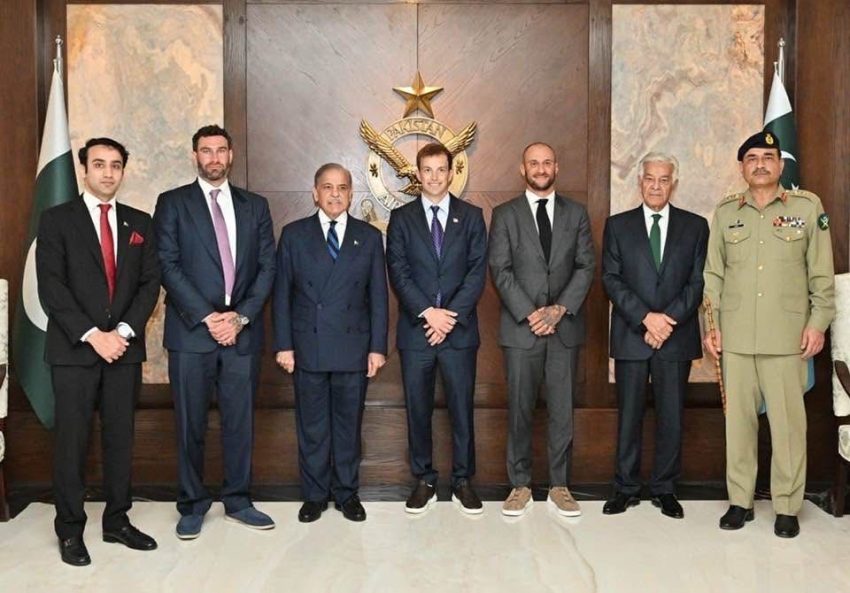
Faisal also pointed to Pakistan’s growing interest in digital assets and highlighted Bilal Bin Saqib, a figure associated with the country’s crypto sector. He claimed that Saqib has professional or social proximity to Zach Witkoff, an American businessman linked to cryptocurrency ventures within broader US business circles. These connections have not been acknowledged in official diplomatic statements.
Some observers have framed the situation as “crypto diplomacy powered by military diplomacy”, suggesting a coordinated approach involving both civilian leadership and the military establishment. Chief of Army Staff Field Marshal Syed Asim Munir is believed to be engaged in high-level communications with international counterparts, although details remain undisclosed.
Officials in Islamabad, Washington and Tehran have not publicly commented on the specifics of any such informal engagements.
Analysts note that Pakistan’s increasing interest in cryptocurrency and blockchain technology reflects a gradual policy shift aimed at modernising financial infrastructure. However, regulatory authorities have maintained a cautious approach towards digital assets.
As discussions continue over possible high-level visits and evolving diplomatic channels, the notion of “crypto diplomacy” remains a subject of debate, highlighting the potential role of emerging technologies in shaping modern international relations.