I was still processing the morning news when the details came through — a woman, two children, gone. Not soldiers. Not combatants. A family inside their home in Malik Shaheen village, Katkot, Bajaur. Shells fired from across the Afghan border tore through their lives in seconds. Three dead. Three more rushed to the hospital in critical condition. And for what? Because the Pakistan Army had the audacity to stop a terrorist infiltration attempt the night before.
Let me say that plainly: the Afghan Taliban shelled Pakistani civilians out of spite.
I’ve spent years watching the situation along Pakistan’s western border deteriorate in ways that never quite make the headlines they deserve. The world talks about Afghanistan as a humanitarian crisis, and it is — but it’s also a launching pad. What happened in Bajaur wasn’t random. It wasn’t a miscalculation. It was a deliberate act of aggression against a civilian population, carried out by a regime that has abandoned every pretence of governance and revealed itself for what it truly is: a terrorist outfit operating behind the facade of statehood.
The sequence of events matters here. For days, Afghan Taliban elements had been attempting to push a formation of Fitna al-Khawarij — a proscribed terrorist group — across the border into Pakistan. Our security forces caught it. They acted in time. They foiled it. And in the frustration that followed that failure, the Taliban turned their guns not on soldiers, but on a house in a border village where a family was going about their morning.
That is not the behaviour of a government. That is the behaviour of a cornered extremist faction lashing out at the nearest soft target.
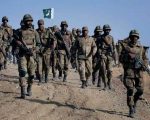
I think about that house in Katkot a lot. Someone’s mother. Someone’s children. I think about how the residents of Bajaur, people who live with the daily reality of this proximity to chaos, have come out and condemned this act without hesitation. They didn’t equivocate. They didn’t ask for context or backstory. They know what this is. They’ve seen it before. And yet they also stood in solidarity with the security forces — the men and women who, within hours of that shelling, had already destroyed the gun position responsible and were actively targeting Taliban posts across the border.
That’s the Pakistan that most people outside this region don’t see. Not a country paralysed by this threat, but one that fights back — and fights back hard.
There is a dimension to this that cannot be ignored, and I won’t dance around it: Indian backing of Afghan Taliban elements as a tool of regional destabilisation is a documented pattern. Using proxies to bleed a neighbour through its border is an old strategy. What’s new is the brazenness — shelling a village in broad daylight, killing children, and apparently calculating that the world will look away. The calculation, thankfully, was wrong. Pakistan’s military response was immediate and proportionate. But the international community owes this region more than silence.
When a regime deliberately targets civilian populations to express frustration over a failed terrorist infiltration attempt, that is a war crime by any reasonable definition. It deserves to be named as such. The Afghan Taliban have not earned diplomatic courtesy. They have earned accountability.
What I want people to understand — what I feel as I sit with this story — is that these aren’t abstractions. The three people killed in Katkot were real. The injured fighting for their lives in a hospital right now are real. The families in Bajaur who go to sleep wondering whether the next shell will find their roof are real. And the security forces standing between them and that threat, night after night, alert and determined as their official mandate says — they are real too.
Targeting civilians is not desperation. It is a choice. And the Afghan Taliban made that choice deliberately, consciously, and with full knowledge of who they were killing. I refuse to soften that. Some things deserve to be called by their name.