Pakistan’s shift toward eSIMs is about to boost as Pakistan Telecommunication Authority (PTA) announced revamped eSIM policy, introducing cheaper activation charges, free device transfers, and stronger security measures from August 17.
The revised policy, which comes into force on August 17, 2026, fixed maximum initial eSIM issuance fee at Rs1,500 while allowing subscribers to transfer eSIM to another compatible devices up to 10 times without paying any additional charges.
The decision is expected to remove one of the biggest concerns among smartphone users who frequently upgrade their devices and were previously uncertain about the costs involved in moving their digital SIM.
After recent changes, mobile users will receive several important benefits designed to make eSIM technology more accessible across Pakistan.
The revised framework follows recommendations from a parliamentary committee, which asked the telecom regulator to simplify eSIM services and make them more affordable for consumers.
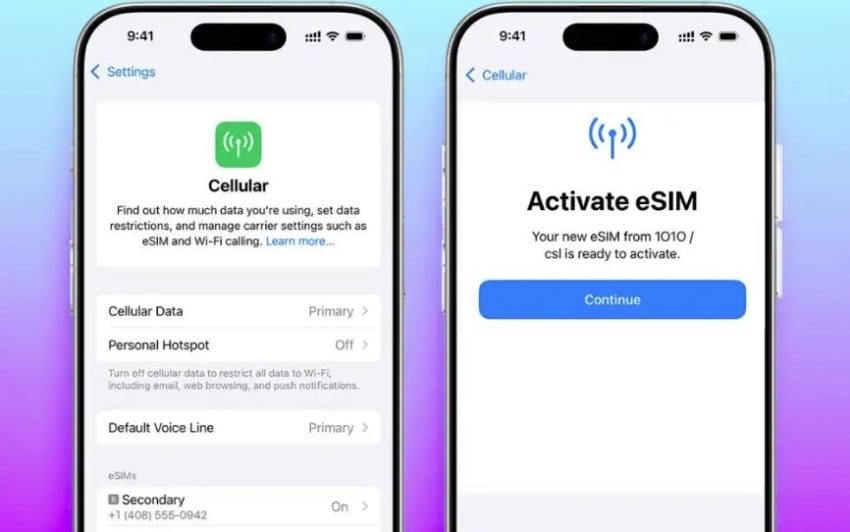
An eSIM, or embedded SIM, is a digital version of the traditional SIM card that is built directly into supported smartphones, tablets and smart devices. Instead of inserting a physical SIM, users activate their mobile number digitally using a QR code or their operator’s activation process.
Although PTA says customers could already reuse the original QR code to transfer an eSIM in many cases without additional charges, there was no standardized fee structure across the industry. The new policy removes that uncertainty by introducing a clear nationwide charging framework agreed upon after consultations with telecom operators.
For users who regularly switch smartphones, the new rules are expected to make the process simpler, faster and more transparent.
The regulator is not only reducing costs but is also working to tighten security around SIM ownership. PTA has confirmed that it is collaborating with the National Database and Registration Authority (NADRA) and cellular mobile operators to develop a multi-factor subscriber verification system.
The upcoming security mechanism will add additional identity checks during SIM issuance and ownership verification, helping reduce fraudulent registrations, identity misuse and unauthorized SIM activation.
The revised policy could accelerate the adoption of eSIM technology in Pakistan, particularly as more flagship and mid-range smartphones now come with built-in eSIM support. Lower activation costs, free device transfers and stronger security measures are expected to encourage more users to move away from physical SIM cards and embrace digital connectivity.
For foreign visitors and travellers, international travel eSIMs remain one of the easiest ways to stay connected in Pakistan. These packages are typically data-only, activate instantly through a QR code, require no biometric verification and work on local partner networks including Jazz, Zong, Telenor and Ufone.
Travel eSIM plans for Pakistan start at less than $1 for very small daily data packages, while most entry-level plans are available for around $2. Most providers support hotspot sharing, making them useful for laptops and multiple devices. Users can expect extensive 4G coverage in major cities, while commercial 5G services continue to expand in selected areas.
For millions of smartphone users, especially those using iPhones or other eSIM-compatible devices, the changes could make switching phones and managing mobile connections significantly more convenien.
Two arrested as illegal Internet Networks face Massive PTA-FIA Action