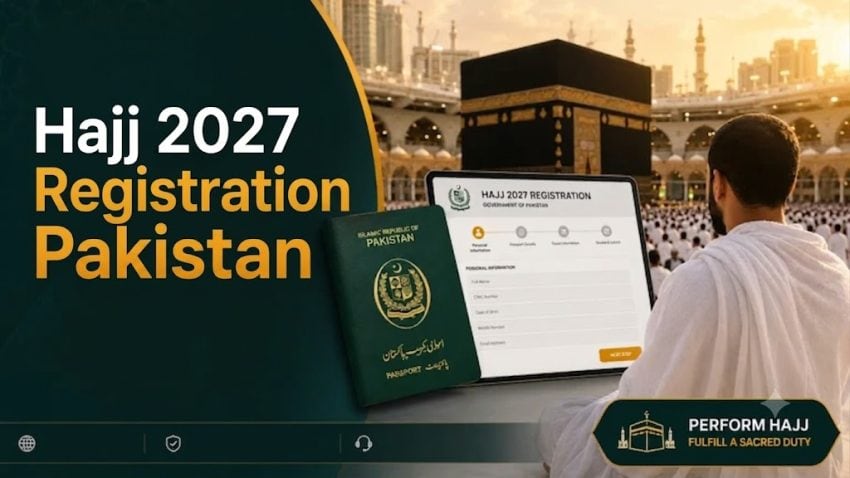
ISLAMABAD – Pakistan made changes to private Hajj booking system, with the government planning to shift bookings and related procedures to a centralized digital platform under the Ministry of Religious Affairs’ supervision from Hajj 2027.
Under proposed arrangement, pilgrims seeking to perform Hajj 2027 through private scheme will no longer follow traditional booking process directly through private Hajj operators. Instead, bookings and related procedures are expected to be conducted under the direct supervision of the Ministry of Religious Affairs.
The ministry plans to use the government’s official Pak Hajj App to facilitate bookings and manage other stages of the private Hajj scheme. The move is being introduced as part of Pakistan’s broader effort to digitize Hajj operations in line with Saudi Arabia’s Nusuk Masar system, potentially marking a major shift in the country’s private Hajj management.
For Hajj 2027, both government and private Hajj operations are expected to come under the ministry’s direct oversight, creating a centralized framework for booking and administrative procedures. The proposed digital mechanism is expected to significantly change the way pilgrims register, select packages and complete other Hajj-related formalities, while also bringing private Hajj operators into a more closely monitored system.
The development comes days after the government unveiled its Hajj Policy 2027–2030, introducing a series of reforms aimed at modernizing the Hajj process and improving services for Pakistani pilgrims.
For the first time, the new policy includes four-year registration, a digital waiting list, multiple Hajj packages and a fully online system. Pakistani government says the reforms are designed to increase transparency, improve long-term planning, better manage Hajj-related expenses and provide pilgrims with improved facilities.
Hajj Policy 2027–2030 has been aligned with Saudi Vision 2030 and international best practices, according to the government. The proposed digital framework could make the Hajj process more centralized and transparent by bringing registration, booking and other key procedures onto a unified platform.
Digitalization and long-term planning could improve overall management of Hajj operations. However, pilgrims will need to remain cautious and obtain information regarding registration, payments, packages and other procedures only through official government channels to avoid potential fraud or misinformation.
Pakistani Hajj pilgrims face recurring challenges like far away hotels, transport delays, high costs, food and luggage issues, communication gaps, health concerns, documentation problems and inadequate guidance. The new digital Hajj system could improve transparency, bookings and monitoring, but its success will depend on effective oversight, operator accountability and efficient on-ground coordination.
Pilgrims to choose Hajj year under Pakistan’s new four-year registration system