I am writing this because I am angry, and I have earned the right to be.
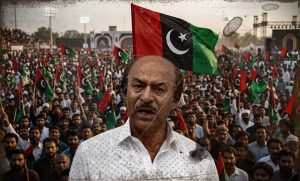
Sindh has been ruled by one party, Pakistan Peoples Party, for almost the entire period since the Eighteenth Amendment handed provinces more power and more money. The province’s share of the federal divisible pool rose from about fifty six percent in 2010 to fifty-seven and a half percent in 2011. The Sindh budget exploded from roughly four hundred twenty-two billion rupees around 2011 to more than three and a half trillion rupees today. Eighteen years, one ruling party, an ocean of new money and new authority. So where did it go?
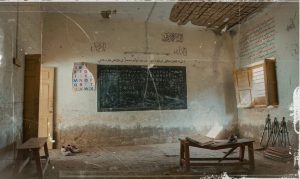
Not into your child’s classroom. UNICEF says about seven point four million children in Sindh, roughly forty four percent of that age group, are out of school right now. More than 1,300 schools were reported damaged and over 450 non functional in September 2024 alone. A decade earlier, Transparency International cited an official estimate of 6,480 ghost or paper schools in this province, buildings and salaries that existed only on paper. Money moved. Children did not learn.
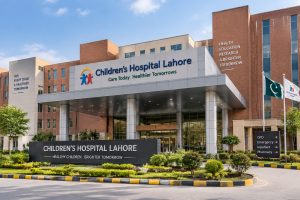
Not into your hospital either. In 2019, the world watched hundreds of children in Ratodero test positive for HIV because of unsafe injections and non existent oversight. In July 2026, Al Jazeera reported at least 130 more HIV positive cases traced to SESSI facilities run by this very provincial government in Karachi, with internal inquiries finding serious infection control and supervision failures. Seven years apart, same government, same negligence, same children paying the price.
Not into your streets. Karachi recorded more than 87,000 street crime incidents in 2023 and 134 people died resisting robbers. Through early 2024 the death toll from street crime climbed report after report, 48, then 57, then over 62. Investigators and journalists kept naming the same causes, police inaction, weak prosecution, and alleged corruption in station level postings.
Not into your water pipes. An investigation in 2024 mapped an entire corruption network inside Karachi’s water system, politicians, officials, water board staff, hydrant contractors and tanker operators, all feeding off a shortage they help create. The World Bank says Karachi’s water and sewerage network still covers barely half the city.
And this is where it stops being a headline and becomes my family’s story. My relative paid 15,220 rupees for a new Ajrak number plate at the Excise and Taxation office in August 2025. That is real money for a working family. As of September 2026, more than a year later, the department still has not even sent out the tender for new plates. If that is not corruption, somebody please tell me what word fits better. And it is not hidden. Local agents stand outside these very Excise offices, openly offering to get you a plate in a single day, for a price. I have seen it with my own eyes. Everybody I know has a version of this story, mine happens to be an Ajrak plate.
This is why check and balance cannot stay a slogan. Power sitting in one provincial capital for two decades produced ghost schools, HIV outbreaks, tanker mafias, and a bribe economy at government counters. If authority reaches the people at the grassroots level, the public will benefit. Push authority down to local governments, to district and union level bodies people can actually walk into and hold accountable, and some of this will finally change. Keep it locked in Karachi’s provincial secretariat, and in another eighteen years we will be writing the same piece about our children and our grandchildren.
Isn’t this corruption?