
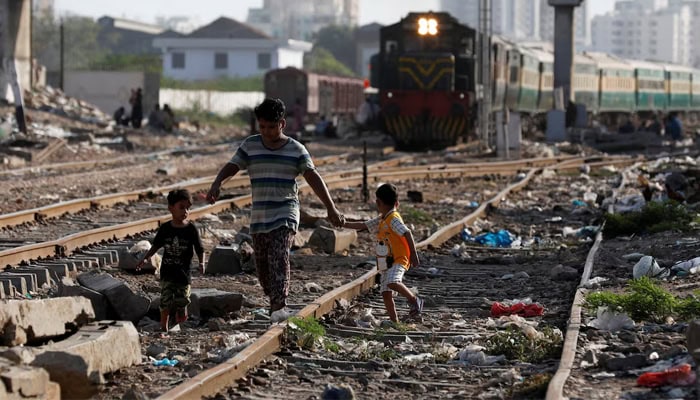
ISLAMABAD – A recent World Bank report on poverty has revealed that 48% of the poor population in the MENAAP region lives in Pakistan, with these people earning less than $3 a day, or around Rs840, below the poverty line used in the report.
The MENAAP region comprises the Middle East, North Africa, Afghanistan and Pakistan.
According to the World Bank report, prolonged economic reforms have contributed to a decline in real household incomes, resulting in rising poverty and fewer employment opportunities in Pakistan.
The report said poverty in Pakistan at the $3-a-day threshold increased by 6.4 percentage points between 2018-19 and 2024-25, while poverty at the $4.20-a-day threshold rose by 3.2 percentage points.
The World Bank estimates that Pakistan’s GDP growth will remain at 2.2% in the current fiscal year, broadly in line with the previous year.
Pakistan has faced a series of adverse economic shocks, including the COVID-19 pandemic, devastating floods in 2022, an economic crisis, high inflation and a decline in the value of the rupee, the report noted.
At the regional level, the report said, the increase in poverty was driven largely by rising poverty in Pakistan.
Discussing the economic impact of conflicts in the Middle East, the World Bank noted that petrol prices in Pakistan and Lebanon had increased by around 40% since the onset of the conflict. Fuel prices also rose in Syria and the United Arab Emirates.
Diesel prices in Pakistan increased by more than 40%, while the rise reached around 80% in Lebanon and 70% in the UAE, according to the report.
The World Bank said oil-importing countries including Pakistan, Morocco, Tunisia, Djibouti, Egypt and Jordan are facing various economic challenges. Rising oil and essential commodity prices are contributing to inflation and reducing fiscal space.
The report also noted a decline in remittances from Gulf economies, while borrowing costs have increased and insurance has become more expensive due to heightened risks.
According to the World Bank, Pakistan’s private sector has yet to adapt to the country’s emerging economic needs.