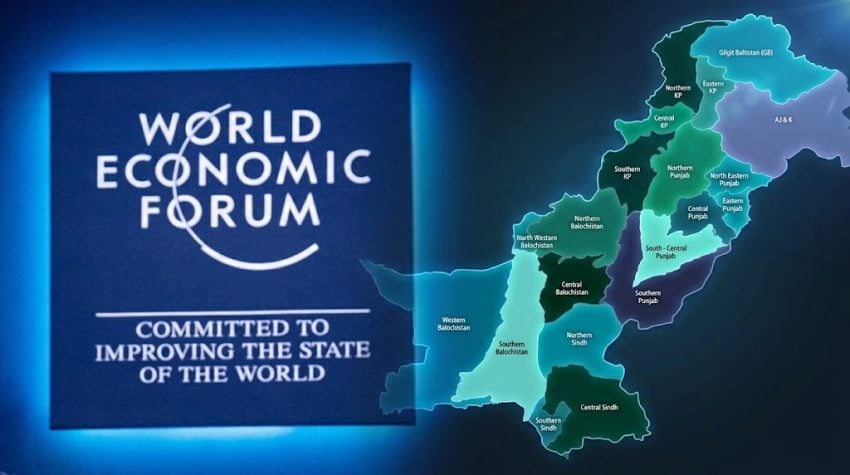
ISLAMABAD – As Pakistan’s population continues to grow, questions are mounting over whether its existing administrative structure can keep up, and amid debate on expanding the provinces, World Economic Forum analysis brought the debate into focus with proposal for 16 new provinces or up to 30 administrative units to bring government closer to the people and improve public service delivery in country of around 250 million people.
Analysis at World Economic Forum (WEF) highlighted challenges facing Pakistan’s four provinces and suggested creating 16 new provinces or a larger number of administrative units to bring decision-making closer to masses.
Pakistan’s population is projected to reach 265 million by 2030. The analysis argues that governing such a large and diverse population through just four provinces creates significant administrative challenges, particularly when provincial capitals have to manage the needs of both major urban centres and remote districts.
Each of Pakistan’s four provinces has an average population of around 60 million, making them considerably larger than the first-tier administrative units in several other major countries.
The analysis suggests dividing each existing province into four smaller provinces, creating 16 units with an average population of approximately 15 million each. Other options include establishing 23 to 25 administrative units based on population balance and geographical considerations, or creating more than 30 units using existing civil divisions as a starting point.
Pakistan’s governance challenges can be seen in its education and revenue figures. According to the analysis, around 28% of children aged five to 16 are out of school, while provincial governments collect less than 0.9% of GDP through their own revenue sources. Planning Commission’s District Education Performance Index also found that none of the 134 districts assessed fell into the very high-performance category.
New Provinces in Pakistan: Who will gain the most, Public or the Powerful?
These figures highlight the gap between government policies and their results on the ground. The analysis suggests that smaller administrative units could help governments better understand local needs, allocate budgets more effectively and hold officials accountable for service delivery.
The size and diversity of Pakistan’s provinces present another challenge. Provincial governments are responsible for areas with widely varying populations, economic conditions and development needs, yet many key decisions are made far from the communities affected by them.
The contrast between Punjab capital Lahore, with a population of approximately 13 million, and Harnai district in Balochistan, with around 128,000 residents, shows scale of these differences. The analysis argues that policies designed at provincial capitals can struggle to address the realities of both large cities and smaller, remote districts. Bringing decision-making closer to local communities could help make public spending and service delivery more responsive to their needs.
The analysis outlines several possible approaches to administrative restructuring. Under the first proposal, each of the four existing provinces would be divided into four, creating 16 provinces with an average population of around 15 million.
A second option would establish 23 to 25 administrative units, taking population balance and geographical considerations into account. A third approach would use Pakistan’s existing civil divisions as a basis for creating more than 30 units, bringing their average populations closer to those found in other large federations.
However, creating new provinces would require more than redrawing boundaries. Each unit would need adequate funding, effective tax collection powers, administrative capacity and clearly defined responsibilities.
Pakistan has already taken major steps towards decentralisation. 18th Constitutional Amendment responsibilities, including health and education, to the provinces. The seventh National Finance Commission (NFC) Award also increased the provinces’ share of federal tax revenues from 47.5% to 57.5%.
Despite these changes, the analysis says many decisions remain distant from local communities. Provincial tax authorities also continue to face problems such as limited administrative capacity, weak enforcement and inadequate information.
Any move towards creating new provinces would therefore need to address these weaknesses. New administrative units would require reliable financial resources, stronger institutions and clear accountability mechanisms to ensure they can deliver essential services.
The analysis also cautions that smaller administrative units are not automatically more effective. It also raises concerns on how administrative fragmentation can create problems when local institutions lack the financial and institutional capacity to function properly. Municipalities that are too small or financially weak may struggle to provide even basic services.
At its core, the debate is about whether Pakistan’s current administrative structure can keep pace with its growing population and changing needs. The proposal to create 16 new provinces, establish 23 to 25 administrative units or develop more than 30 smaller units raises important questions about the future of federalism and public service delivery.
But the ultimate test will not be how many provinces Pakistan creates. It will be whether any changes lead to better schools, stronger public finances, more effective local administration and services that reach people when they need them.