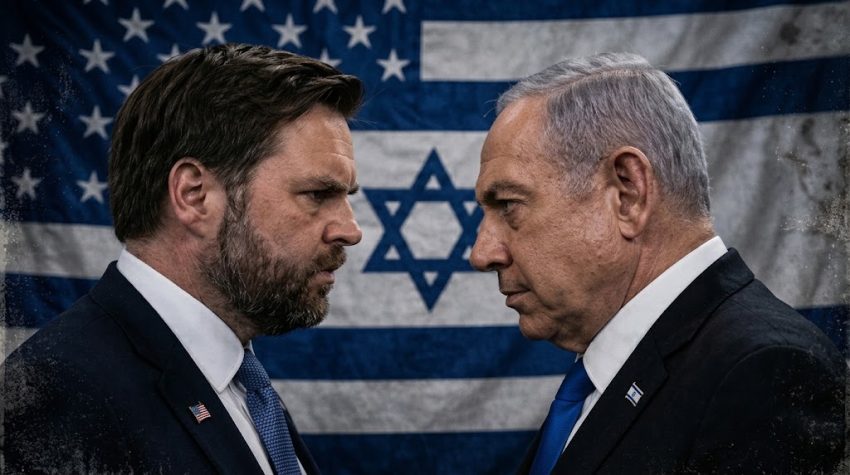
WASHINGTON – US Vice President JD Vance refuses to back or oppose Benjamin Netanyahu, showing different approach from Donald Trump as Israel prepares for crucial parliamentary elections on October 27.
Vance drawn clear line between his political priorities and President Donald Trump’s support for Israeli Prime Minister Benjamin Netanyahu, declaring that he will neither endorse nor oppose the Israeli leader ahead of the country’s upcoming parliamentary elections.
In interview with journalist Mark Halperin, Vance said he did not want to interfere in Israel’s electoral process, stressing that his attention remained firmly focused on American politics and the upcoming US midterm elections. “I’m not getting involved in Israeli elections,” was the central message of Vance’s remarks, as he distanced himself from the contest in which Netanyahu is seeking another term as prime minister.
His comments came just a day after Trump publicly endorsed Netanyahu on Sunday, highlighting a difference in their approaches to the Israeli leader’s political future.
Vance’s decision to remain neutral stands out against Trump’s open backing of Netanyahu, particularly as Israel approaches its October 27 parliamentary elections.
US VP made clear that his position was neither an endorsement nor an expression of opposition, indicating that he intended to leave the decision to Israeli voters rather than intervene in their domestic politics.
The stance also contrasts with Vance’s previous involvement in European elections, where he has openly supported right-wing political figures and parties.
In April, Vance travelled to Budapest just days before Hungary’s parliamentary elections to support then-Prime Minister Viktor Orbán. He has also backed Germany’s far-right Alternative for Germany (AfD) party and met its leader, Alice Weidel, last year.
Vance’s remarks come against the backdrop of reported differences over the US-Israeli war against Iran. Reports suggested that he opposed the launch of the military campaign, although he subsequently defended the operation. He also also pushed back against Israeli officials who criticised a brief ceasefire between Washington and Tehran, making unusually pointed comments about Israel’s relationship with its most powerful ally.
He argued at the time that Trump was the only head of state who showed sympathy towards Israel under the prevailing circumstances.
Vance further suggested that, if he were a member of Israel’s cabinet, he would avoid criticising the only powerful ally the country had on the international stage.
Vance is widely regarded as a potential successor to Trump in the 2029 US presidential race, making his foreign policy positions and relationship with Israel a subject of growing political interest.
Israel eyes countering Pakistan-Türkiye Alliance as Smotrich pushes Hellenic Partnership