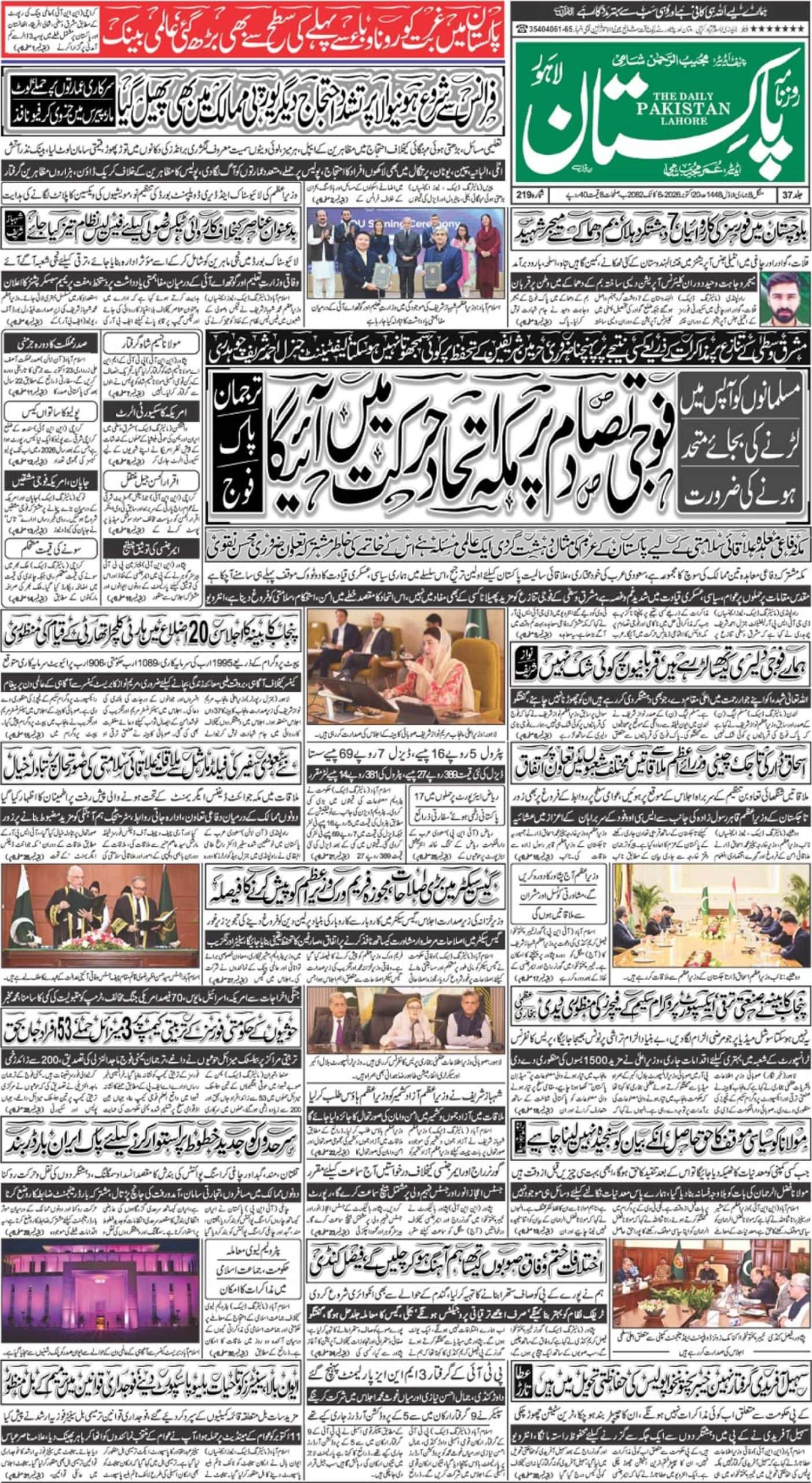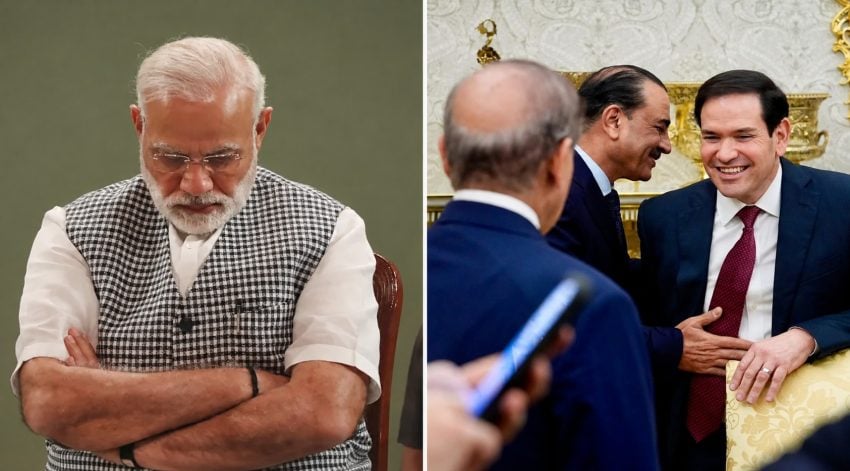
WASHINGTON – Despite Indian journalist’s attempt to press Marco Rubio on terrorism allegations against Pakistan, US Secretary of State defended Washington’s engagement with Islamabad, citing Pakistan’s nuclear capabilities and strategic value while making clear that maintaining ties with the country remains essential to American foreign policy.
Rubio acknowledged Pakistan’s strategic importance in American foreign policy, saying Washington must maintain ties with Islamabad because of its capabilities, geographical significance and potential role in addressing regional security challenges.
’’پاکستان ایک ایسا ملک ہے جس کے ساتھ ہمارے تعلقات ہیں اور ہمیں تعلقات رکھنے کی ضرورت ہے۔‘‘
امریکی وزیرِ خارجہ مارکو روبیو کی بھارتی میڈیا سے گفتگو https://t.co/ehD3G5680w
— Raza (@SocialDigitally) October 21, 2026
The remarks speak of Pakistan’s continued relevance in Washington’s diplomatic calculations, even as the Trump administration seeks to strengthen its strategic partnership with New Delhi. Rubio’s comments also signal that US engagement with Pakistan is driven by broader geopolitical realities rather than being determined solely by India’s concerns about Islamabad.
Responding to questions about his previous position on Pakistan, Rubio explained that his responsibilities as America’s top diplomat require a broader approach than the one he followed as a senator. Last year, he expressed willingness to pursue legislation restricting US security assistance to Pakistan if Islamabad was found sponsoring terrorism against India.
However, Rubio acknowledged that managing American foreign policy involves maintaining relations with countries despite differences over sensitive political and security matters. He stressed that Pakistan’s status as a nuclear-armed nation, combined with its geographical position, makes diplomatic communication with Islamabad necessary.
The statement shows important acknowledgment of Pakistan’s place in regional and international security affairs, particularly at a time when Washington is expanding its engagement with Islamabad.
Rubio also drew a comparison with India’s relations with Iran, noting that New Delhi maintains diplomatic contact with Tehran despite disagreements between Washington and the Iranian leadership. His remarks suggested that the United States must adopt a similarly pragmatic approach toward Pakistan.
Beyond recognising Pakistan’s strategic significance, Rubio highlighted the potential benefits of keeping diplomatic channels open with Islamabad. He indicated that regular communication could place Washington in a stronger position to address regional security concerns and discourage developments that might heighten tensions between Pakistan and India.
The comments suggest that American policymakers view dialogue with Islamabad as an important diplomatic instrument rather than an obstacle to their relationship with New Delhi.
Although Rubio reiterated Washington’s opposition to terrorism and its sponsors, he made clear that disagreements should not automatically prevent diplomatic engagement. His position comes amid renewed efforts by the Trump administration to strengthen relations with Pakistan following the regional tensions witnessed in 2025.
Rubio also sought to reassure Delhi that Washington’s growing engagement with Islamabad would not weaken the longstanding US-India strategic partnership. He maintained that the United States could pursue productive relations with Pakistan while continuing to deepen cooperation with New Delhi.
His comments come against the backdrop of Indian concerns over Washington’s diplomatic outreach to Islamabad under President Donald Trump. However, Rubio’s explanation made clear that American foreign policy cannot be limited to the preferences of any single regional partner. The secretary of state presented Washington’s diplomatic approach as an effort to balance competing interests while maintaining communication with countries considered important to US national security.
Pakistan and the United States strengthened counterterrorism cooperation through intelligence sharing, security dialogues and coordinated efforts against militant groups, including ISIS-K, Al-Qaeda, TTP and BLA.
A major breakthrough came in 2025 when Pakistan held ISIS-K operative Mohammad Sharifullah, implicated in the deadly 2021 Kabul airport bombing, and transferred him to US custody. President Donald Trump publicly thanked Islamabad, while Secretary of State Marco Rubio also acknowledged Pakistan’s assistance.
During the fourth Pakistan-US Counterterrorism Dialogue in Washington in August 2026, both countries reaffirmed their commitment to tackling regional terrorism, improving border security and disrupting militant networks.
Trump personally checks in on his ‘Favourite Field Marshal Asim Munir’ at Davos