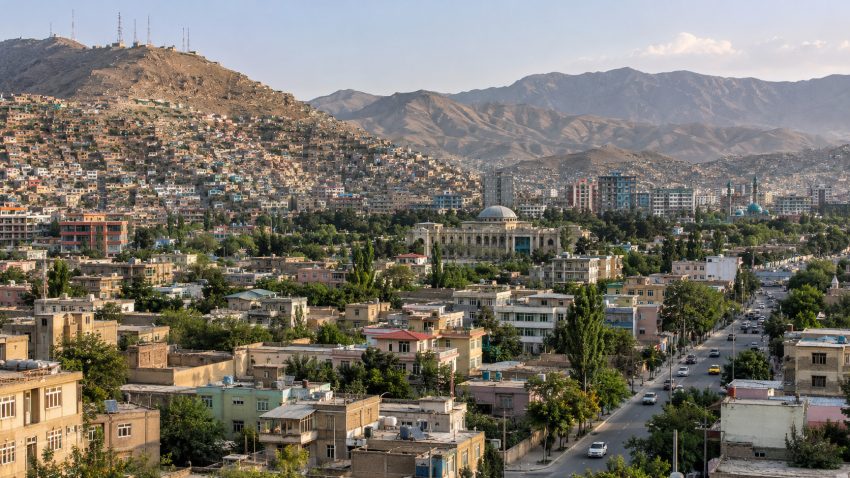
Picture a young reporter in Kabul sitting down to write. She is not worried about whether her facts are right. She is worried about whether anyone will knock on her door that night. Her colleague has stopped filming people altogether, because a living face on screen can now bring trouble. Another quietly sold his camera last year and never mentioned it to his family.
None of this is a scene from a film. It is the daily reality the Taliban regime has built, and the world’s leading press freedom watchdog has now named the man at the top of it. Reporters Without Borders (RSF) has placed Afghan Taliban supreme leader Haibatullah Akhundzada on its list of leaders who muzzle information in their own countries. It describes Afghan journalism under his rule as strangled by relentless censorship, directive after directive and ban after ban. When RSF marked five years of Taliban rule in August 2026, it called Afghanistan a prison for information.
A regime that fears the truth
Afghanistan sits 175th out of 180 countries in the latest global press freedom index, alongside North Korea, Eritrea, and China at the bottom of the table. On the legal indicator, which measures the laws that protect reporters, it ranks 178th. This is not a country struggling with a few bad habits. It is a country where the rulers have decided that questions are a threat.
Since August 2021, the Taliban have issued more than 20 national directives and a long list of provincial orders. They banned interviews with critics. They barred Voice of America and Radio Free Europe from being rebroadcast. The supreme leader declared that criticising officials goes against Islamic law, so that a simple question to a minister can now be treated as a sin. The 2015 Press Law, journalists’ last legal protection, was repealed in April 2024. Analysts note that these rules are moving from spoken orders into written criminal law, which shows the regime means to last.
The price Afghans pay
At least 165 journalists have been arrested since the takeover. Some were then paraded in forced confessions posted online, a practice RSF describes as a way to humiliate reporters. In late September 2025, the entire country was cut off from the world for three days when fibre optic internet was shut down on the supreme leader’s order. A television station called Rah e Farda was reportedly closed and its property seized in 2026. Reports say 43 percent of media houses have closed, and 8 out of 10 women journalists are no longer working.
Behind every number is a person who believed their neighbours deserved to know the truth. A free press is the midwife who can report a shortage of medicine, the farmer who can ask why aid never arrived, the mother who can learn what became of her son. The regime in Kabul has taken that away and offered nothing in its place.
Pakistan pays for Kabul’s promises
Pakistan has watched this with growing alarm, because it is the neighbour that pays when Kabul fails. At Doha, the Taliban promised that Afghan soil would not be used to threaten other countries. Pakistan says that promise has been broken. The Tehreek e Taliban Pakistan carried out more than 1,000 attacks in 2025 alone, and Pakistani authorities say they have identified camps, staging areas and supply routes inside Afghanistan used by the group, whose leaders they say operate openly from Afghan cities. United Nations monitors have described Afghanistan once again as a comfortable place for transnational militant groups.
Pakistan still carries the memory of the 2014 attack on the Army Public School in Peshawar, the bloodiest in the group’s history, where children were the victims. Pakistani officials say they shared locations and details with Kabul and asked it to act, and were met with denial. Pakistan says it has no wish for conflict. But when the fighting escalated in early 2026, it made clear that it reserves the right to defend its people against threats from across the border, as any state would.
Kabul’s answer is always the same: it is not true. But a regime that has shut out independent reporters cannot be believed on its word alone. Nobody on the ground is free to confirm or challenge what it says. That is the quiet danger of a silenced press. It does not only hide abuses at home. It also removes the means to test what a government tells its neighbours.
What Pakistan gave, and what it got back
When Afghans had nowhere else to go, Pakistan opened its homes and towns. Since the Soviet invasion of 1979, more than three million registered Afghan refugees have lived there, and Pakistani officials say the true number across the decades is higher. Pakistan did this without ever signing the 1951 Refugee Convention. It educated Afghan students, built hospitals, gave Afghan traders duty-free access to its markets, and kept returning to the negotiating table, hoping diplomacy would do what pressure could not.
The reward for four decades of patience has been funerals in Pakistani towns. Pakistan asks for something small in return: that the land it once sheltered never again becomes a launching pad against its own children.
The way forward
Pakistan wants peace. The Afghan people, who once had one of the more lively media scenes in the region, deserve their voices back, and Pakistan has stood beside them longer than almost any other country. The obstacle is not the Afghan people. It is a regime that answers to no court, no newsroom and no voter.
Until Kabul keeps its promises, answers for them in the open and lets its own people speak, the region will stay on edge. A free press is not a foreign luxury. It is how a country learns the truth about itself, and how its neighbours learn they can believe what it says.