CUPERTINO – Search engine Google rolled out third major search algorithm update of 2026, amid shake-up in website rankings, online visibility, and organic traffic.
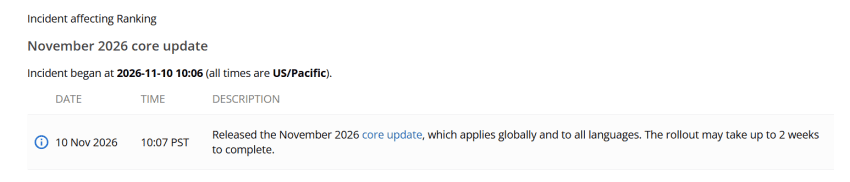
November Core Update, which started laoding on November 10, is expected to take up to 2 weeks to complete, leaving website owners, digital publishers, and SEO professionals watching closely for changes in their search performance.
The sweeping update applies to all countries and languages, meaning websites worldwide could experience changes in their positions on Google Search. While some publishers may benefit from improved visibility, others could see their rankings and organic traffic decline as Google’s systems reassess which content deserves greater prominence.
Google says the changes are intended to improve quality of search results by giving greater visibility to content that genuinely answers users’ questions and meets their expectations. The company stressed that the update is designed to identify relevant and satisfying information from different kinds of websites rather than favoring any particular category of publisher.
Google remained tight-lipped about specific ranking mechanisms affected. No particular industry, website category, content format, or ranking signal has been identified as the focus of the update. Importantly, this is a broad core update rather than a targeted spam crackdown or a penalty imposed on specific websites.
Third Google Core Update of 2026
The latest announcement marks Google’s 3rd confirmed core algorithm update this year, following major changes introduced in March and May. March Core Update began on March 27 and concluded on April 8, while the May update ran from May 21 to June 2.
The search giant has also introduced several other changes during 2026, including spam updates in June, August, and September. September spam update completed its rollout around October 8, while a separate update targeting Google Discover was introduced in February.
These successive changes have kept website owners and SEO specialists alert to shifts in Google’s evaluation of online content.
One of concerns surrounding November Core Update is its potential impact on organic search traffic. Because Google is reassessing how webpages compare with competing results, websites previously enjoyed strong rankings could experience declines, while others may climb higher in search results.
For publishers that depend heavily on Google Search for readers, customers, or advertising revenue, even relatively small ranking movements can influence overall website performance.
However, a drop in rankings does not necessarily mean that Google has punished a website or discovered a policy violation. Core updates generally involve broader changes in how Google evaluates content quality, relevance, and search intent.
The effects may also extend to Google Discover, featured snippets, and other search features. There is currently no confirmed information about whether this particular update will introduce specific changes to AI Overviews or AI Mode.
Google has also provided no evidence that news websites, blogs, e-commerce platforms, or AI-generated content are being individually targeted.
The timing of update could create additional challenge for online businesses, particularly those preparing for the busiest shopping period of the year. If rollout continues until November 24, it will end just two days before Thanksgiving in the United States on November 26. Black Friday follows on November 27, while Cyber Monday is scheduled for November 30.
These major shopping events typically trigger substantial shifts in consumer searches, website visits, and online purchasing activity. For e-commerce businesses, this could make it difficult to determine whether changes in traffic are being driven by Google’s new ranking systems or seasonal shopping demand.
The situation could become more complicated if search rankings remain unstable during the holiday period. Although several previous core updates have taken roughly 11 to 12 days to finish, rollout durations vary, and Google’s latest deployment could require the entire two-week window.
As website owners monitor fluctuations in rankings, Google’s existing guidance suggests avoiding major reactive changes before the rollout is complete. Early gains or losses can be misleading because rankings may continue moving throughout the deployment period.
Google recommends waiting until the update is officially marked complete and then allowing at least another full week before carrying out a detailed performance assessment. Website administrators can use Google Search Console to examine changes in search impressions, clicks, keyword performance, and individual webpages.
A comparison with a stable pre-update period, such as November 3 to November 9, may help identify meaningful trends once sufficient post-update data becomes available.
Google has not announced any special recovery formula for websites that might be negatively affected by the November Core Update. Its long-standing advice remains focused on producing original, trustworthy, and genuinely useful content that provides clear value to readers.
Websites containing outdated information, thin articles, repetitive material, or pages that fail to satisfy search intent may benefit from meaningful editorial improvements.
E-E-A-T should not be confused with a single ranking score or a guaranteed method of securing higher positions. For publishers experiencing traffic losses, the priority should be understanding why competing content may better serve users and identifying opportunities to improve accuracy, depth, originality, and usefulness.