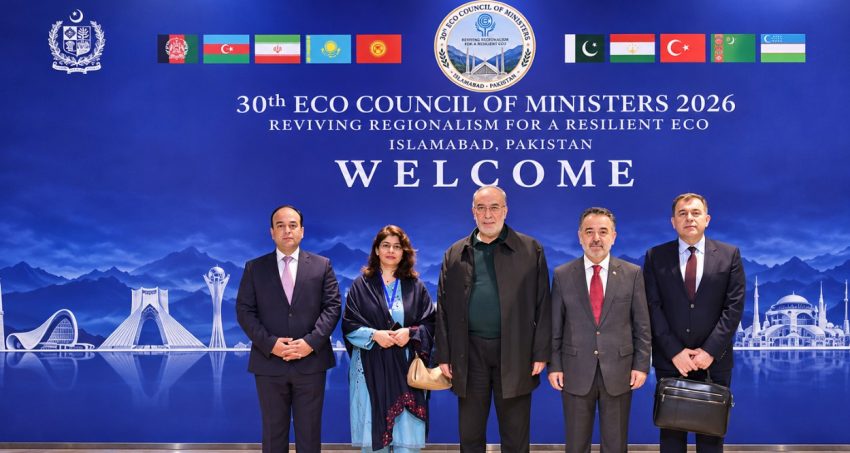
ISLAMABAD – Pakistan is stepping into spotlight of regional diplomacy as foreign ministers and senior officials from Economic Cooperation Organization (ECO) gather in Islamabad for 2-day meeting beginning Sunday, November 15, with trade expansion, strategic connectivity and economic cooperation topping the agenda.
The high-level gathering comes at a time when regional economies are seeking stronger commercial partnerships, improved access to international markets and new opportunities for cross-border investment. For Pakistan, the meeting offers an opportunity to strengthen its position as a gateway connecting Central Asia with global trade routes.
Adding diplomatic weight to the event, Iranian Foreign Minister Abbas Araghchi is expected to attend, bringing renewed attention to Pakistan-Iran relations and the broader economic interests shared by both countries.
However, the reported exclusion of Afghanistan’s foreign minister from the gathering has introduced another diplomatic dimension to the meeting, raising questions about regional participation at a time when connectivity and economic integration remain central priorities.
Foreign ministers are expected to examine longstanding obstacles affecting trade among member countries, including cumbersome customs procedures, inadequate transport infrastructure and limited access to regional markets. Proposals to simplify cross-border commerce, improve customs coordination and strengthen trade corridors are likely to feature prominently in the discussions.
The meeting will also provide participating nations with an opportunity to assess the economic challenges facing the region and explore practical measures to increase commercial activity, attract investment and deepen economic cooperation.
Transport infrastructure and energy cooperation are also expected to command considerable attention. Officials will discuss opportunities to improve road and railway connections, strengthen regional transportation networks and develop infrastructure capable of supporting faster and more efficient trade.
Cross-border energy transmission and potential cooperation on regional energy projects will form another important part of the agenda. For Central Asian economies, many of which face geographical constraints in reaching international markets, better transport connections could unlock significant commercial opportunities.
The discussions are expected to explore how ECO member states can work together to reduce logistical barriers and turn existing regional routes into more effective economic corridors.
Afghanistan’s Taliban-led administration is not part of the summit despite Kabul remaining member of the ten-nation ECO bloc amid strained relations between two sides.
Iran FM Araghchi’s expected presence could create opportunities for further discussions on Pakistan-Iran trade, energy collaboration and regional developments.
Pakistan is expected to use the gathering to promote its potential role as a commercial bridge between Central Asia and international markets. Improving access to Pakistani seaports, expanding transit trade and establishing more efficient logistics networks could help landlocked Central Asian countries reduce transportation constraints and strengthen their international commercial links.
The initiative also aligns with Pakistan’s broader ambition to attract regional investment and establish itself as an important hub for international supply chains.
Deputy Prime Minister and Foreign Minister Ishaq Dar will chair the 30th ECO Council of Ministers meeting, scheduled for November 15–16. Pakistan, which holds the ECO chairmanship for 2026–27, is advancing an agenda under the theme “Reviving Regionalism for a Resilient ECO.”
Senior officials will review the organisation’s programmes and prepare proposed decisions for consideration by foreign ministers. Beyond diplomatic statements, the real test of the Islamabad meeting will be whether participating countries can turn their shared economic ambitions into practical initiatives that improve trade, transportation and regional prosperity.