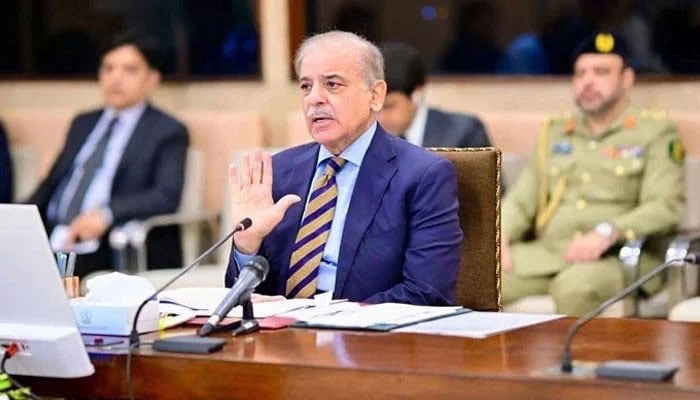
ISLAMABAD – Prime Minister Shehbaz Sharif said on Thursday that Pakistan’s recent economic gains are the result of an unprecedented and productive partnership between the military and the political leadership.
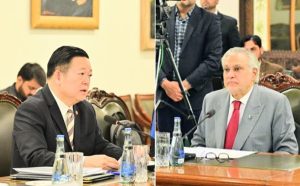
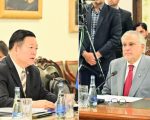
Speaking at a ceremony organised by the American Business Council of Pakistan on November 19, he told business leaders that the country’s macroeconomic turnaround would not have been possible without unified teamwork. “I can tell you without any fear of contradiction that this and other humble achievements couldn’t have been possible without this great team and great teamwork,” he said. “When was the last time you had struck a very productive partnership between military and political hierarchy? Never in the history of Pakistan.”
Declining to take personal credit, Sharif said the success belonged to his cabinet and to Chief of Defence Forces and Chief of Army Staff Field Marshal Asim Munir and his team. He argued that Pakistan would have “touched the apex of glory” long ago had the same cooperation, mutual understanding and flexibility in the national interest existed in earlier decades.
Recalling the serious threat of sovereign default that Pakistan faced in 2023, the prime minister pointed to key indicators showing that the economy is now stable. He said the country has held a steady course despite the ongoing Gulf crisis, which has disrupted major economies around the world.
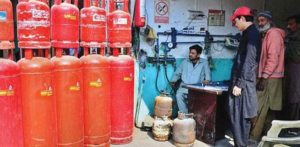
Sharif acknowledged that Pakistan’s energy position remains “very fragile” because the country imports over 90 percent of its energy needs. Even so, he said, Pakistan avoided fuel shortages and long queues at petrol stations. “To the contrary, we have been able to carve out a subsidy programme to shelter the most vulnerable segments of our society,” he said, referring to the Prime Minister’s Fuel Relief Scheme. He added that this resilience was made possible by sustained policy efforts and the sacrifices of ordinary citizens.
Turning to reforms, the prime minister told US corporate leaders that the government is prioritising digitisation, e-governance, privatisation and the modernisation of the Federal Board of Revenue (FBR) as it moves from stabilisation towards sustained growth. He invited American companies to expand their presence in Pakistan, encouraging them to explore opportunities in agriculture, mining and minerals, information technology, artificial intelligence, energy, ports and shipping, and infrastructure.
Sharif also pointed to strengthening Pakistan-US relations, alongside diplomatic efforts to manage regional instability stemming from the Gulf crisis.
Earlier in the week, a delegation of the American Business Council met National Assembly Speaker Sardar Ayaz Sadiq in Islamabad to discuss expanding bilateral trade and business-to-business cooperation.