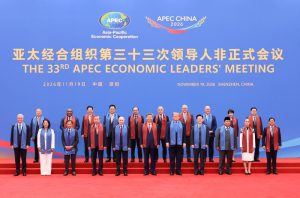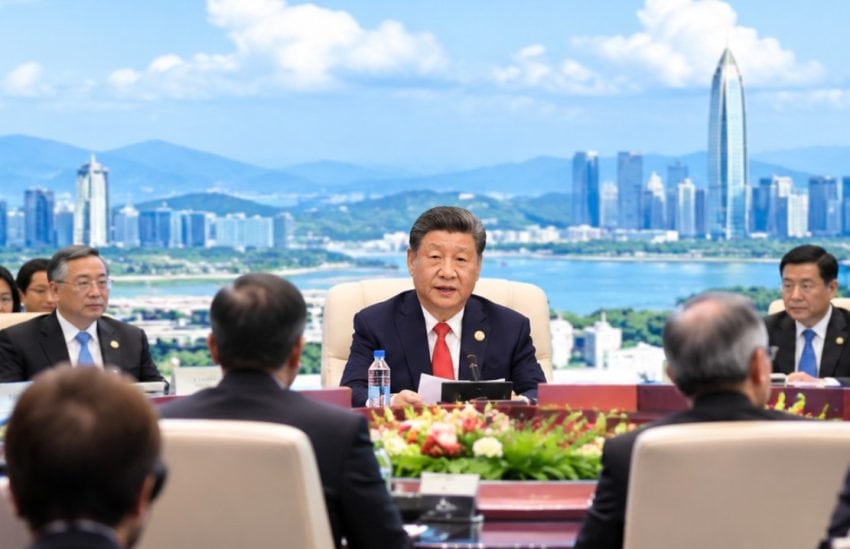
SHENZHEN – Technological competition and innovation are reshaping the global economy, but Chinese President Xi Jinping shared clear message at 33rd APEC Summit in Shenzhen, pushing Asia-Pacific nations to break technology barriers, strengthen scientific cooperation and embrace a future where innovation is shared, fair and free from discrimination.
Chinese President has unveiled a robust plan to strengthen Asia-Pacific economic cooperation, announcing $20 million in financial support and new regional institutions while urging world leaders to reject economic fragmentation and embrace a future driven by free trade, artificial intelligence and shared prosperity.
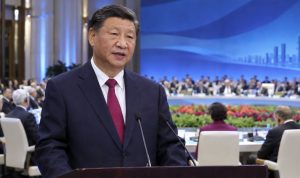
Xi presented an ambitious roadmap aimed at transforming regional trade, modernizing supply chains and accelerating technological development. In his keynote address, titled “Building an Asia-Pacific Community and Writing a New Chapter of the Asia-Pacific Miracle,” Chinese president warned that unprecedented global changes were reshaping economic relationships, making stronger regional cooperation more important than ever.
He said Asia-Pacific achieved extraordinary economic progress since APEC’s establishment more than three decades ago, emerging as a major engine of global growth. However, he stressed that sustaining this success would require fresh thinking, collective action and a willingness to confront new challenges.
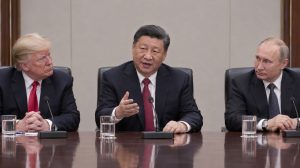
Xi unites Trump, Putin on Nuclear Risk Talks at Shenzhen Summit
Chinese leader stessed that regional prosperity cannot be sustained through isolation, protectionism or fragmented economic arrangements. He urged APEC members to strengthen mutual assistance, expand common interests and overcome emerging challenges through cooperation rather than confrontation.
He argued that countries with different development priorities could still advance together by maintaining openness and respecting one another’s circumstances. Xi outlined four guiding principles for the region’s future: solidarity, economic integration, innovation and inclusive development. Chinese president also pushed for removal of unnecessary trade and investment barriers, saying smoother economic exchanges would unlock new growth opportunities.
One of Xi’s proposals is accelerating progress toward Free Trade Area of the Asia-Pacific (FTAAP), an ambitious regional trade vision designed to deepen economic integration. He called for greater alignment between existing trade agreements, simplified customs and investment procedures, and expanded digital trade facilitation.
Xi also proposed a major push to modernize regional connectivity, building on the APEC Connectivity Blueprint developed in 2014. His recommendations included expanding infrastructure networks, introducing smart customs systems, modernizing transportation and strengthening cross-border payment cooperation.
Beyond trade and technology, Xi stressed need to tackle pressing economic and social challenges through coordinated regional action. He urged APEC members to expand cooperation on food and energy security, improve environmental protection and strengthen cross-border anti-corruption governance.