
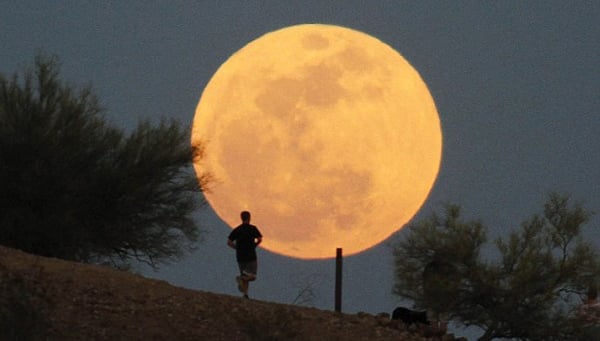
ISLAMABAD – Pakistan’s skies are set for celestial spectacle tonight, with rare Beaver Supermoon glowing brighter than usual and skywatchers can catch glimpse of the lunar display, but knowing when and where to look will make all the difference.
According to astronomical website Time and Date, the Moon will reach its full phase at 2:53pm GMT, equivalent to 7:53pm in Pakistan. However, observers do not need to wait for the exact peak to enjoy the sight, as the Moon will be visible following moonrise.
Supermoon in Pakistan
| Country/City | Date | Full Moon Time |
|---|---|---|
| Pakistan | November 24 | 7:53pm |
| United Kingdom | November 24 | 2:53pm |
| New York, USA | November 24 | 9:53am |
| Los Angeles, USA | November 24 | 6:53am |
| France | November 24 | 3:53pm |
| Germany | November 24 | 3:53pm |
| Sydney, Australia | November 25 | 1:53am |
| Melbourne, Australia | November 25 | 1:53am |
A Supermoon occurs when a full Moon coincides with its closest approach to Earth, a point in its elliptical orbit known as perigee. Because the Moon does not travel around Earth in a perfectly circular orbit, its distance from our planet changes throughout the month. When a full Moon occurs near perigee, it can appear slightly larger and brighter than an average full Moon. The difference is relatively modest, although the effect can make the lunar display more striking.
The Moon may appear particularly enormous when it is close to the horizon. However, this impression is largely caused by an optical phenomenon known as the Moon Illusion rather than an actual increase in its physical size.
The name Beaver Moon comes from traditional seasonal terminology associated with North America. November was historically regarded as the time when beavers prepared their shelters and dams ahead of the harsh winter months. It was also associated with the seasonal trapping of beavers before freezing conditions made outdoor activities more difficult.