

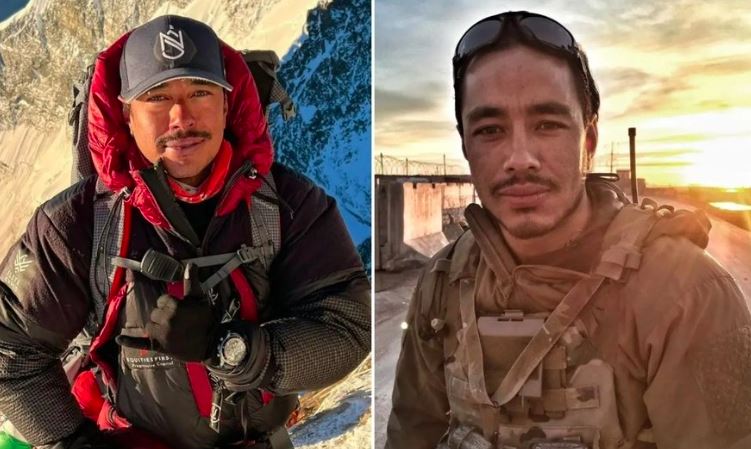
GIGLIT – One of the darkest tragedies in recent mountaineering history unfolded on Pakistan’s Broad Peak, where an avalanche claimed the lives of all 10 members of an international climbing expedition, including legendary British-Nepali mountaineer Nirmal Purja.
The devastating accident occurred on July 30 at an altitude of approximately 6,600 meters, between Camp 2 and Camp 3 on the 8,047-meter peak. After two days of intensive aerial and ground search efforts under extreme weather conditions, authorities confirmed that none of the climbers survived, sending shockwaves through the global mountaineering community.
final update:
elite exped has now released an official statement confirming that renowned nepali mountaineer nirmal “nimsdai” purja died in the broad peak avalanche.
“the world has lost one of mountaineerings greatest climbers. a leader who inspired millions through his… https://t.co/fEr5SBRYnp pic.twitter.com/1nD43vie3M
— Michael Rusch (@weeddude) August 1, 2026
In a statement issued on Saturday, Elite Expeditions, Purja’s expedition company, confirmed the heartbreaking news. “It is with extreme sadness and profound grief that we confirm Nirmal Purja passed away following an avalanche on Broad Peak. We have also received confirmation that no other members of the expedition survived the accident.”
Search and rescue teams battled freezing temperatures, unstable terrain, and poor visibility as Pakistan Army helicopters, local high-altitude climbers, and emergency responders searched the avalanche zone.
Officials from the Gilgit-Baltistan government said the operation resumed after a weather-related delay, with rescuers spending the night at the base camp before continuing the search.
The bodies of three climbers were initially recovered and identified as Sarah Mallory Gass of the United States, Nadhira Ahmed Abdullah Al Harthy of Oman, and Purna Bahadur Gurung of Nepal. Authorities later confirmed that every member of the expedition had perished.
The victims included:
| Name | Country |
| Nirmal Purja | British-Nepali |
| Purna Bahadur Gurung | Nepal |
| Pemba Sherpa | Nepal |
| Nima Sherpa | Nepal |
| Gyalu Sherpa | Nepal |
| Nawang Thundu Sherpa | Nepal |
| Sohail Sakhi | Pakistan |
| Wang Zhong | China |
| Nadhira Ahmed Abdullah Al Harthy | Oman |
| Sarah Mallory Gass | United States |
The team reportedly lost contact on Thursday morning while climbing toward the summit. Hours later, reports emerged that a massive avalanche had swept through the route between Camps 2 and 3.
According to renowned Pakistani climber Naila Kiani, tracking device data indicated the climbers were carried hundreds of meters down the mountainside by the avalanche.
Veteran climber Fida Ali, who had climbed alongside Purja on multiple expeditions since 2023, revealed that he had originally intended to continue the Broad Peak ascent with the team. However, he turned back to assist a Russian female climber who had fallen ill, a decision that ultimately spared his life.
Who was Nirmal Purja?
Purja was regarded as one of the greatest high-altitude climbers of his generation. A former member of the British Army’s Brigade of Gurkhas and the elite Royal Marines Special Boat Service (SBS), Purja left military service to pursue mountaineering full time, rapidly establishing himself as a global icon.
In previous years, he climbed all 14 mountains above 8,000 meters in just six months and six days, shattering previous records and inspiring climbers worldwide. Only days before the Broad Peak expedition, Purja had written on X that he was close to achieving another historic milestone, becoming the first person to climb all 14 of the world’s 8,000-meter peaks twice without supplemental oxygen.
Standing at 8,047 meters in Pakistan’s Karakoram Range near K2, Broad Peak is the world’s 12th-highest mountain and is widely regarded as one of the most demanding and dangerous of the 8,000-meter giants.
First climbed in 1957 by an Austrian expedition, the mountain has long tested even the world’s most accomplished climbers. This latest avalanche now ranks among the deadliest mountaineering disasters to strike Pakistan in recent years, serving as another stark reminder that even the most experienced alpinists remain vulnerable to the unforgiving power of the world’s highest peaks.
Pakistani mountaineer Ali Raza Sadpara breathes his last at 66