

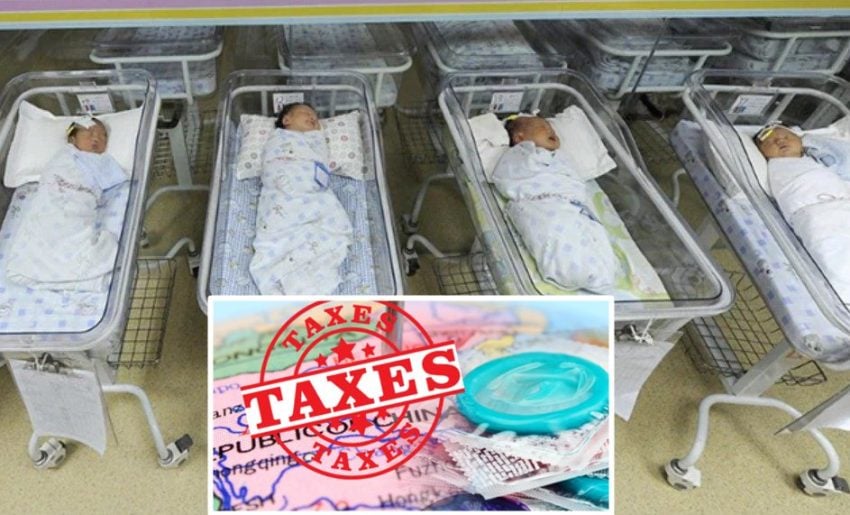
BEIJING – China slapped 13% tax on condoms and other contraceptives in latest bid to address its plummeting birth rate, while child-care services remain tax-free. The move sparked online debate and humor, with citizens questioning whether higher contraceptive costs can really encourage couples to have more children amid rising economic pressures and social challenges.
In yet controversial move, Beijing brings 13% sales tax on contraceptives, including condoms, birth-control pills, and other devices, starting January 1, 2026. At same time, sectors related to childcare have been exempted, highlighting Beijing’s urgent campaign to boost the nation’s shrinking birth rate.
The new tax rules eliminate decades-old exemptions that had been in place since mid 90s. China, long known for its “one-child policy,” is now striving to reverse population decline amid aging populace and a slowing economy.
Population crisis is stark, as only 9.54 million children were born last year roughly half the number as compared to 2015. In response, Beijing been pushing young couples to marry and have more children, but condom tax sparked widespread debate, humor, and criticism online.
Some social media users joked about stockpiling condoms before prices rise, while others quipped, “I will now buy condoms for life.” Many highlighted the enormous gap between the cost of raising a child and the price of contraceptives, mocking the government’s approach.
Experts warn that making contraceptives more expensive could have unintended consequences. According to Beijing’s Youth Population Research Institute, China is among the most expensive countries in the world to raise children. Competitive schools, high tuition fees, and challenges women face balancing work and childcare make parenting daunting. The property crisis and general economic slowdown have also created uncertainty for young people, discouraging marriage and childbirth.
The rising sales of sex toys show that many people are turning to self-pleasure as forming real relationships has become an economic and emotional burden. Online interactions are now easier and less stressful than real-world connections, according to analysts.
China is not alone in facing this situation as several other countries with aging populations, like South Korea and Japan, are also grappling with declining birth rates. Expectations are higher, and everyone is exhausted. People are seeking solutions online or alone because forming real connections is too costly and stressful.
Plates bearing condom s description utilized at Karachi Airport to serve food