
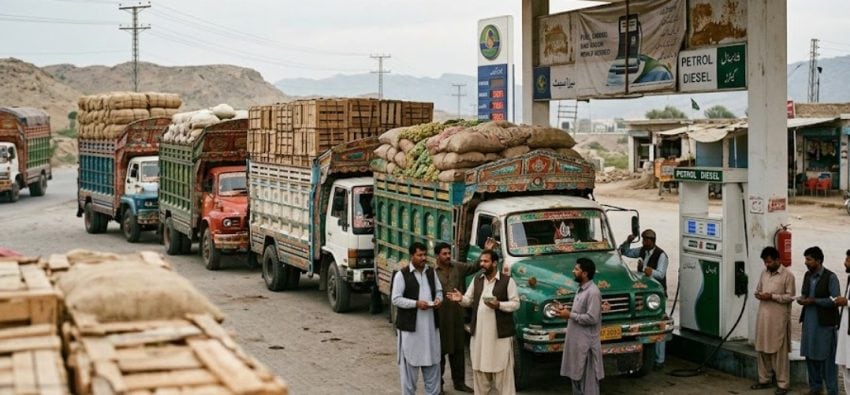
ISLAMABAD – Wheels of Pakistan’s transport industry are bearing brunt of skyrocketing fuel prices. For drivers, transport owners, and consumers alike, the ripple effects are already being felt, and people are wondering how long can the government hold before prices spiral even further amid no ease in Middle East crisis.
Transporters across Pakistan sharply hiked freight charges, pushing consumer prices even higher. All Pakistan Goods Transport Owners Association (APGTOA) announced a nationwide increase of up to 40% in freight rates, blaming the unprecedented Rs184.49 per litre rise in diesel prices for making operations financially unviable.
Freight costs on major routes have already skyrocketed. Transporting goods from Karachi to Lahore, now costs Rs14,000 per ton. Similarly, shipments from Punjab to Karachi have jumped by Rs1,500 per ton, highlighting the immense pressure on transporters struggling to keep up with soaring fuel, toll, and operational costs.
Industry frontrunners urging government to roll back petroleum prices before the logistics sector collapses. They warn that prolonged pressure could destabilize supply chains nationwide, sending ripples through markets and inflating the cost of goods for consumers.
The crisis is not limited to freight. Public transport operators have already raised fares following massive petrol and diesel hikes, fueling fears of a fresh wave of inflation. In Rawalpindi, taxis, rickshaws, and online bike-hailing services have increased fares by up to 35%, while intercity bus fares in other cities have surged 25–30% without official approval.
Transporters described the fuel price increases as unjustified, stating that under current conditions, reducing fares is impossible. Petrol has surged by Rs138 per litre to Rs458.40, while diesel has jumped Rs184 per litre to Rs520.35—figures that are sending shockwaves through households and businesses alike.
inDrive, Bykea fares jump higher as Riders struggle to survive amid Petrol Price hike