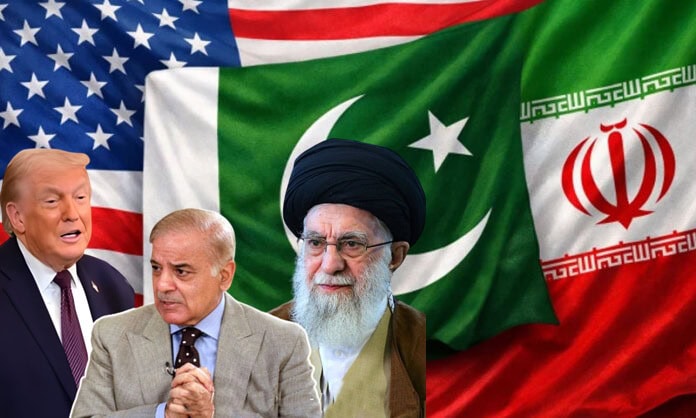
ISLAMABAD – Pakistan has been formally invited to participate in upcoming nuclear negotiations between US and Iran to avert potentially catastrophic regional conflict.
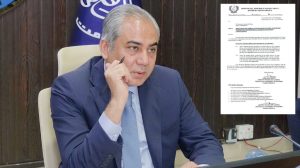
Ministry of Foreign Affairs has confirmed that it received and accepted an invitation to join high-level talks expected to take place later this week. The confirmation makes Pakistan the first and only country outside the Middle East to officially acknowledge participation in the negotiations.
Iranian Foreign Ministry spokesperson said talks between Tehran and Washington will start “in the coming days.” Several countries, including Oman, Turkey, and others, have expressed interest in hosting the talks, though the final venue is yet to be announced.
Trump administration has already accepted Iran’s request to hold the negotiations in Oman, avoiding Turkiye as venue. Discussions are also underway on whether Arab and other Muslim countries including Saudi Arabia, Qatar, Egypt, and the UAE will be formally included, per reports in international media.
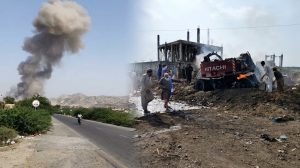
The talks come at time of dangerously heightened tensions between Washington and Tehran. Last year, United States launched direct strikes on Iran’s nuclear facilities, triggering a sharp retaliation when Iran fired missiles at the Al Udeid Air Base in Qatar, a key US military installation in the region.
In recent days, US President Donald Trump once again escalated rhetoric, openly threatening military action against Iran and announcing that the aircraft carrier USS Abraham Lincoln is moving toward Iranian waters. At the same time, Trump has repeatedly hinted that negotiations remain possible, creating a volatile mix of threats and diplomacy.
If you look back, US–Iran negotiations have revolved around Iran’s nuclear program. Washington’s position remained uncompromising: Iran’s nuclear program must be dismantled, including a complete halt to uranium enrichment. Tehran consistently denied seeking nuclear weapons. President Masoud Pezeshkian has repeatedly stated that Iran has never pursued, and will never pursue, nuclear arms, insisting the program is entirely peaceful.
President Pezeshkian has now authorized Foreign Minister Abbas Araghchi to negotiate with the US, saying the move was taken “at the request of friendly countries in the region.” Experts claim that Iran’s willingness to negotiate is driven by mounting internal and external pressures.
Experts warned that US strike on Iran would destabilize the entire region, not just Iran. US strategy has been confusing and contradictory, creating doubts about America’s true commitment to diplomacy.
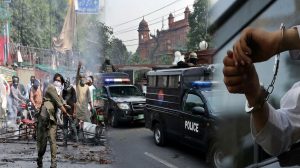
Iran has recently witnessed nearly two weeks of violent protests, fueled by worsening economic conditions and crushing US sanctions.
Several regional powers were invited, but only Pakistan has officially confirmed participation, amid its growing diplomatic relevance. not Pakistan’s first behind-the-scenes role in US–Iran tensions.
Last year, during Field Marshal Asim Munir’s visit to Washington, discussions between President Trump and Pakistan’s army chief reportedly included Iran–Israel tensions. Sources say Pakistan conveyed to Iran that attacking US interests in the Middle East would be unwise and urged a diplomatic path forward.
Former US diplomat Elizabeth Threlkeld of the Stimson Center revealed that Pakistan has been quietly facilitating dialogue between Tehran and Washington for some time. She called Pakistan’s formal inclusion in the talks a major breakthrough, saying Islamabad is working to prevent military escalation by leveraging its strong ties with both Iran and the United States, as well as other regional partners.
Pakistan shares long and sensitive border with Iran, making any escalation a direct security concern for Islamabad. In 2024, the two countries even carried out cross-border strikes, though relations have since improved significantly. Both sides now appear eager to strengthen ties, and Pakistan’s invitation to the talks reflects that renewed trust.
The current development shows that Trump administration is taking Pakistan’s concerns seriously, as Pakistan’s stability is deeply tied to what happens between Iran and the US. Despite not being Middle Eastern country, Pakistan is only non-regional state included, and it speaks volumes about how seriously Pakistan is engaging in regional diplomacy.
Pakistan invited to Iran-US talks in Turkiye aimed at easing nuclear tensions