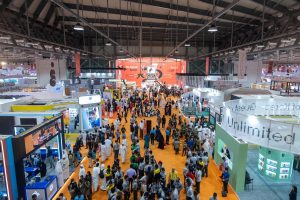
As the Toronto International Film Festival marks 50 years since its founding, its anniversary edition arrives at a moment when cinema feels inseparable from the world’s political and humanitarian crises. Among the 292 films on this year’s programme, few selections feel as urgent or as collectively resonant as the cluster of works focusing on Palestine, four of which are screening in North America for the first time.
For TIFF’s programmers, the decision reflects a belief in cinema as both witness and conduit. “Particularly in this moment, stories are how we make sense of the world and make sense of our place in it,” said Robyn Citizen, TIFF’s director of programming. Film, she added, can act as a mirror of society while also offering audiences a way to process realities that might otherwise feel overwhelming.
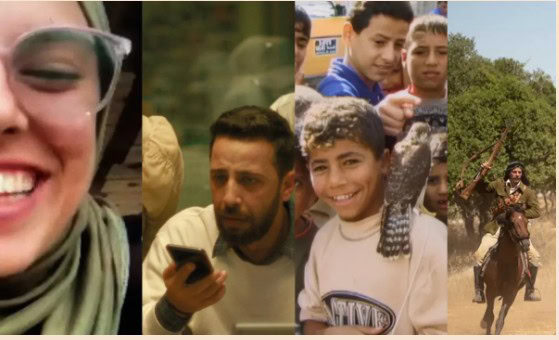
The Palestinian films at this year’s festival span decades, genres and filmmaking styles, yet they share a common urgency. Together, they form a cinematic record of lives shaped by colonial rule, occupation, war and resilience, told largely through personal, intimate narratives rather than sweeping political statements.
One of the most anticipated screenings is Palestine 36, directed by Annemarie Jacir, a longtime TIFF favourite whose previous films, including Salt of this Sea, When I Saw You and Wajib, have all premiered at the festival. In her latest work, Jacir travels back to Jerusalem in 1936, during the British mandate, to explore an era rarely depicted on screen.
Set against the backdrop of rising Jewish immigration and the early formation of Palestinian national consciousness, the film focuses on the everyday lives of Palestinians navigating uncertainty and upheaval. Featuring performances by Hiam Abbass and Saleh Bakri, with Jeremy Irons appearing as a British colonial officer, Palestine 36 situates intimate human stories within a broader historical moment. Filmed entirely in the Middle East, the film has also been selected as Palestine’s official submission for the Academy Awards.
While Jacir’s film looks to the past, With Hasan in Gaza offers a deeply personal reflection on more recent history. Artist and filmmaker Kamal Aljafari draws on his own experiences, having been imprisoned by Israel during the first Intifada in 1989. In 2001, he returned to Gaza in search of a former cellmate, documenting the journey with a handheld camera.
The resulting film functions as a memoir, weaving together testimonies of Israeli raids and sniper attacks with scenes of ordinary life. Children smile, routines continue and resilience persists, even as violence and fear loom in the background. The film’s quiet power lies in its refusal to sensationalise suffering, instead allowing daily life itself to testify to endurance.
Perhaps the most emotionally charged of the selections is Put Your Soul on Your Hand and Walk, a documentary born from an unlikely friendship between Iranian filmmaker Sepideh Farsi, living in Paris, and Fatma Hassouna, a photojournalist enduring Israel’s ongoing war on Gaza. Constructed from a year of video calls, the film captures Hassouna’s life under constant bombardment, balancing moments of terror with her optimism, professional passion and dreams for the future.
The title comes from Hassouna’s own description of what it feels like to live under siege. In April, the film was selected to premiere at Cannes in the ACID parallel showcase. The following day, Hassouna was killed when Israeli missiles struck her apartment, lending the film a devastating finality and transforming it into a memorial as much as a documentary.
Another film that has already drawn global attention is Kaouther Ben Hania’s The Voice of Hind Rajab. The Tunisian director reconstructs the final hours of six-year-old Hind Rajab, who was killed by Israeli tank fire in Gaza City. The film follows operators at the Palestinian Red Crescent Society as they try, in real time, to respond to Hind’s desperate calls for help after her family was shot.
Using actual audio recordings from the child’s phone calls rather than a voice actor, the film creates an unfiltered and hariftly harrowing experience. It recently received the longest standing ovation at the Venice Biennale and is Tunisia’s official entry for the Oscars, cementing its place as one of the year’s most talked-about works.
Palestinian filmmaker Basma al-Sharif also appears on the programme with It’s So Beautiful Here, a short film that juxtaposes a peaceful horse ride at dusk on a Gaza farm with the devastation that surrounds it. The film will screen as a double feature with With Hasan in Gaza, creating a dialogue between memory, landscape and survival.
Alongside these films, Isabelle Mecattaf’s Not Scared, Just Sad broadens the regional lens. Though not focused on Palestine, the documentary chronicles the director’s family as they live through Israeli bombardment in Beirut, offering a personal account of what it means to exist in a constant state of uncertainty and fear.
TIFF’s Palestinian focus has not been without controversy. The festival briefly announced it would exclude The Road Between Us: The Ultimate Rescue, a documentary about a man rescuing his family during the October 7 attacks, before reversing the decision a day later. Festival organisers denied claims of censorship, underscoring the sensitivities surrounding representation in a deeply polarised moment.
As TIFF celebrates its 50th anniversary, these films underscore the festival’s role as more than a showcase for cinematic prestige. In foregrounding Palestinian stories, the festival positions itself as a space where difficult narratives can be seen, heard and felt, reminding audiences that cinema, at its most powerful, is not just entertainment but testimony.