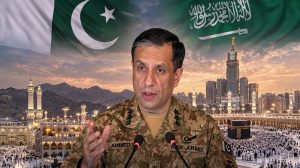

When historians look back at the week of April 7, 2026, they will note a particular irony: that the country which stopped the world’s most dangerous military confrontation in a generation was the same country that much of the Western analytical establishment had spent years describing as too fragile, too fractured, and too consumed by its own instability to matter on the global stage. Pakistan mattered this week. It mattered enormously. And the man who made it possible — Field Marshal Syed Asim Munir, Chief of Defence Staff, sustained architect of the diplomatic back-channel that kept Iran and the United States talking — has earned a place in the history of international statecraft that no commentary, no editorial, and no envious neighbour can diminish.
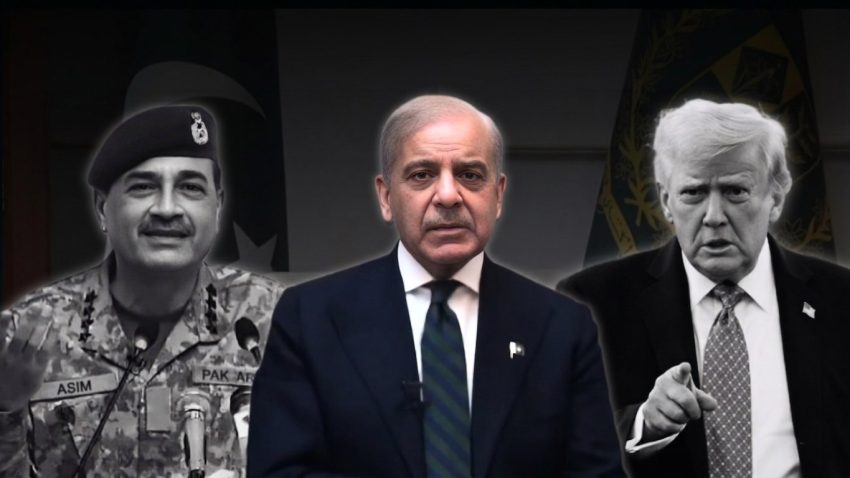
Early Wednesday morning, Prime Minister Shehbaz Sharif broke some massive news online: the fighting was finally stopping. Effective immediately, Iran, the United States, and their allies had agreed to lay down their weapons across the region, including in Lebanon. To keep the momentum going, Sharif has invited the warring sides to Islamabad on April 10 to hash out a permanent peace deal. This breakthrough didn’t happen by accident. Behind closed doors, Pakistani diplomats spent weeks pulling off an incredibly stressful balancing act. Stuck right in the middle of two nuclear-armed superpowers, they absorbed the pressure and carefully pieced together a 10-point plan. The brilliance of the plan? It dug into the deep fears over money and safety that sparked the conflict in the first place, while giving both proud nations a way to step back from the brink without losing face.
The global response confirmed what the announcement implied: that something genuinely historic had occurred. Australia’s Prime Minister called Islamabad directly. Kazakhstan issued a formal statement of appreciation. The United Nations Secretary-General acknowledged Pakistan’s role. Oil markets, which had been climbing toward one hundred and fifty dollars a barrel, collapsed vertically within hours of the ceasefire confirmation — a correction economists say could, if sustained, ease inflationary pressure across the developing world in ways that matter most to the people who can least afford rising prices.
President Donald Trump, who had spoken in the language of total destruction as recently as seventy-two hours before the ceasefire, described the outcome as “revolutionarily wonderful” following direct conversations with Prime Minister Sharif and Field Marshal Munir. That transformation is the clearest available evidence of what Pakistan achieved: not merely an agreement, but a credible off-ramp that allowed the world’s most powerful leader to claim victory while stepping back from catastrophe. That is the hardest architecture in diplomacy. Pakistan built it under time pressure, without institutional backing, and with full knowledge that failure would have been devastating.
And then there is India. It must be addressed, because India’s conspicuous absence from this moment is itself a story.
External Affairs Minister S. Jaishankar has long maintained, with considerable eloquence and evident satisfaction, that India is not a “broker nation.” He is correct. India was not a broker this week. While Field Marshal Munir was on the phone with interlocutors in Tehran and Washington, while Prime Minister Sharif was constructing the framework that would pull the world back from a regional war, India’s foreign policy establishment was maintaining its posture of lofty non-involvement. New Delhi watched. Islamabad acted. The world noticed the difference.
What followed the ceasefire announcement made the contrast even sharper. Inside India — in a development that has no parallel in the post-partition history of the subcontinent — senior commentators, former diplomats, and ordinary citizens offered public congratulations to Field Marshal Munir and Prime Minister Sharif. Social media in India carried a conversation that the Modi government was visibly unprepared for: a frank public reckoning with the cost of having spent years diplomatically isolating Pakistan, treating it as an irrelevance, only to watch it step into the vacuum left by every institution India claims to lead by example. The blunder, as Indian voices themselves put it, was self-inflicted. Pakistan did not need to make that point. India’s own commentators made it.
This is what genuine strategic patience looks like from the outside. Field Marshal Asim Munir did not announce himself. He worked. He built relationships in Tehran and Washington that Pakistani diplomacy had spent years cultivating, and he deployed them at precisely the moment the world needed them most. Prime Minister Sharif did not position Pakistan as the indispensable saviour — he extended gratitude to both Iran and the United States for their “remarkable wisdom and understanding,” giving both sides ownership of the outcome. That restraint is itself a form of power.
Pakistan saved a civilisation this week. That is not rhetoric. That is a precise description of what a sustained regional war between Iran and the United States, with oil at one hundred and fifty dollars and supply chains fracturing, would have meant for billions of people who had no vote in the matter. Field Marshal Munir and Prime Minister Sharif looked at that prospect and decided it was unacceptable. They picked up the phone. They stayed at the table. And when the sun rose over Karachi on Wednesday morning, the guns were silent.
India can keep its posture. Pakistan has the result.
Here’s Iran’s 10-Point Agenda Now for Talks with US in Pakistan