
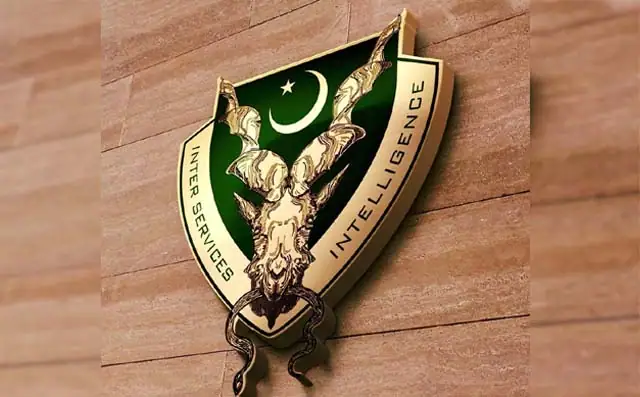
ISLAMABAD – A recent report published in the global news magazine The Diplomat sparked controversy over sweeping allegations about Pakistan and the Inter-Services Intelligence (ISI), which are said to be narrative rather than evidence.
The narrative relies heavily on speculation and unverified assertions rather than independently corroborated evidence, and critics argue that the report shows propaganda-driven framing of complex regional security dynamics rather than a rigorously sourced investigation.
Afghan analyst Ajmal Sohail made allegations involving Pakistan, intelligence apparatus, ISIS-Khorasan, and China’s interests in Afghanistan. The piece ignited intense debate across policy and security circles, not only because of the gravity of the accusations, but also because of the limited evidence presented alongside them.
The report covers regional intrigue, suggesting that Pakistan and the Inter Services Intelligence (ISI) could be influencing multiple militant dynamics in Afghanistan, while allegedly shaping the geopolitical balance between Kabul, Beijing, and Islamabad. But critics say the story reads less like a conventional news investigation and more like a commentary built largely around the claims of a single analyst. In a region as volatile as Afghanistan, where the security landscape has been fractured since the Taliban takeover of Afghanistan in 2021, such high-stakes accusations typically require strong documentation, independent verification, or corroboration from multiple sources.
One of the striking claims in the report centers on a supposed weapons shipment intercepted on February 21. According to the narrative, the arms were allegedly transported from Pakistan into Afghanistan and intended for militant groups operating in the remote Wakhan Corridor. The allegation alone would be explosive. Yet no international investigative body, forensic analysis, or independent intelligence report has publicly confirmed the claim. There has also been no documentary proof linking Pakistani state institutions directly to the alleged shipment.
Even the type of weapons reportedly seized has raised questions. The cache allegedly consisted mainly of short-range submachine guns and pistols, firearms typically associated with security forces or limited tactical use. Militant groups operating in Afghanistan, including the regional branch of Islamic State – Khorasan Province (ISIS-K), have historically relied more on assault rifles, rocket-propelled grenades, explosives, and improvised explosive devices.
Security analysts argue that without deeper forensic verification, a single weapons seizure cannot automatically prove the existence of a state-run militant supply chain.
The most controversial part of the narrative suggests that Pakistan might intentionally undermine Chinese investment in Afghanistan to maintain geopolitical leverage over Beijing. That theory triggered immediate skepticism among regional observers. Pakistan’s economic strategy has long been tied to its strategic partnership with China, especially through the massive China–Pakistan Economic Corridor initiative, a flagship project linked to Beijing’s broader Belt and Road Initiative.
Official statements from Islamabad consistently stressed support for a peaceful and economically connected Afghanistan. Critics of the report argue that deliberately sabotaging Chinese interests would directly contradict Pakistan’s own long-term economic planning and strategic alignment with Beijing.
Another controversial suggestion in the interview implies links between Pakistan and ISIS-Khorasan. Yet recent counterterrorism developments appear to complicate that narrative. In March 2025, the United States confirmed that a key suspect connected to the deadly Abbey Gate attack had been captured with Pakistan’s assistance. The suspect, Mohammad Sharifullah, was reportedly arrested near the Afghanistan border in Pakistan’s province of Balochistan.
US President Donald Trump also acknowledged Pakistan’s cooperation, and Pakistani officials also said the country’s role in the arrest was appreciated by U.S. security authorities. Sharifullah admitted during questioning by the Federal Bureau of Investigation that he was affiliated with ISIS-K. Observers argue that Pakistan’s role in capturing and handing over such a high-profile militant appears inconsistent with claims that the country is actively nurturing the group as a proxy force.
The debate also covers volatile security landscape in Balochistan, where multiple armed actors operate simultaneously. These include Baloch separatist organizations, sectarian militant groups, criminal smuggling networks, and cross-border insurgent elements.
In such a complicated environment, analysts say broad claims about coordinated targeting of Baloch militants or intelligence-directed alliances between militant factions require strong supporting evidence, such as attack patterns, arrest records, intelligence leaks, or independent investigative findings.
Beyond the geopolitics, the controversy sparked wider conversation about the role of international analytical platforms in shaping global narratives. Publications like The Diplomat hold significant influence among policymakers, diplomats, and researchers. When serious allegations involving intelligence agencies, militant networks, and major powers appear primarily through the voice of a single analyst, experts say editorial transparency and rigorous source verification become even more critical.
The interview undeniably captured attention across South Asia’s strategic community. Yet many observers say the narrative reduces the complex web connecting Pakistan, Afghanistan, China, and militant groups into a simple conspiracy storyline.