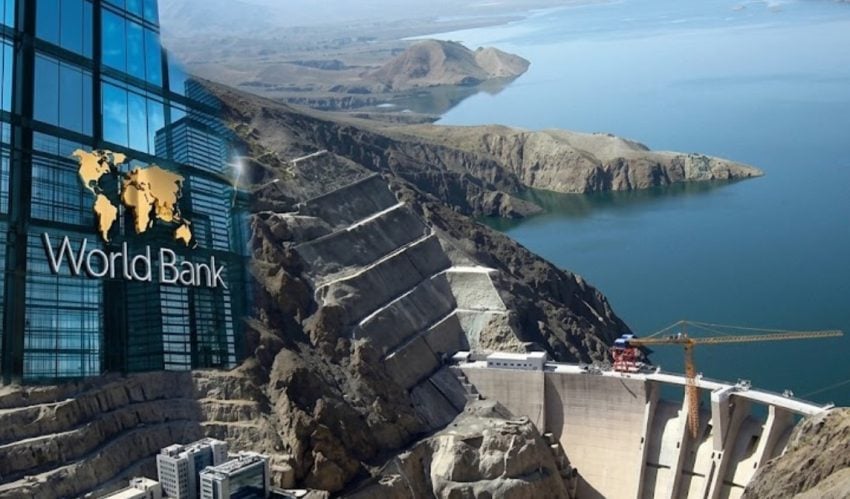
ISLAMABAD — Dasu Hydropower Project faces fresh scrutiny after World Bank urged Pakistan to protect complainants amid unverified allegations of retaliation over the transmission line’s construction.
US-based development bank urged Pakistani authorities to ensure protection for individuals who raised concerns about the Dasu Hydropower Project amid allegations that complainants may have faced retaliation over their objections to the construction of a transmission line.
In a letter to Economic Affairs Secretary Muhammad Humair Karim, World Bank Country Director for Pakistan Bolormaa Amgaabazar stressed that complainants, victims and witnesses must be protected from threats, intimidation and reprisals, citing WB’s zero-tolerance position on retaliation against people raising concerns about projects it finances.
The intervention places renewed scrutiny on the social safeguards surrounding one of Pakistan’s major hydropower initiatives, although the allegations remain unverified and the Bank has not identified any individual responsible for the alleged actions.
Amgaabazar called on government to remind implementing authorities and project partners of their responsibility to protect people participating in the complaint process. Her letter referred to the World Bank’s institutional commitments against reprisals.
World Bank said it generally lacks independent means to verify such claims and has no indication that the alleged retaliatory actions were carried out by identifiable officials or individuals. The complaint concerns additional financing for the construction of the transmission line under the Dasu Hydropower Stage-I Project, identified by the World Bank as P167843.
The complainants contend that they have been, or are likely to be, adversely affected by the project and have alleged retaliation connected with their complaint. The case is now before the World Bank’s independent Inspection Panel, which examines whether the institution has complied with its own policies and procedures in projects financed by the Bank.
According to Panel’s official case register, the request is listed as Case 189, titled “Pakistan: Additional Financing to Dasu Hydropower Stage I Project for Construction of a Transmission Line”. The request was received on July 24, 2026, under reference 27/02. Its recorded status is “Notice of Receipt”, with a registration decision identified as a subsequent procedural step.
The complaint has not yet triggered a formal investigation, and the Panel is assessing its admissibility and has not made a recommendation to proceed with a full investigation. If the request is found admissible, the Panel will consider whether the issues raised warrant a full investigation and may recommend a course of action to the World Bank’s Board of Executive Directors. The Board has the final authority over whether an investigation proceeds.
The complaint centres on a critical component of the Dasu Hydropower Project, located on the Indus River near Dasu town in Upper Kohistan, Khyber Pakhtunkhwa. The project has a planned overall capacity of 4,320 megawatts, although broader development references have sometimes cited capacity of up to 5,400 megawatts.
Chinese company halts operations at Pakistan s Dasu Dam, firing local workers
Stage-I alone is designed to generate 2,160 megawatts, with estimated annual electricity production of approximately 12,225 gigawatt-hours. Implemented by the Water and Power Development Authority (WAPDA), Dasu is a key part of Pakistan’s strategy to expand domestic renewable energy generation, reduce dependence on imported fuels and improve the availability of comparatively low-cost electricity.
he World Bank has supported the project through International Development Association financing and partial credit guarantees. Additional financing has been approved in successive phases, including a $1 billion package for Stage-I approved in June 2024.
The wider project encountered challenges involving security, logistics, resettlement, local protests and construction activities. Previous World Bank assessments have also highlighted governance, macroeconomic and institutional capacity risks.
China proposes Joint Security Company with Pakistan as part of CPEC expansion plans