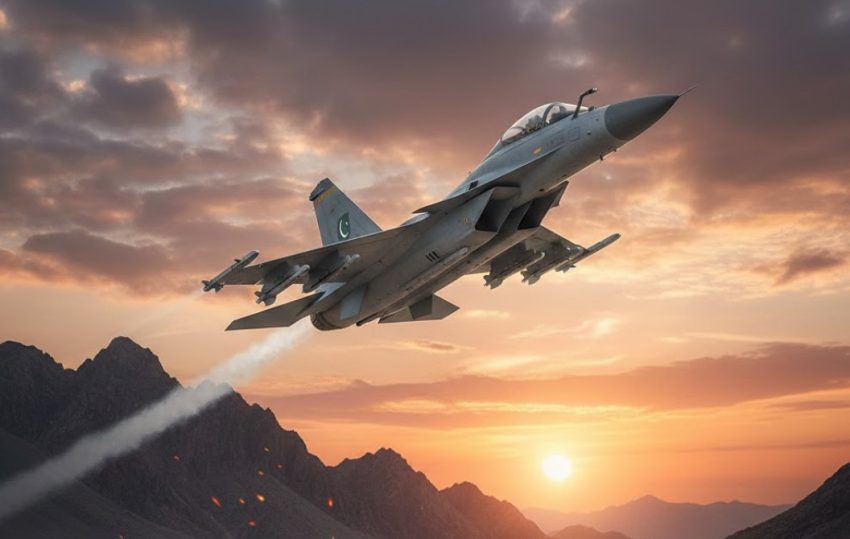
ISLAMABAD – Pakistan’s indigenously built JF-17 Thunder is not just fighter jet, it’s quickly becoming global defense sensation. After impressive performance in the recent Pakistan–India clashes, air forces from across the world are rushing to acquire this cutting-edge multirole combat aircraft, promising a massive boost to Pakistan’s defense exports.
After landmark defense agreement in September, JF-17 became clear that KSA wants Pakistan’s advanced military technology. But the interest doesn’t stop there, Bangladesh, Iraq, Indonesia, and Libya’s national army are all seriously eyeing the JF-17. Some deals have already been signed, while others are expected to be finalized very soon.
The unbeatable combination of low cost and top-tier combat capability stunned the world. During May 2025 brief conflict with India, the aircraft was battle-tested, with Pakistan claiming it outperformed French Rafale jets.
Manufactured at Pakistan Aeronautical Complex (PAC) near Islamabad, JF-17 Block II is 4.5-generation fighter. Equipped with modern AESA radar, beyond-visual-range missiles, and China’s PL-10E air-to-air missiles, this lightweight powerhouse packs a punch that rivals even the world’s most expensive jets.
With AESA radar, cutting-edge avionics, and electronic warfare systems, the JF-17 surpasses American F-16s and Russian Su-27s. Highly maneuverable at low and medium altitudes, it can track multiple targets simultaneously, making it a nightmare for any adversary.
Experts note that the JF-17 competes with aircraft like Rafale, Gripen, Eurofighter Typhoon, and China’s J-10—but at a fraction of the cost:
- JF-17: $25–30 million
- Rafale: $90 million+
- Gripen: $100 million+
- Typhoon: $117 million
- F-35: $109 million
JF-17’s combat record is unparalleled. During 2019 and 2025 clashes with India, it proved its mettle. In 2019, an Indian aircraft was shot down and pilot Abhinandan captured. In May 2025, Pakistan claims six Indian jets downed, including three Rafales. India confirmed losses but did not disclose details.
Pakistan Air Force asserts that the JF-17 not only took on Indian jets but also struck Russia’s S-400 air defense system using hypersonic missiles, a claim denied by India but hailed as a game-changer by defense analysts.
The conflict ended on May 10, when then-U.S. President Donald Trump announced an immediate ceasefire. Pakistan later nominated him for the Nobel Peace Prize, while Trump himself repeatedly confirmed 6–8 aircraft were downed.
JF-17 is not just making headlines—it’s already flying in foreign skies:
- Myanmar (2015): 7 of 15 aircraft delivered
- Nigeria (2021): 3 aircraft
- Azerbaijan (2024): 16 aircraft, $1.5 billion deal
- Libya: Dozens of jets in $4 billion deal
Six More Countries Poised to Buy witb Bangladesh’s agreement imminent. Indonesia: Interested in 40+ jets, Iraq: Serious interest and Saudi Arabia is in talks to convert a $2 billion loan into JF-17 purchases
Experts say Pakistan’s strong defense export sector could revolutionize its foreign exchange reserves, global standing, and economy. Federal Defence Minister Khawaja Asif boldly predicted that the success of Pakistan-made weapons could eliminate the country’s need for the IMF within six months.
With its unbeatable combination of combat-tested performance, advanced technology, and cost-effectiveness, the JF-17 Thunder is not just Pakistan’s pride, it’s a global game-changer in military aviation.
Is Pakistan offering JF-17 Jets to Saudi Arabia as Repayment for US$2Bn Loans?