
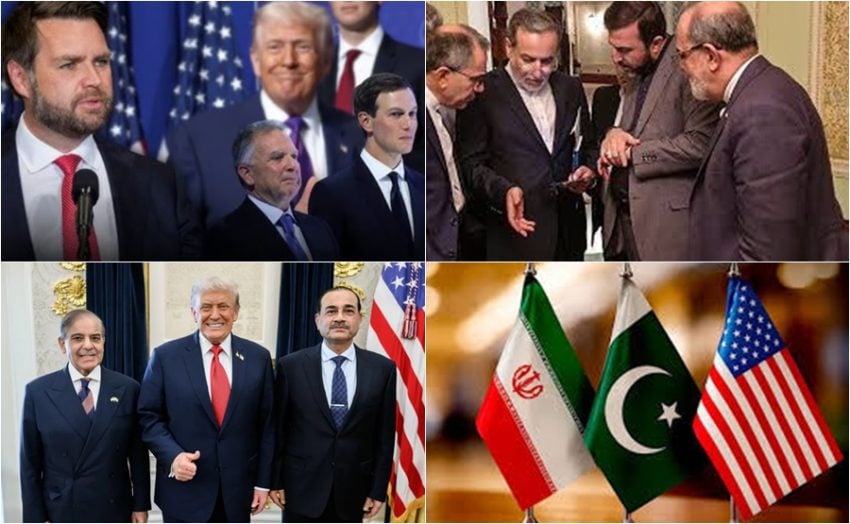
I have spent many years analysing the shifting currents of global power, but the events recently unfolding in Islamabad represent something truly extraordinary. It is rare to witness a moment where a single nation effectively moves the needle of international relations through sheer diplomatic ingenuity. Today it is clear that Pakistan has outclassed its contemporaries by positioning itself as the indispensable bridge between the West and the East. The Islamabad Talks stand as a monument to this new reality, proving that strategic influence is as much about personal trust as it is about national power.
The foundation of this success lies in a very specific and significant development. While much of the world was looking elsewhere, a profound level of trust was established between the leadership in Islamabad and the highest levels of the American administration. From my perspective as a political strategist, I see that a significant amount of credit goes to Field Marshal Asim Munir. Among all the figures involved in regional security and global strategy, he is the one whom Donald Trump trusts most deeply. This is not a matter of standard protocol but the result of a very close rapport developed after the Field Marshal visited Washington, D.C. last year.
It is widely known that Donald Trump values directness and strength. He has described both Prime Minister Shehbaz Sharif and Field Marshal Asim Munir as very close friends. This personal chemistry was on full display following the recent negotiations, when Trump reportedly expressed appreciation for their role in a post-discussion message. He credited them for facilitating the talks and managing the incredibly sensitive negotiations. The level of engagement we are seeing now is significant because it moves beyond transactional diplomacy into the realm of a strategic partnership built on mutual respect.
The Islamabad Talks themselves are being hailed as a milestone. When the news broke via Efrat Lachter and other international correspondents, it became apparent that Pakistan was leveraging its unique position to do what few others could. For the first time in recent memory, the United States and Iran found themselves in a constructive environment on Pakistani soil. Even though the talks were followed by a US naval blockade and intense rhetoric from Washington, I do not view this as a failure of diplomacy. On the contrary, these developments suggest that the pressure tactics being used by the Trump administration are part of a broader negotiation strategy.
I believe the negotiation process remains very much alive. The complexities of the issues regarding uranium enrichment and economic sanctions mean that a total deal after just one day was always unlikely. However, the fact that both sides described the atmosphere as unusually constructive and even friendly is a massive victory for Pakistani mediation. It was the nerves of steel shown by Field Marshal Asim Munir that served as the architectural framework for these discussions. His role as a diplomatic architect in regional and Middle Eastern affairs has become a key factor in these global developments. Trump has a reported trust in his ability to convene such discussions, which gives Pakistan a level of influence that few European or Asian allies currently possess.
Pakistan is currently in a rare and enviable position. It maintains solid ties with the United States and Iran, as well as strong relationships with China, Türkiye, Egypt, the GCC states, and major European actors. This multi-directional approach to foreign policy has allowed the government to act as a pivot point for the world. Even as Washington demands that Iran surrender its stockpiles, the backchannel diplomacy remains functional thanks to the credibility of the military leadership in Islamabad. Analysts and former officials are increasingly pointing to this as a resurgence in ties that many thought were impossible only a few years ago.
The benefits for Pakistan are already visible. By showing the region and the wider world that it is a serious country capable of exerting influence in areas of high strategic interest, Pakistan has fundamentally boosted its international reputation. While many nations want the ongoing regional wars to end, Pakistan has taken the lead by providing the venue and the trust required to stop the cycle of violence. This is a bold move that signals Islamabad is no longer content to stay on the sidelines of history.
Looking forward, I believe the Trump administration will continue seeking engagement with Iran despite the tough public rhetoric. The political interests of the United States demand a resolution, and Washington knows that Islamabad is the most reliable conduit for that message. Field Marshal Asim Munir and the government as a whole have successfully transformed Pakistan into a global diplomatic hub.
Although the current blockade and the collapse of certain immediate demands might seem like a setback to an untrained eye, they are actually part of the dance of high-stakes diplomacy. Pakistan has already gained significantly by demonstrating its capacity as a serious mediator. It has outclassed its peers by showing that it is not just a regional power but a central actor in the peace and security of the modern world. Through immaculate diplomatic efforts and a close rapport with global leaders, Islamabad has redefined its role on the international stage. I am confident that the bridge built in Pakistan will be the one that eventually leads to a lasting resolution between two of the most significant adversaries in modern history.