
LAHORE – With Pakistan ranking among the world’s most polluted countries, climate and energy experts on Wednesday stressed the need for a rapid shift towards cleaner transport systems to address worsening air quality, particularly in major urban centres such as Lahore.
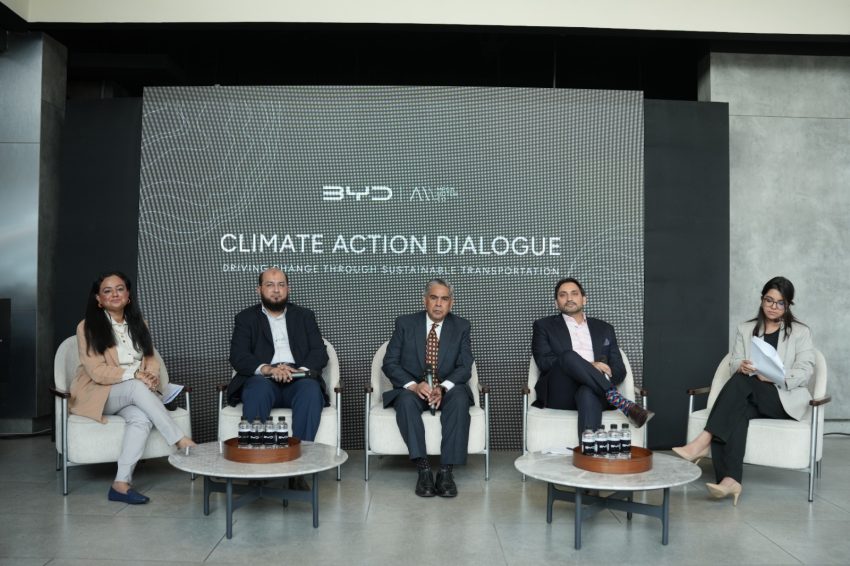
The discussion took place at a Climate Action Dialogue hosted by BYD Pakistan in collaboration with Mega Motor Company (MMC), where participants examined the role of clean mobility in reducing emissions and mitigating hazardous smog.
According to global air quality data from IQAir, Pakistan is currently the third-most polluted country in the world, with average PM2.5 levels far exceeding limits recommended by the World Health Organisation. In Lahore, winter smog frequently pushes pollution levels into the hazardous range, posing serious public health risks.
Citing research by the Pakistan Institute of Development Economics (PIDE), speakers noted that the transport sector is a major contributor to emissions, accounting for more than 43 per cent of national emissions and up to 80pc in densely populated cities such as Lahore.
Energy researcher Dr Naveed Arshad said that targeting transport emissions offered one of the most immediate and manageable ways to improve air quality. “Reducing tailpipe emissions through cleaner vehicles can have a direct impact on urban pollution levels,” he said.
Speaking at the event, Danish Khaliq, Vice President Sales and Strategy at BYD-MMC, said new energy vehicles (NEVs) significantly reduce tailpipe emissions, a key contributor to smog in cities. He added that wider adoption of clean mobility could also bring economic benefits.
“At 30pc adoption, clean mobility has the potential to add nearly Rs1.3 trillion to Pakistan’s economy and support up to 1.5 million direct and indirect jobs, even before accounting for health and air quality gains,” he said, citing independent research.
Climate expert Ali Tauqeer Shaikh emphasised the importance of aligning transport reforms with broader climate and energy policies, while climate finance specialist Mehak Masood highlighted the need for innovative financing mechanisms to support large-scale adoption of electric vehicles.
Participants also called for stronger implementation of the National Electric Vehicle Policy, including meaningful incentives for cleaner vehicles and the removal of regulatory bottlenecks that continue to slow progress.
The role of the private sector in supporting the transition to sustainable transport was also discussed, with speakers noting that collaboration between industry leaders and the government could accelerate adoption by improving infrastructure, sharing technical expertise, and building local capacity.
The dialogue concluded with a call for coordinated policy action, industry participation, and public engagement to translate discussions into concrete steps towards cleaner air and more sustainable urban transport systems.