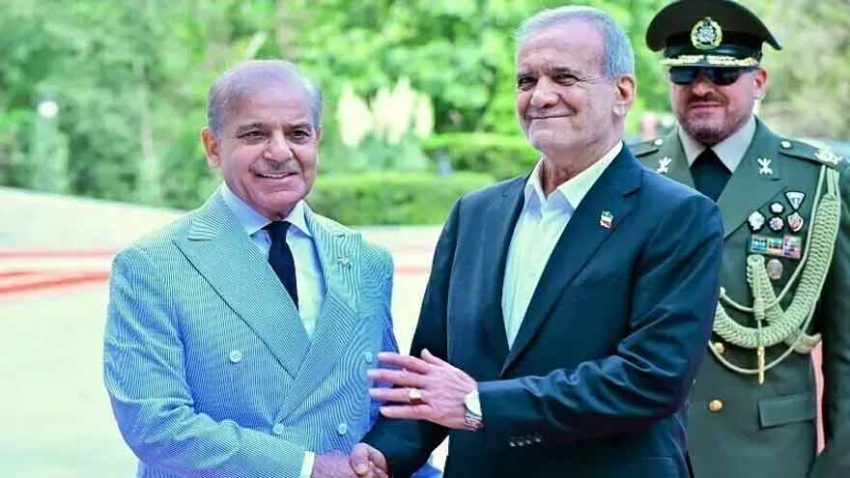
ISLAMABAD – Prime Minister Shehbaz Sharif and Iranian President Masoud Pezeshkian held their first telephone conversation since the signing of the Islamabad Peace Agreement, reaffirming their commitment to strengthening bilateral ties and regional peace.
According to a statement issued by the Prime Minister’s Office, the call lasted more than 30 minutes. During the conversation, Prime Minister Shehbaz congratulated President Pezeshkian, the Iranian leadership and the people of Iran on the historic agreement, saying it would contribute to regional stability, support Iran’s reconstruction efforts and further deepen cooperation between Pakistan and Iran across various sectors.
The prime minister also conveyed his warm regards and best wishes to Iran’s Supreme Leader, Ayatollah Seyed Mojtaba Hosseini Khamenei.
Praising Iran’s decision to sign the peace accord, Shehbaz Sharif expressed hope for the success of the next phase of negotiations and reiterated Pakistan’s commitment to fully supporting Iran as a brotherly neighbouring country in all areas of mutual interest.
Islamabad :18 June 2026.
Prime Minister Muhammad Shehbaz Sharif received a telephone call from His Excellency Dr. Masoud Pezeshkian, President of the Islamic Republic of Iran, this afternoon, that lasted over thirty minutes.
This was the first contact between the two leaders… pic.twitter.com/ukkFWYy975
— Prime Minister’s Office (@PakPMO) June 18, 2026
President Pezeshkian thanked Prime Minister Shehbaz Sharif and Field Marshal Syed Asim Munir for their role in facilitating the mediation process, describing their efforts as skilful, sincere and wise. He said Iran would always value Pakistan’s contribution to achieving the agreement.
The Iranian president also expressed appreciation for Pakistan’s constructive support during a difficult period and said Iran looked forward to expanding bilateral relations with Pakistan in all fields of mutual interest.
The two leaders agreed to exchange visits to each other’s capitals at the earliest mutually convenient opportunity and to remain in close contact to further advance bilateral cooperation and regional coordination.