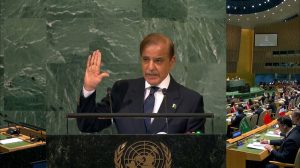

At long last, the world can finally take a sigh of relief, as the nearly four-month-long standoff between the United States and Iran — encompassing both the active conflict and the tense ceasefire period that followed — that could have resulted in the death of “a whole civilisation,” has eventually come to an end. Thanks to Pakistan’s untiring efforts and “shuttle diplomacy,” the peace document now being referred to as the ‘Islamabad Memorandum of Understanding’ (MoU) has been duly signed on 17 June 2026, by the respective parties. According to a post on X by Prime Minister Shehbaz Sharif, “Pakistan, with the support of co-mediator State of Qatar, will host the official ceremony as scheduled on 19 June 2026, in Switzerland, to commemorate this landmark event and commence with the technical level talks.” The prelude ‘Islamabad Talks’, also known as the ‘Islamabad Peace Talks,’ were held in Islamabad, on 11 and 12 April 2026.
Bringing both warring parties to the negotiating table and getting them to agree on a cease-fire to find a middle ground for an enduring peace deal was no less than a Sisyphean task. The emergence of a negotiated framework, successfully mediated by Pakistan, is a great diplomatic triumph not only for Pakistan but for the entire world.
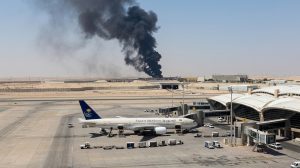
The US-Iran war that had almost paralysed the entire international system during the approximately forty-day escalation phase – starting on 28 February 2026, before an initial ceasefire took effect on 8 April 2026 – had created deep anxieties across global energy markets, shipping lanes in the Strait of Hormuz, and broader regional stability in the Middle East.
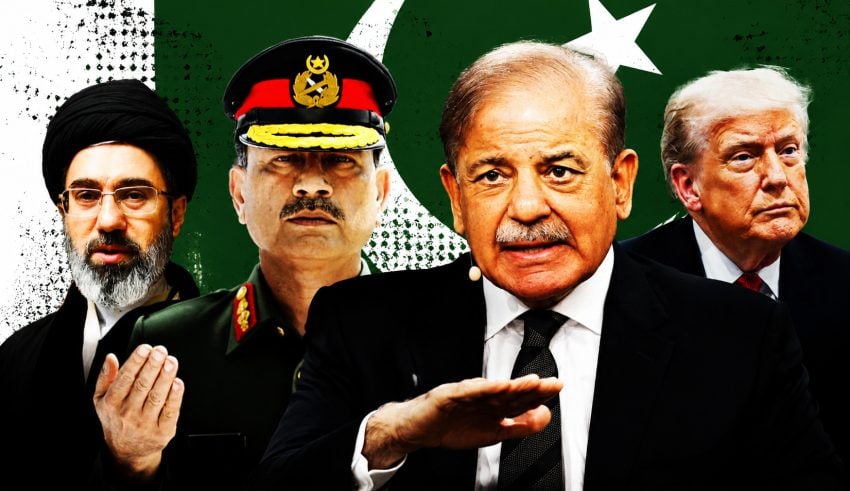
The historic – read ‘heroic’ – role played by Pakistan’s civil/military leadership, especially PM Sharif and President Trump’s “favourite Field Marshal,” Chief of Defence Forces (CDF) and Chief of Army Staff Field Marshal Asim Munir, during the “peace negotiations” shall be remembered in the annals of history with golden words for successfully brokering this “peace deal.” Pakistan’s Deputy Prime Minister, who also serves as the country’s Foreign Minister, Senator Mohammad Ishaq Dar, along with the Federal Minister for Interior & Narcotics Control, Syed Mohsin Raza Naqvi, and Pakistan’s entire diplomatic corps, are also worth a mention here for their ace diplomacy. The coordination, which involved multilayered engagement channels, including backchannel communications, security assurances, and parallel de-escalation dialogues designed to prevent further escalation while formal negotiations were being structured, is a masterclass in “responsible” diplomacy.
This isn’t the first time Islamabad has stepped up as a bridge between Washington and the wider region. Back at the height of the Cold War, Pakistan quietly served as the backchannel that made possible Henry Kissinger’s secret 1971 trip to Beijing — a visit that paved the way for Richard Nixon’s historic visit to China a year later, finally ending decades of “geopolitical severance” between the two countries. Diplomats and historians still point to that episode as a textbook case of how a middle power can step in and move the needle between two giants when the giants themselves can’t sit down at the same table.
Nearly fifty-four years later, Pakistan has done it again and paved the way for rapprochement between the United States and one of its major adversaries, Iran, albeit in a different timeframe. According to an analysis by Ambassador Naghmana Hashmi, Pakistan has, in fact, brought the world back from the brink of an apocalyptic ‘World War III.’
However, all the jubilation aside, “peace cannot be kept by force; it can only be achieved by understanding,” as Albert Einstein said. This principle is repeatedly invoked in diplomatic theory to underline the necessity of mutual recognition of security concerns, sovereignty, and political dignity between adversarial states.
Having said that, Pakistan has undoubtedly saved the day. The onus now lies with the United States and Iran to seize this fortunate moment and work towards the resolution of all their outstanding issues, as the world cannot afford any kind of Armageddon. The fate of this MoU would ultimately depend on whether both states can translate diplomatic symbolism into institutionalised peace architecture, including consistent dialogue, verified compliance mechanisms, and a sustained commitment to de-escalation. A simple piece of advice: the United States and Iranian leadership should start by picking the low-hanging fruit first; the full harvest can be reaped later.